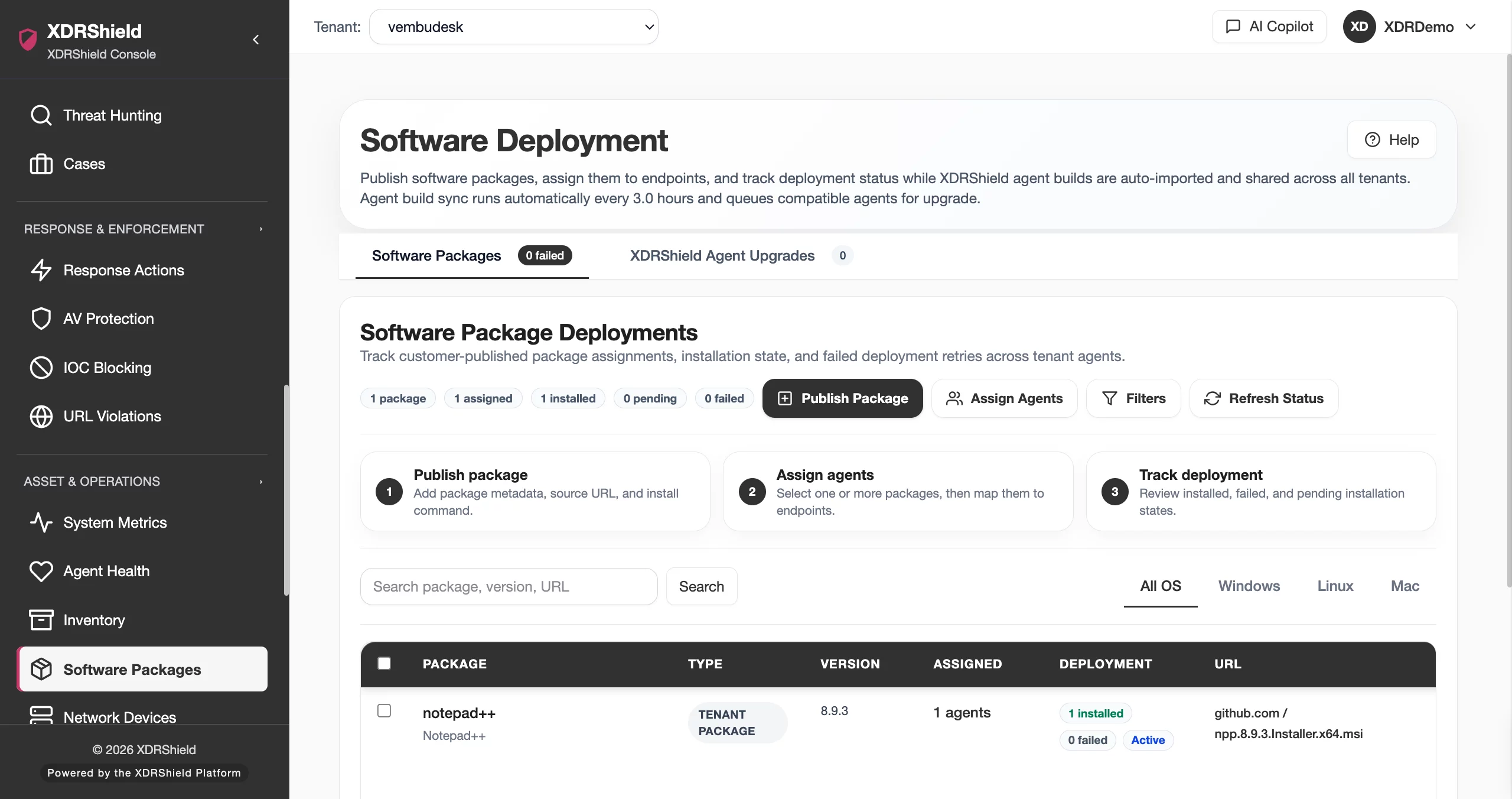
Prepare endpoint operations before ransomware turns into downtime.
XDRShield helps IT, security, and service-provider teams strengthen ransomware readiness with endpoint visibility, file-change monitoring, suspicious process evidence, IOC controls, alert triage, investigation workflows, and governed response actions that can be reviewed when business continuity is on the line.
Ransomware readiness is operational discipline, not a single tool checkbox.
Teams need to know whether endpoints are healthy, whether file and process activity is visible, whether suspicious signals become actionable alerts, and whether response decisions can be taken with evidence and accountability. XDRShield brings these workflows together so ransomware preparation is easier to validate before an incident.
A readiness model that connects detection, investigation, and response.
XDRShield supports ransomware readiness by combining prevention-adjacent controls, endpoint monitoring, operational health, and response governance. The goal is not to promise perfect prevention; it is to help teams see risky activity sooner, validate scope faster, and preserve the evidence needed to justify remediation and recovery decisions.
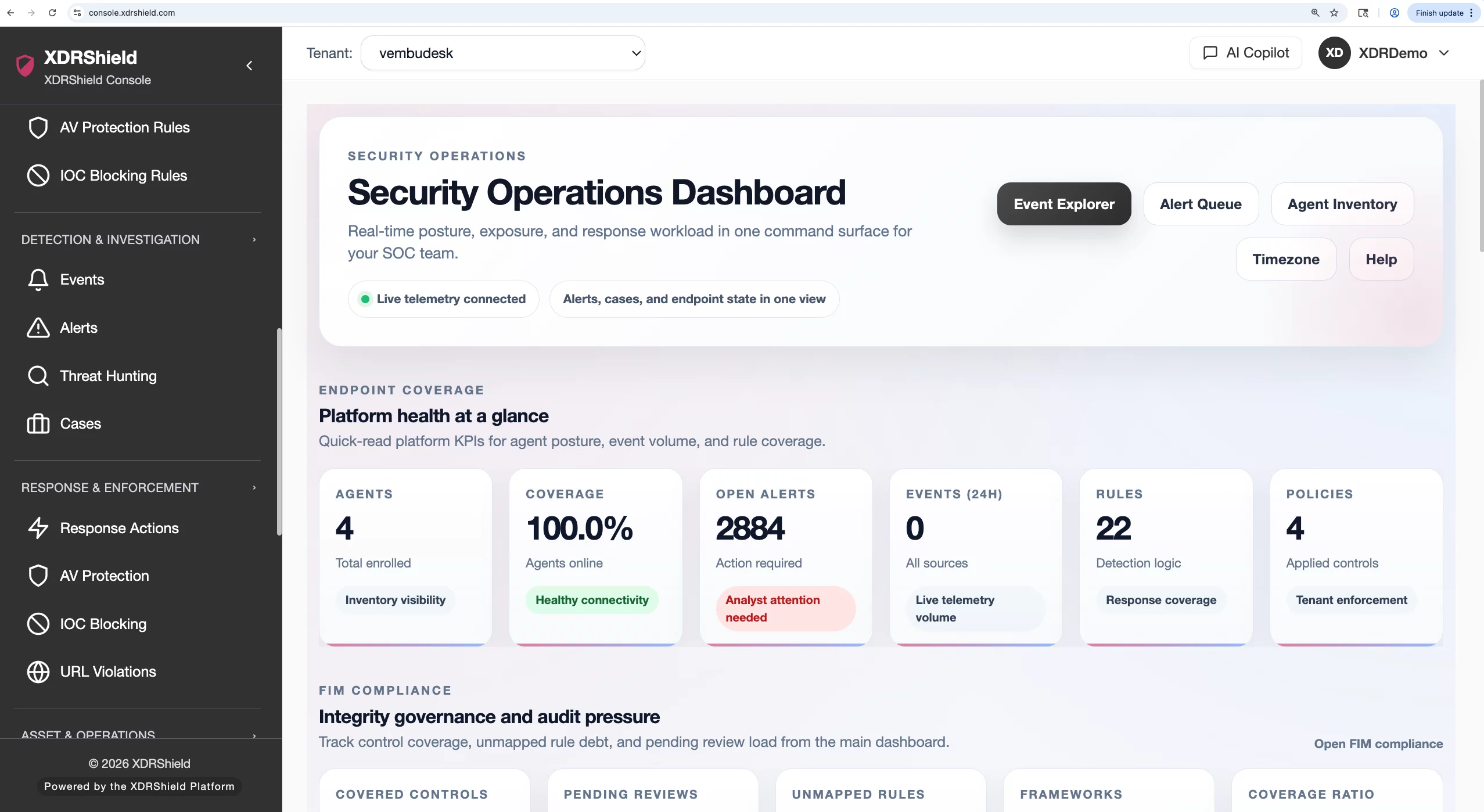
- Agent health, operations health, and dashboards show whether endpoint security workflows are ready to trust.
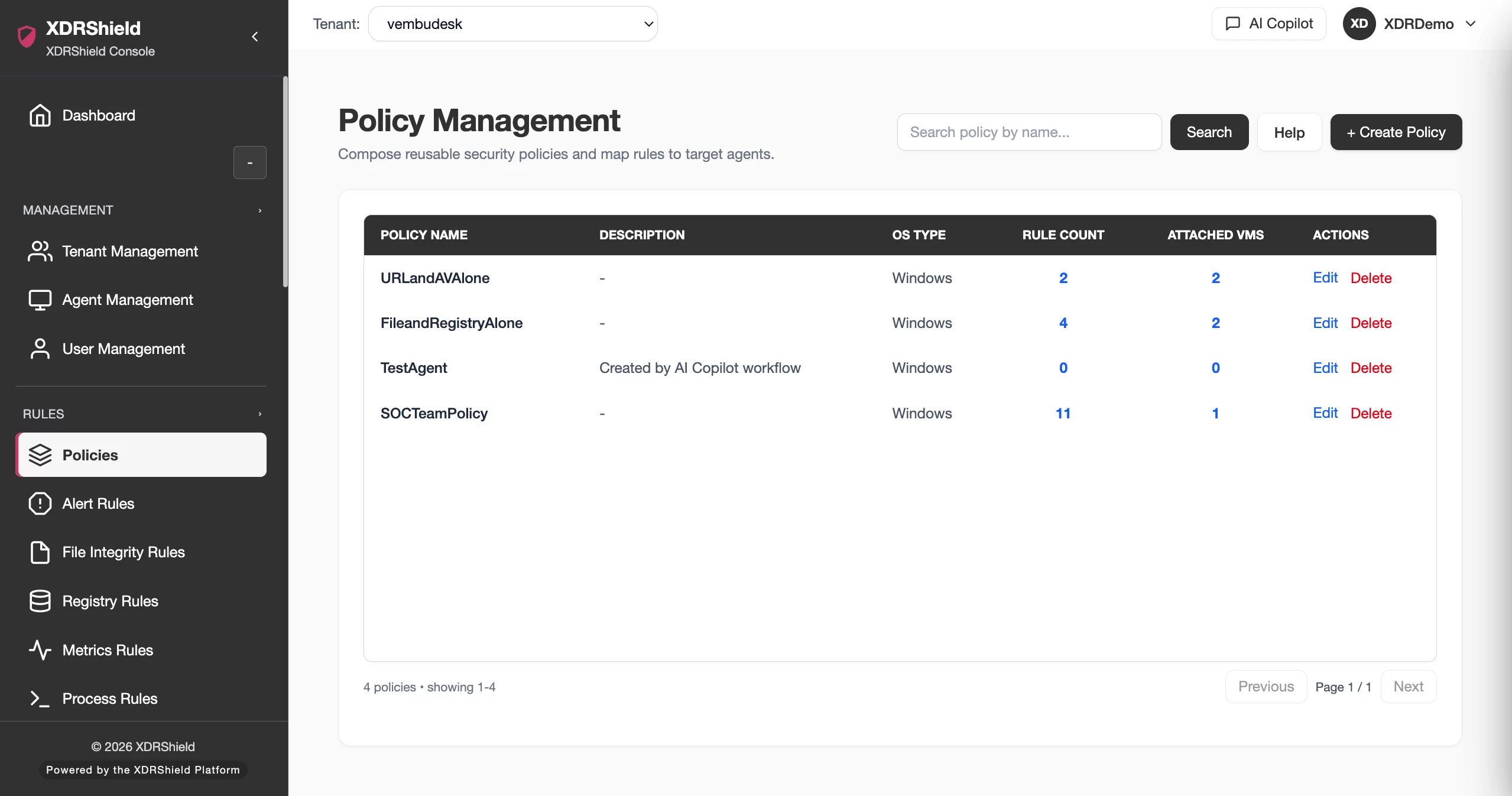
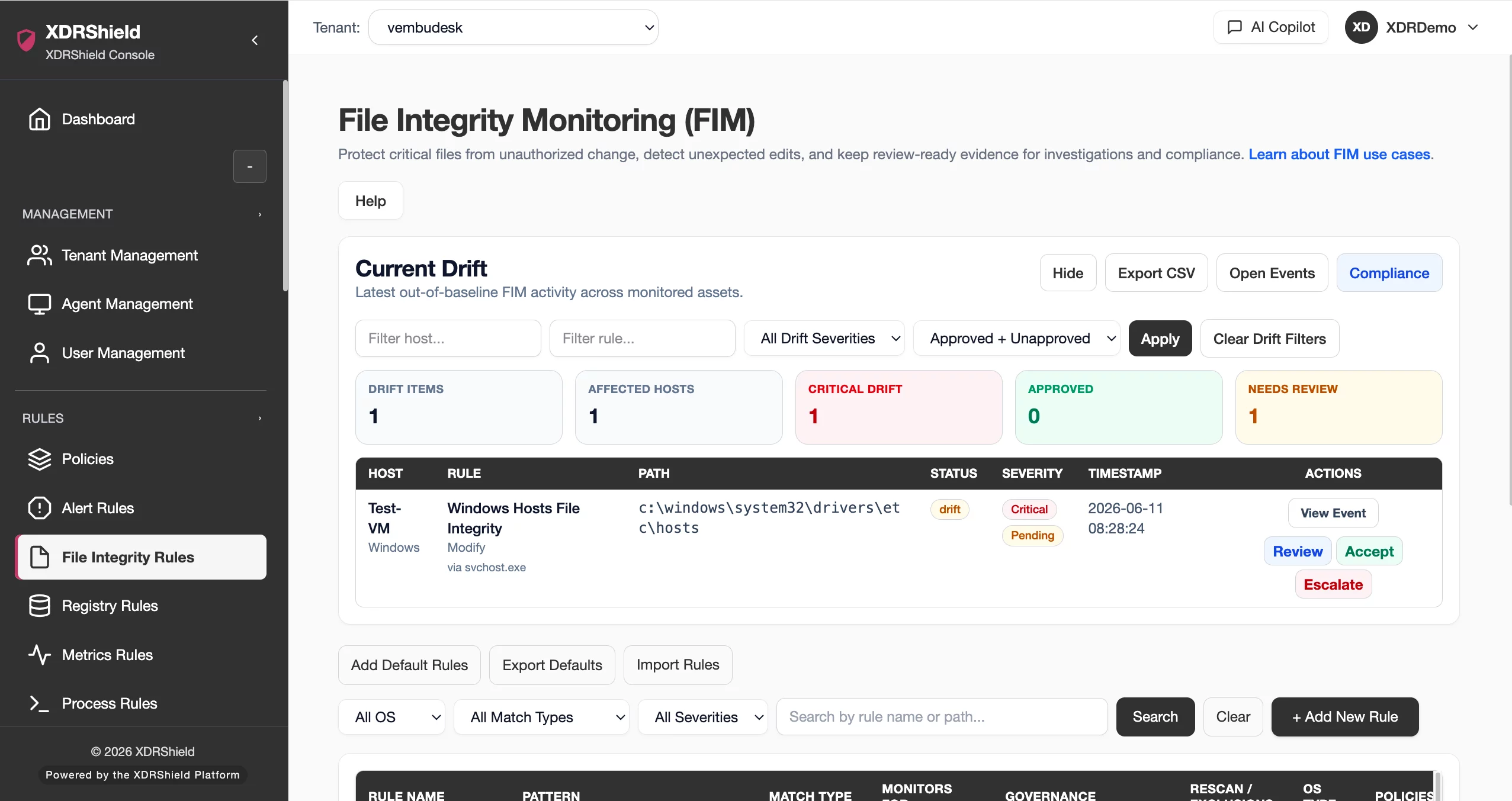
- FIM, process, IOC, URL, AV, metrics, and alert rules help expose ransomware-like patterns and weak posture signals.
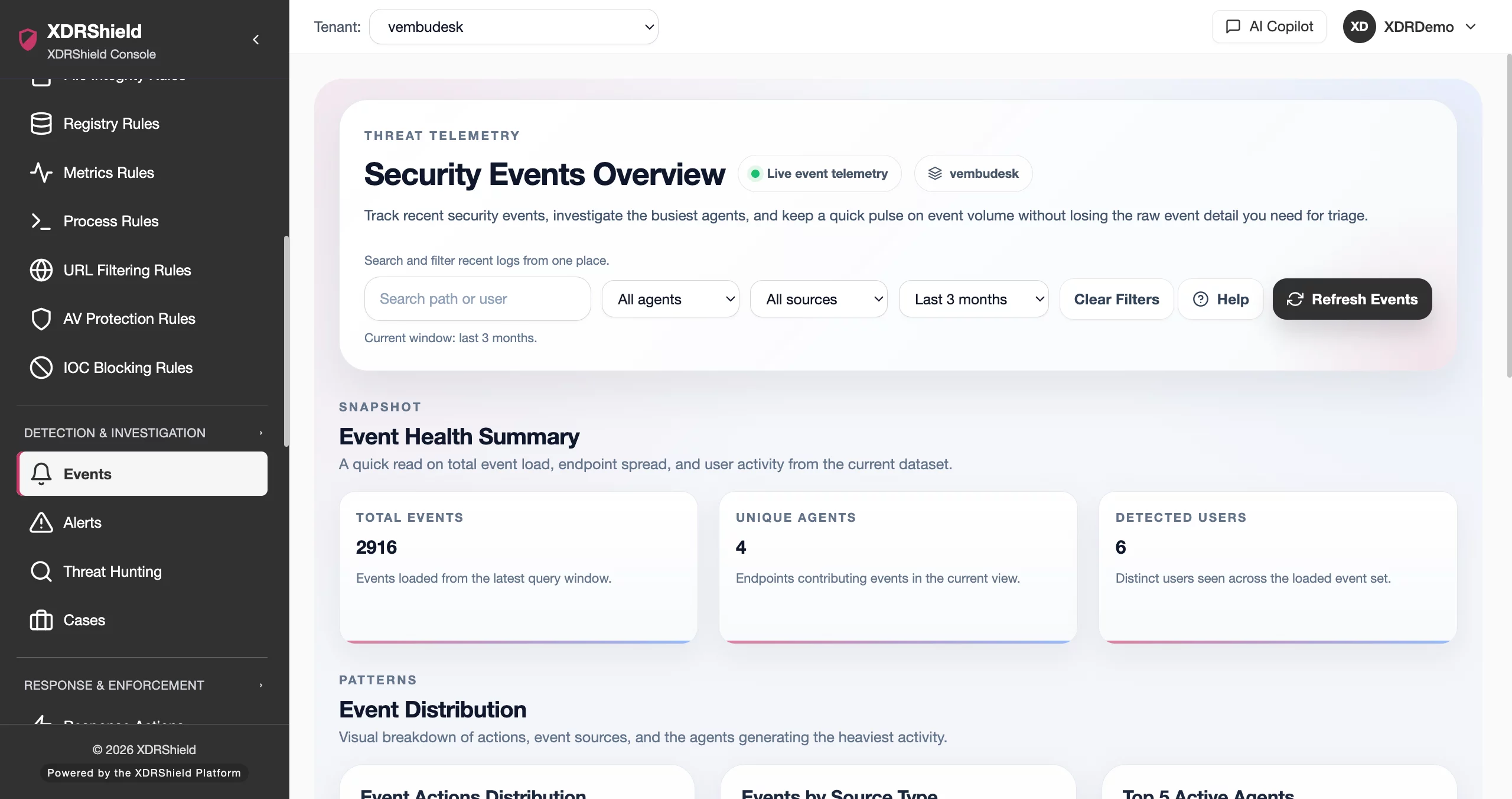
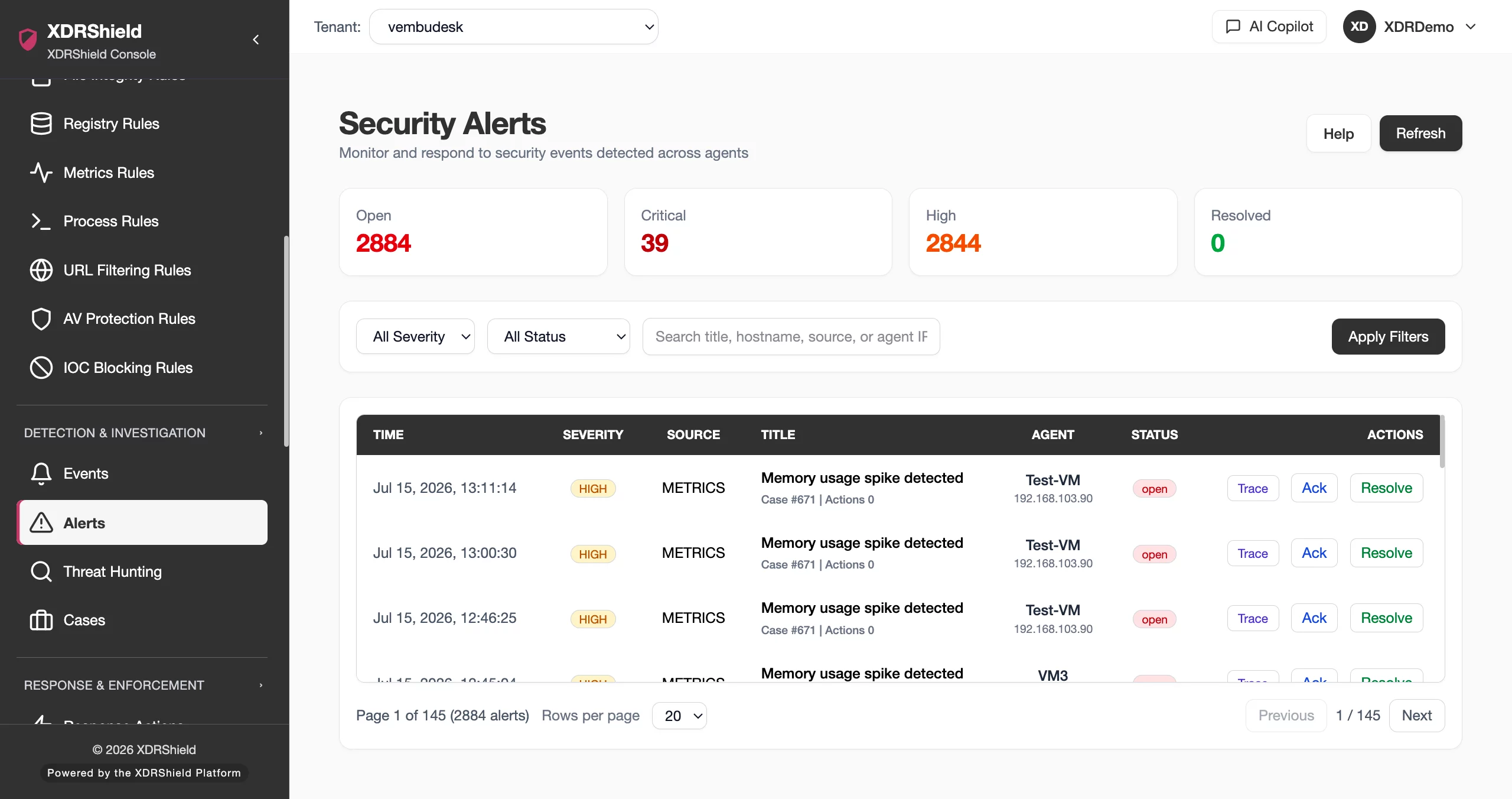
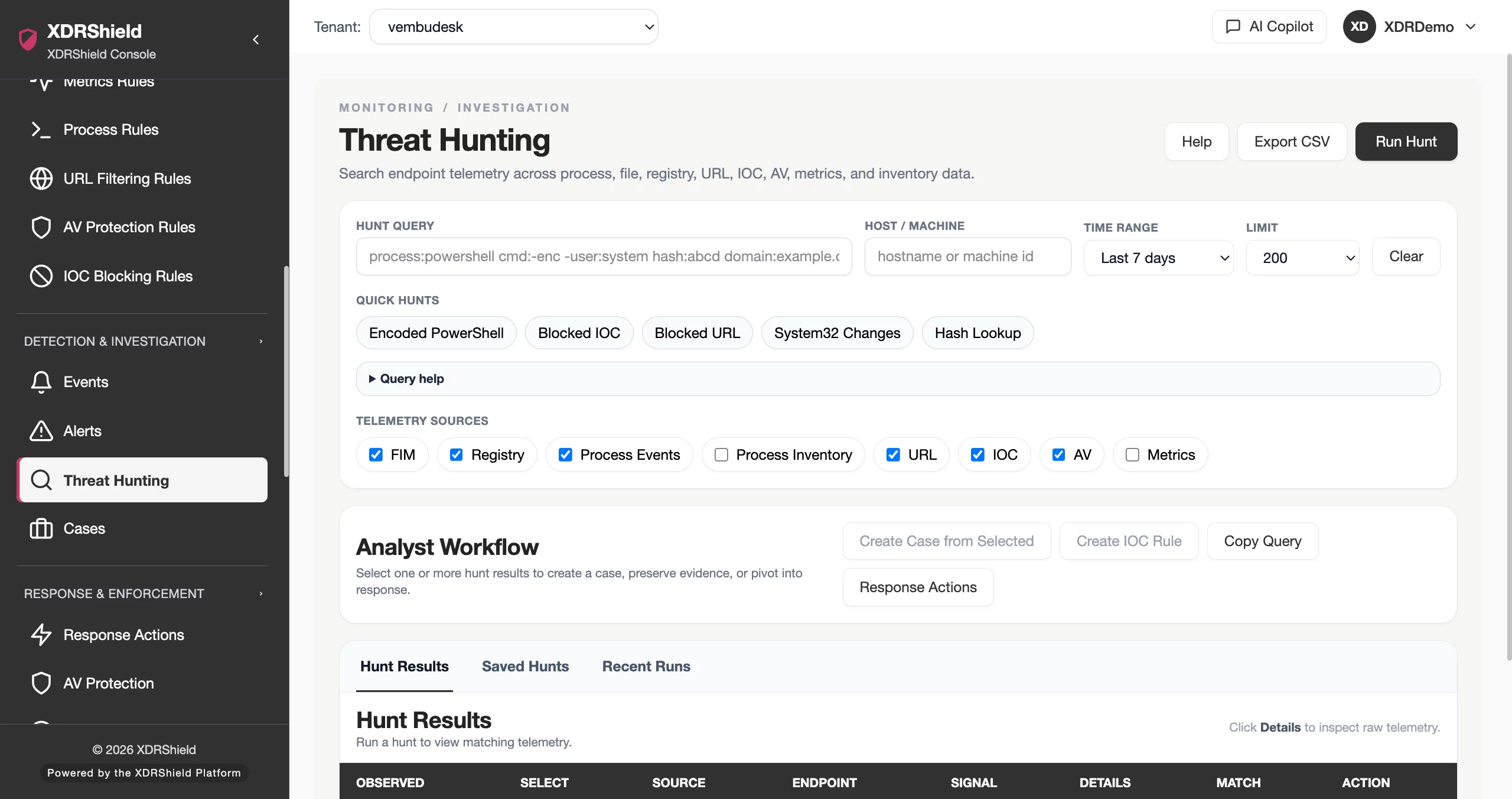
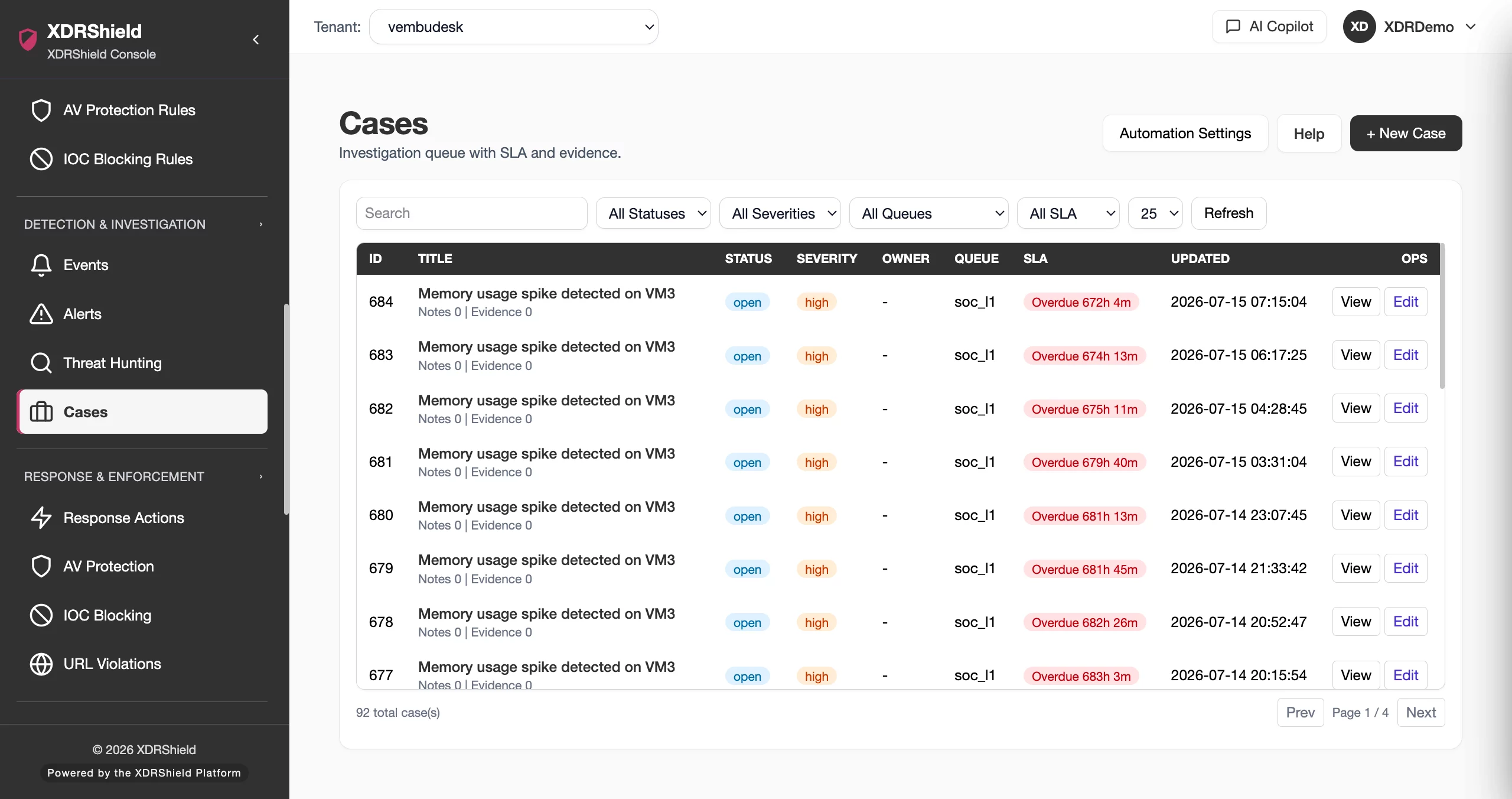
- Security alerts, events, threat hunting, and cases help teams scope affected endpoints and document findings.
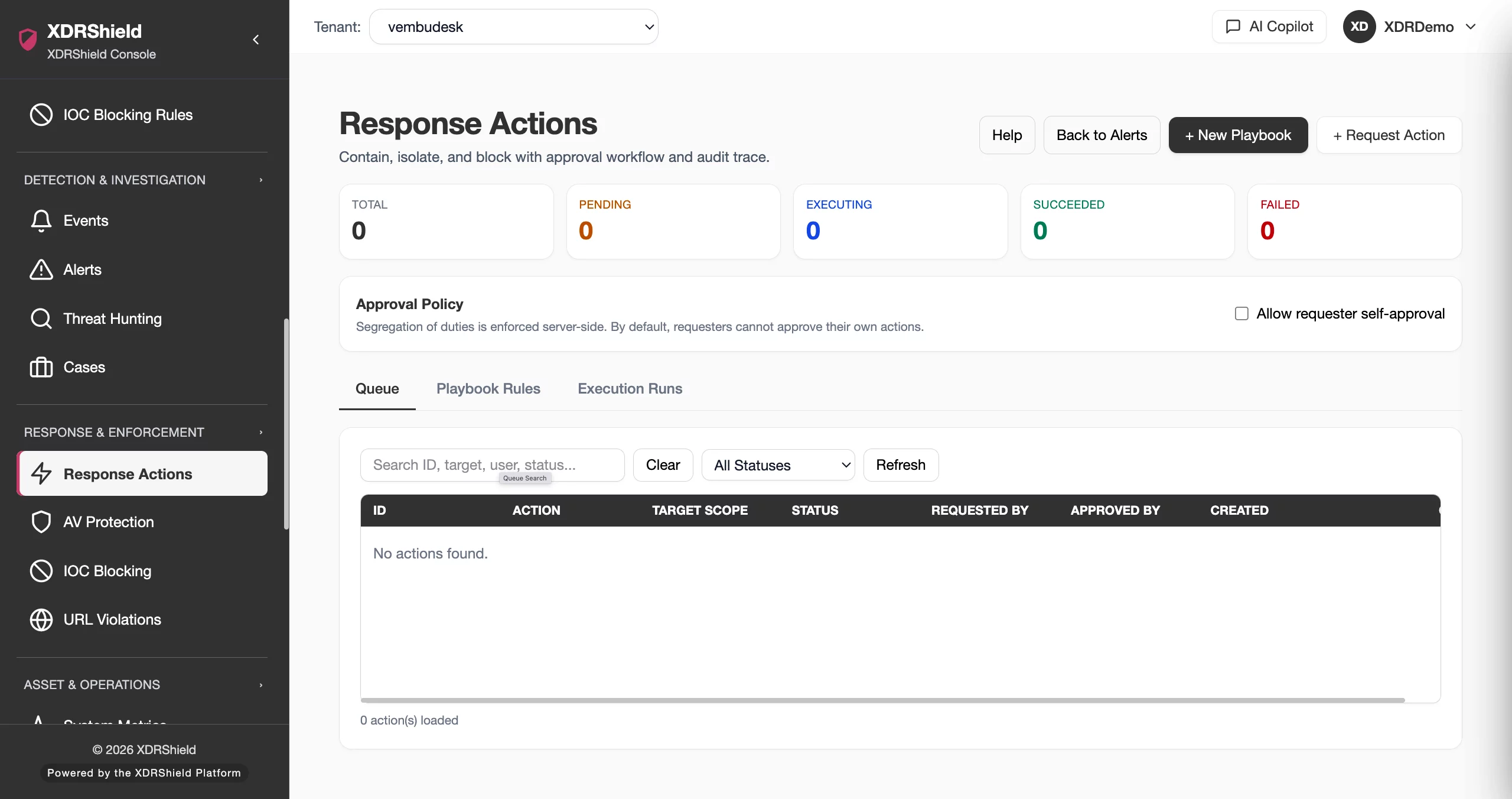
- Governed response, audit logs, notifications, and user access controls support accountable containment and follow-up.
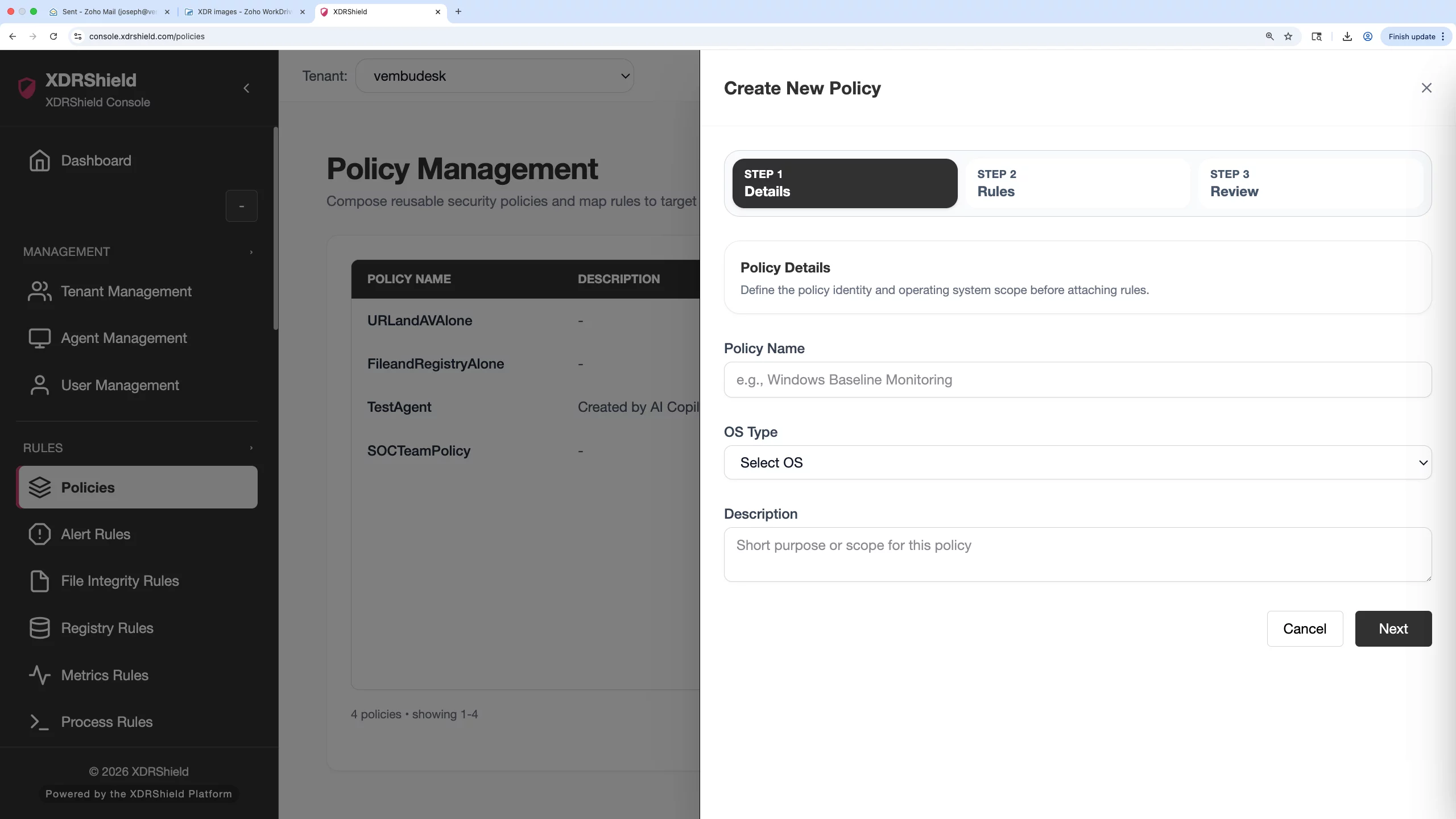
What XDRShield helps teams operationalize for ransomware readiness.
These capabilities work together as a readiness workflow rather than isolated controls.
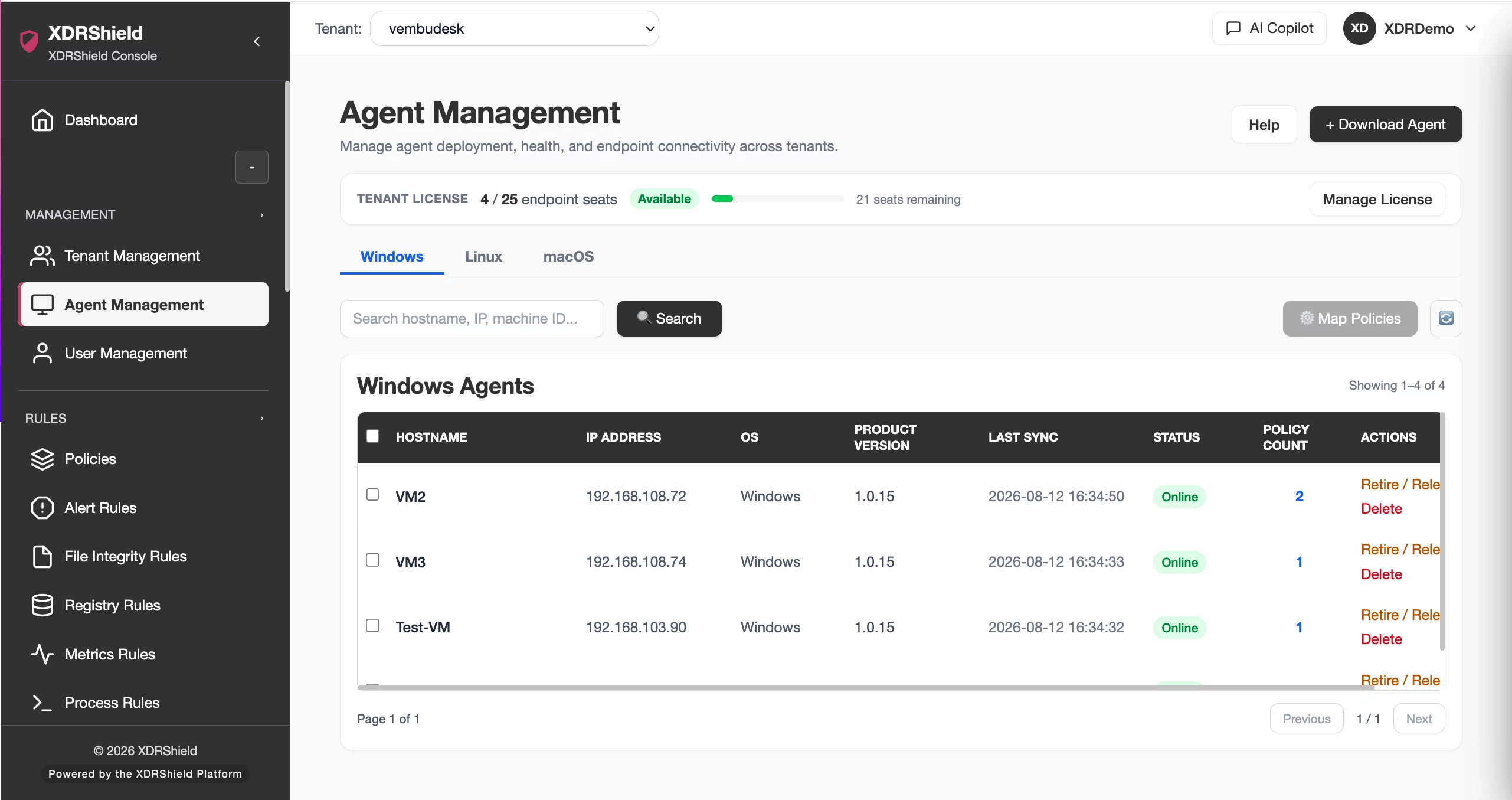
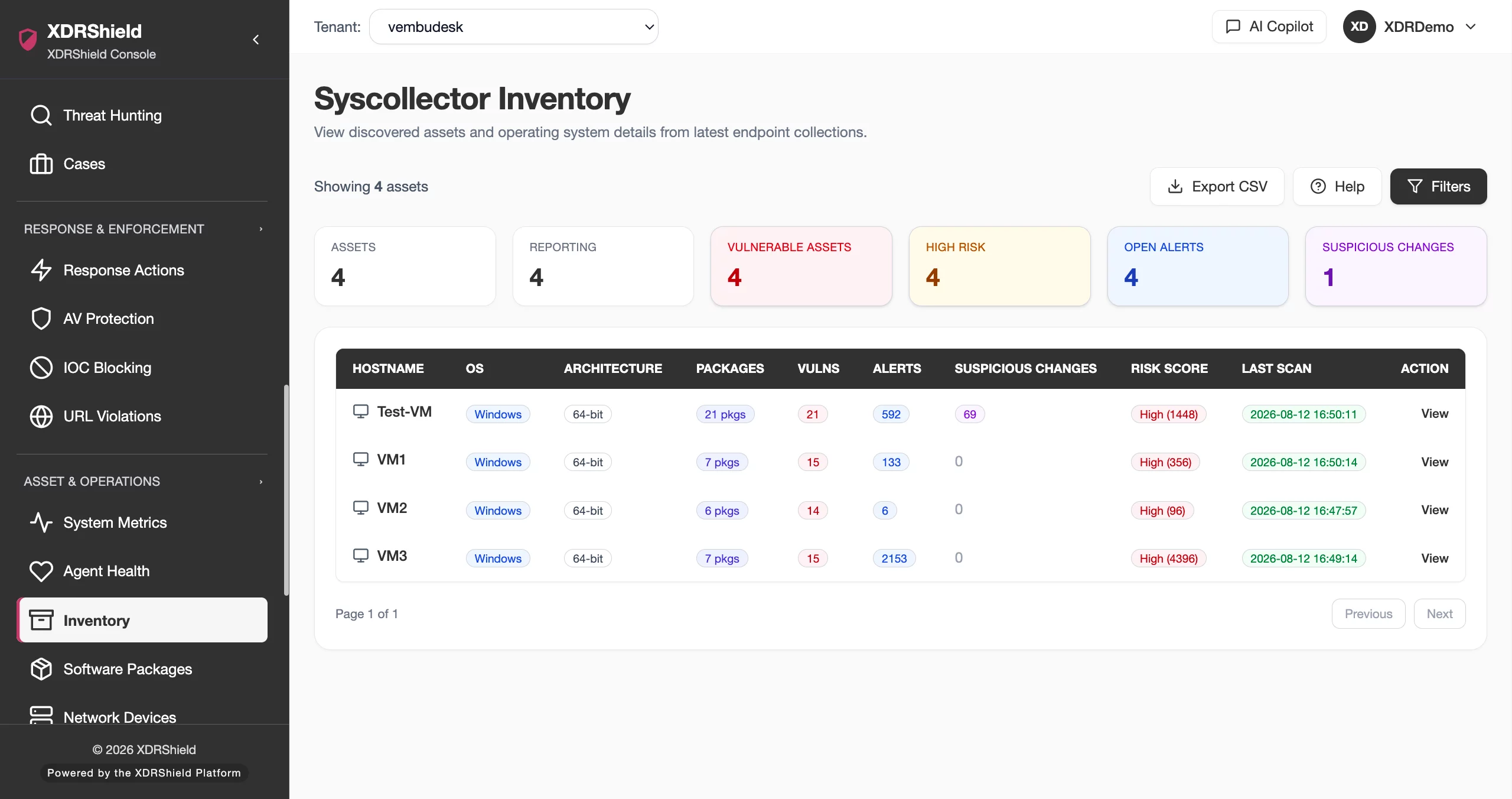
Coverage and health validation
Confirm endpoints are enrolled, reporting, and operational before relying on detection evidence.
File integrity monitoring
Track important file and directory changes that may indicate encryption, tampering, or unauthorized change activity.
Process and command visibility
Review suspicious process execution, command-line context, and related endpoint activity.
IOC monitoring and blocking
Use trusted indicators to monitor, alert, block, kill, or quarantine where supported and appropriate.
Security alert triage
Prioritize ransomware-relevant alerts with endpoint, severity, and related event context.
Governed containment
Use approved response actions with ownership, tenant scope, and audit evidence.
Policy and rule readiness
Standardize ransomware-relevant monitoring and response rules through governed policy assignment.
Operational review evidence
Use audit logs, cases, notifications, and timezone-aware timelines for post-incident review.
From readiness review to incident action.
A repeatable workflow helps teams validate readiness and respond with evidence when suspicious activity appears.
Validate operating readiness
Check agent health, operations health, endpoint coverage, policy sync, and evidence freshness.
Review protective signals
Confirm FIM, process, IOC, AV, URL, metrics, and alert rules are assigned where needed.
Monitor and triage alerts
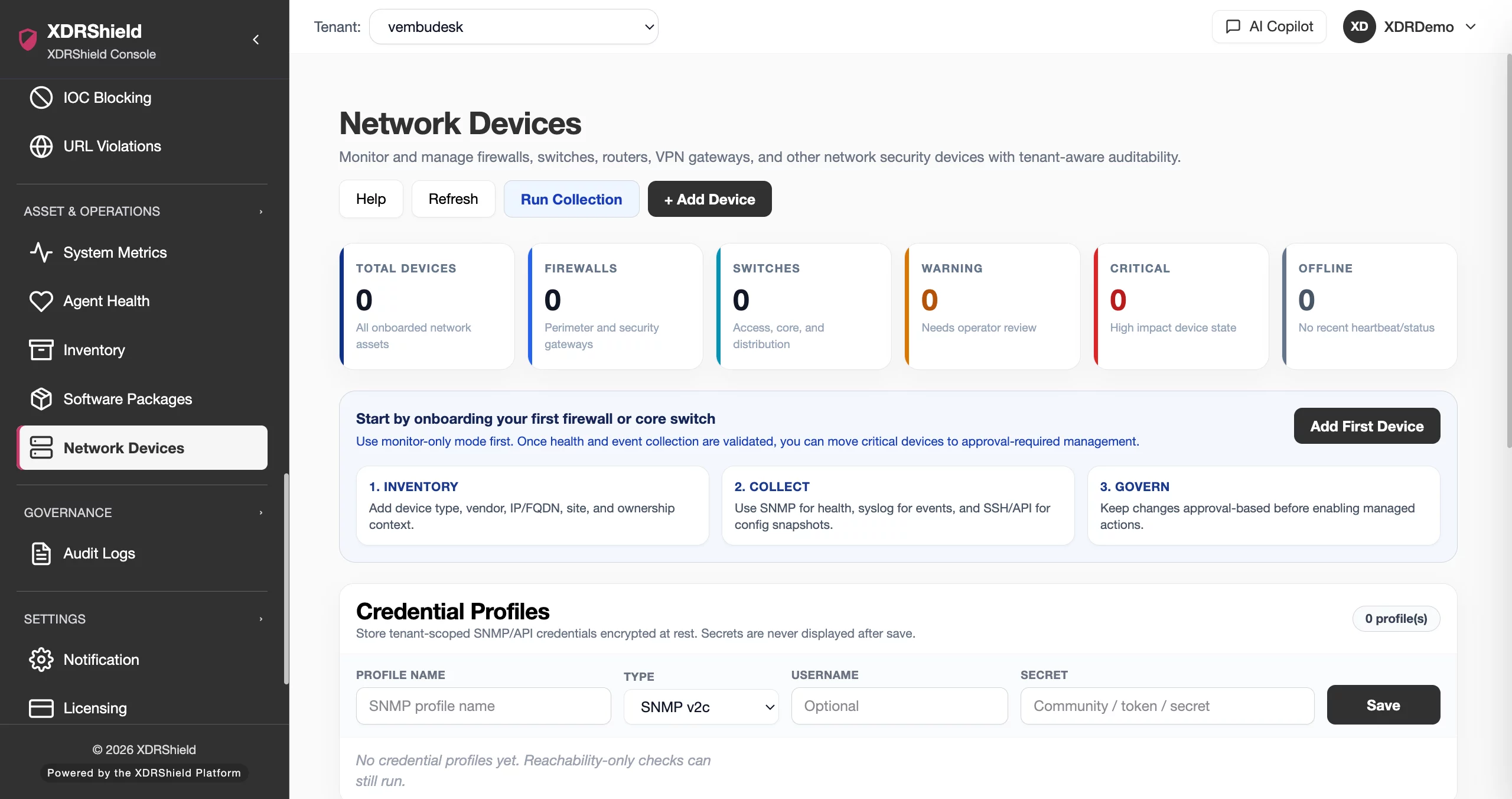
Review alerts and events that indicate suspicious file, process, network, or endpoint behavior.
Investigate scope
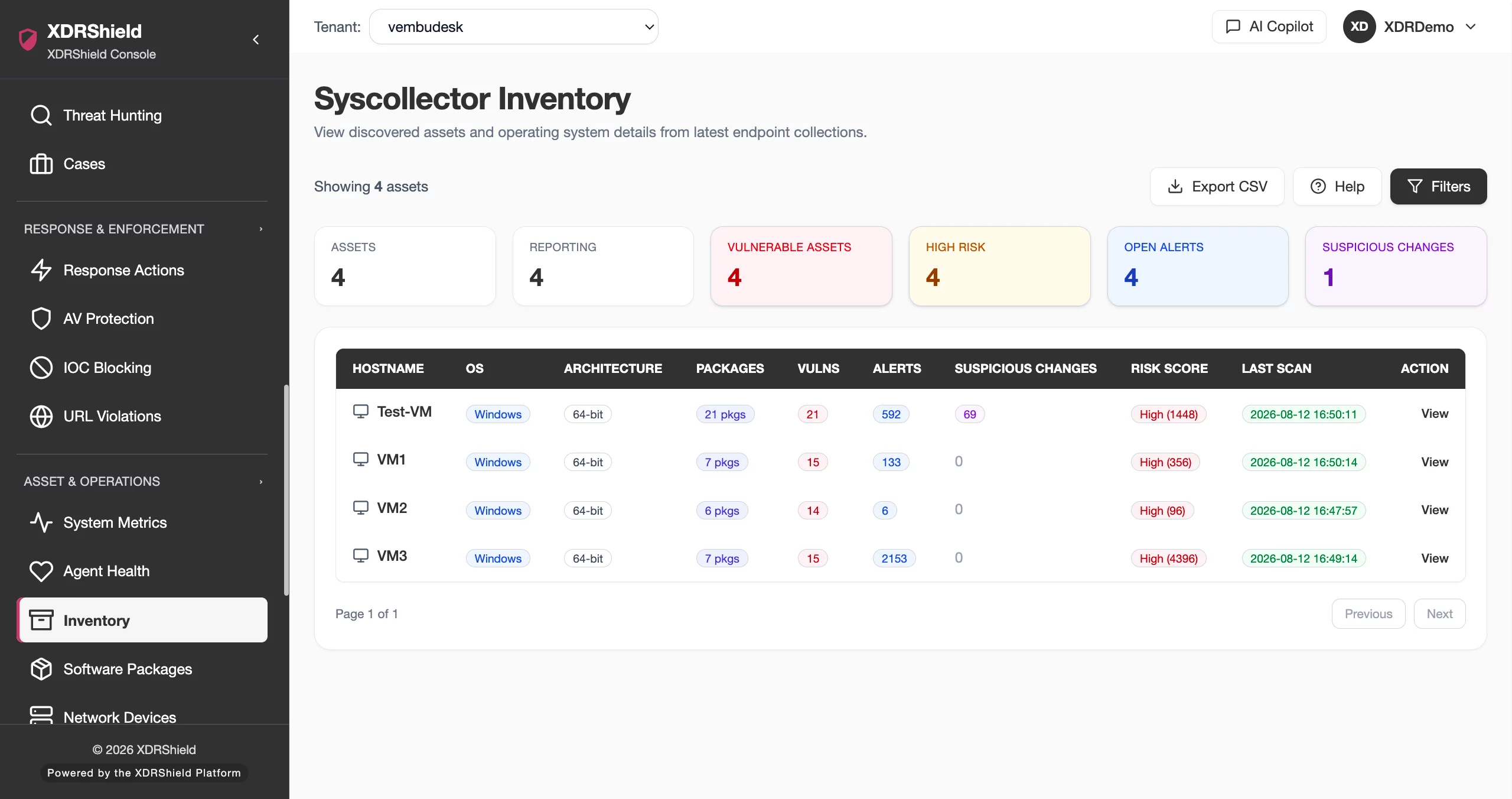
Use hunts, cases, timelines, packages, vulnerabilities, endpoint context, and related evidence.
Take governed action
Use approved response workflows when containment or escalation is required.
Document and improve
Use cases, audit logs, policy updates, and service reviews to improve readiness after findings.
Where ransomware readiness work usually starts.
Use XDRShield when ransomware preparation needs endpoint evidence, not just a written plan.
Readiness assessment
Check whether endpoint evidence, policies, and health signals are ready before an incident.
Early warning triage
Review suspicious alerts involving files, processes, IOCs, AV posture, or metrics.
Incident scoping
Find affected endpoints and related activity during suspected ransomware behavior.
Control rollout
Assign FIM, process, IOC, URL, AV, and alert rules through policies.
Audit and after-action review
Preserve case, audit, timeline, and response evidence for review.
MSP customer readiness
Validate customer-specific readiness without mixing tenant evidence.
Separate readiness signals from response actions.
This table helps teams understand where each XDRShield workflow fits in ransomware readiness.
| Area | What it means | How teams use it |
|---|---|---|
| Readiness baseline | Agent Health, Operations Health, Dashboard, Policy Management | Use to confirm coverage, sync, freshness, and operational state. |
| Suspicious activity evidence | FIM, Process Monitoring, IOC Blocking, Security Alerts, Events | Use to surface possible ransomware-like behavior and supporting details. |
| Investigation and scoping | Threat Hunting, Cases, Installed Packages, Vulnerabilities | Use to understand affected systems, timelines, and related risk. |
| Response and review | Governed Response, Audit Logs, Notifications, User Management | Use to authorize action, preserve accountability, and improve the workflow. |
Ransomware readiness for security and service teams.
Use these paths to connect readiness planning with the detailed workflows that support it.
For incident responders
Use this path when suspicious activity needs investigation, scoping, and controlled response.
- Triage alerts and events first.
- Move important findings into cases.
- Use governed response for approved containment.
For readiness owners
Use this path when preparing endpoint coverage, policies, and operational evidence before an incident.
- Validate health and policy sync.
- Review file, process, IOC, AV, and URL controls.
- Use audit logs and cases for readiness review.
Ransomware readiness FAQs.
What does ransomware readiness mean in XDRShield?
It means validating endpoint coverage, monitoring rules, alert triage, investigation workflows, governed response, and audit evidence before ransomware-like activity creates operational disruption.
Does XDRShield guarantee ransomware prevention?
No. The page does not claim guaranteed prevention. XDRShield supports readiness by improving endpoint visibility, detection evidence, investigation speed, and response governance.
Which XDRShield features support ransomware readiness?
Relevant workflows include agent health, operations health, FIM, process monitoring, IOC blocking, security alerts, threat hunting, cases, governed response, vulnerabilities, and audit logs.
How can teams validate readiness before an incident?
Teams should check endpoint health, policy sync, assigned rules, alert routing, case workflow, response authorization, audit logs, and reporting evidence.
How does XDRShield help during suspected ransomware activity?
Teams can triage alerts, review events, hunt across endpoint evidence, open cases, scope affected systems, and use governed response actions where approved.
How does this help MSPs?
MSPs can review ransomware readiness by tenant or customer scope, preserve customer-separated evidence, and support service reviews without mixing environments.
Use endpoint health, suspicious-activity monitoring, investigation workflows, and governed response to prepare before disruption starts.
XDRShield helps teams turn ransomware readiness into a practical, reviewable security operation.