Keep endpoint security evidence ready for audits, reviews, and governance.
XDRShield helps teams organize endpoint health, access activity, policy changes, vulnerability context, cases, response records, and operational evidence so compliance and audit conversations are supported by clear, reviewable security data.
Audit readiness improves when evidence is produced by daily operations, not assembled at the last minute.
Compliance and security reviews often ask simple questions that are difficult to answer without connected evidence: who changed access, which endpoints were covered, what alerts were reviewed, what vulnerabilities remained, which policies were applied, and what action was taken. XDRShield helps keep that evidence tied to real workflows.
A governance model built from operational evidence.
XDRShield does not replace formal compliance programs, auditors, or legal guidance. It supports readiness by helping teams keep security operations documented: endpoint status, policy scope, alerts, cases, vulnerabilities, user access, response actions, tenant boundaries, timestamps, and activity history.
- Audit logs and user management help review administrative changes and access-sensitive activity.
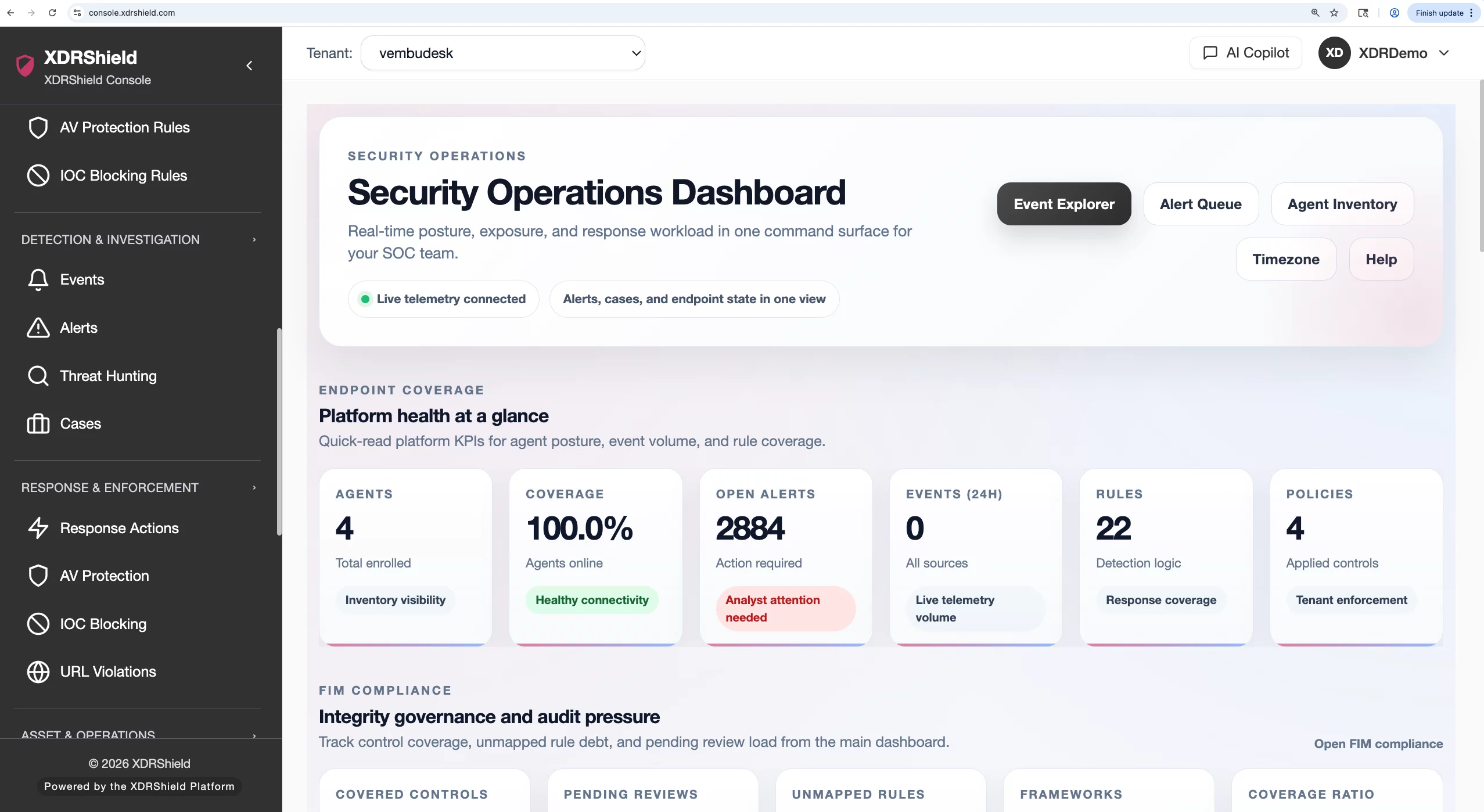
- Dashboards, agent health, operations health, and policy management show whether controls and endpoint workflows are operating as intended.
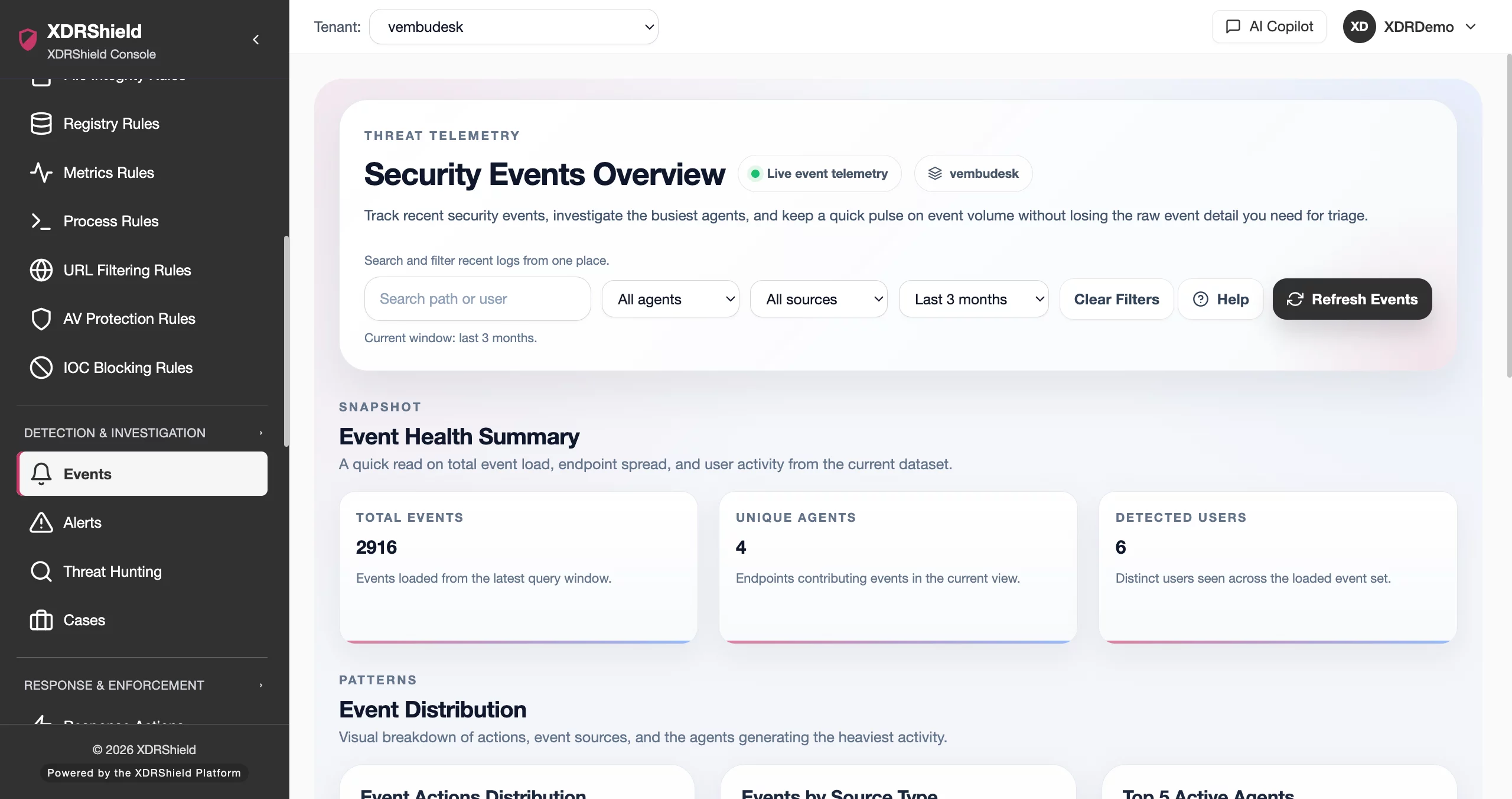
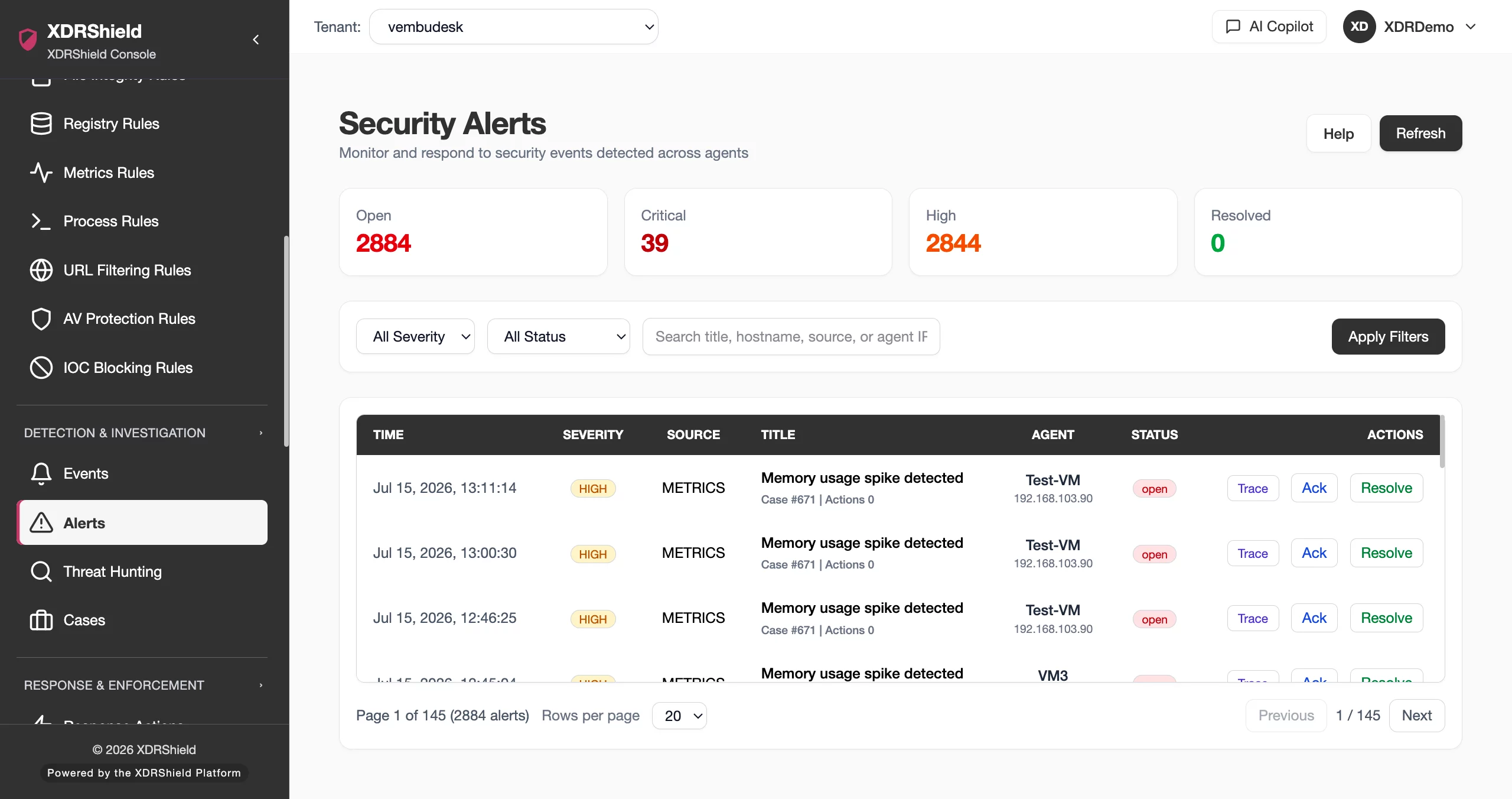
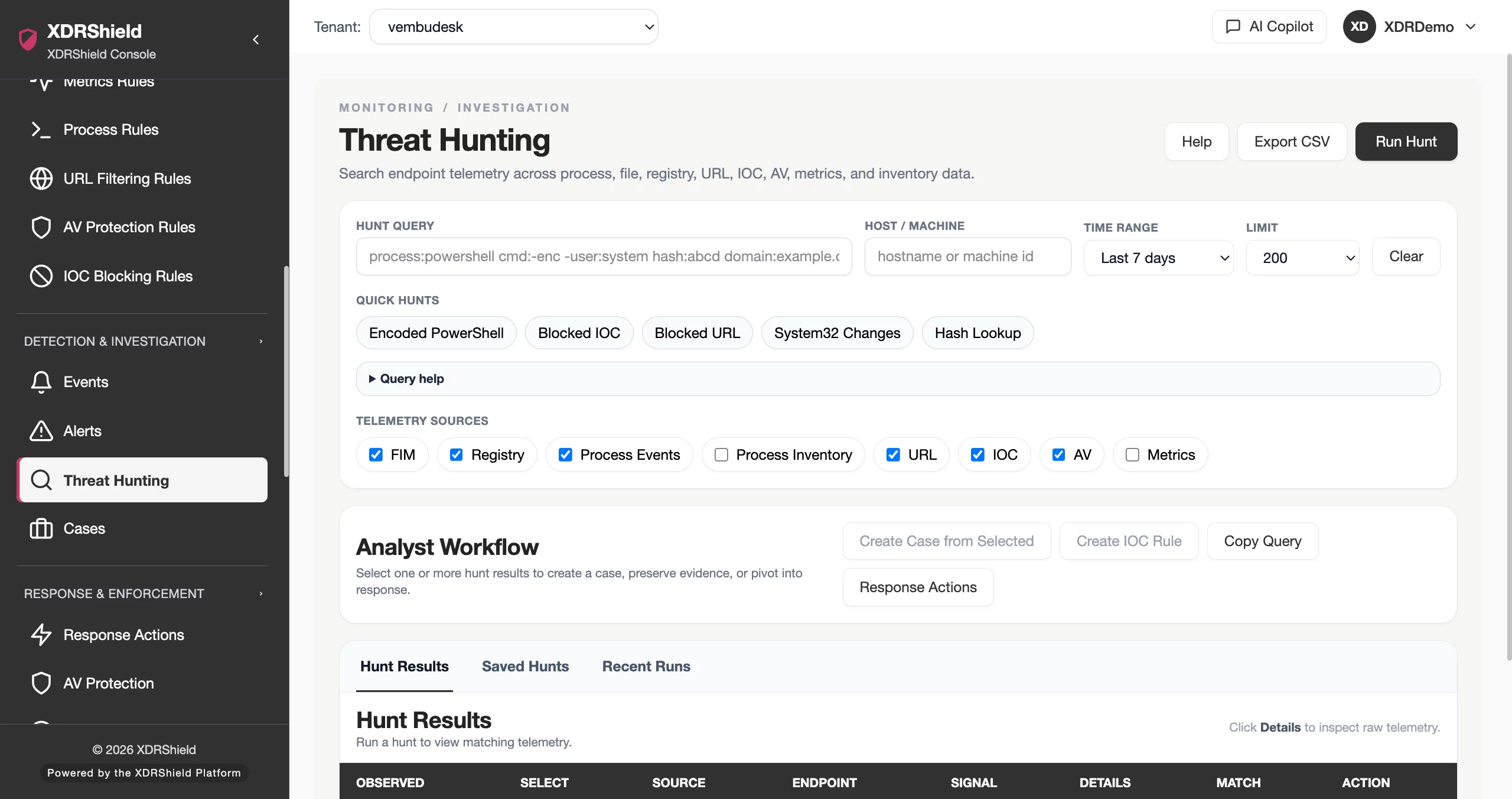
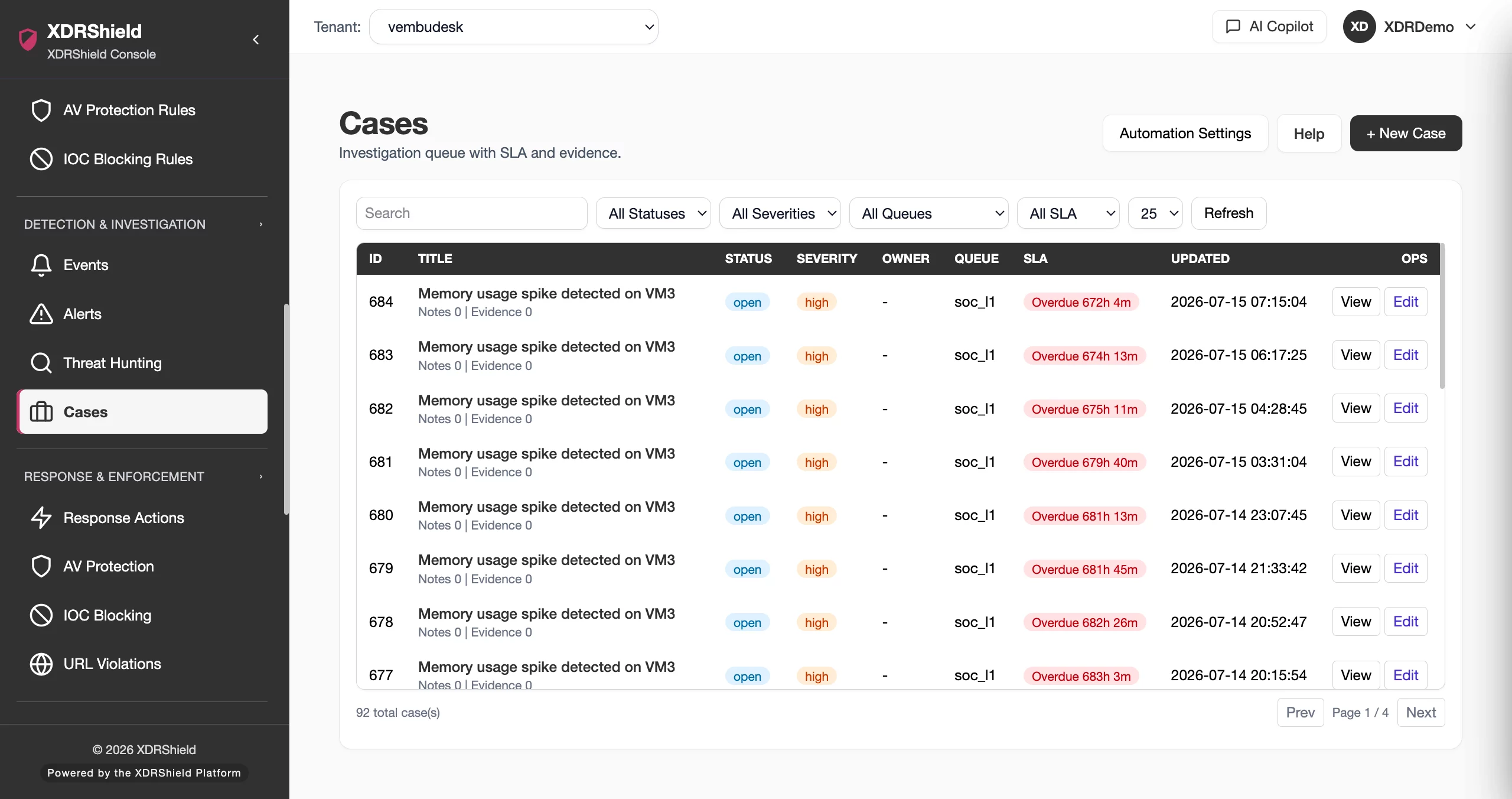
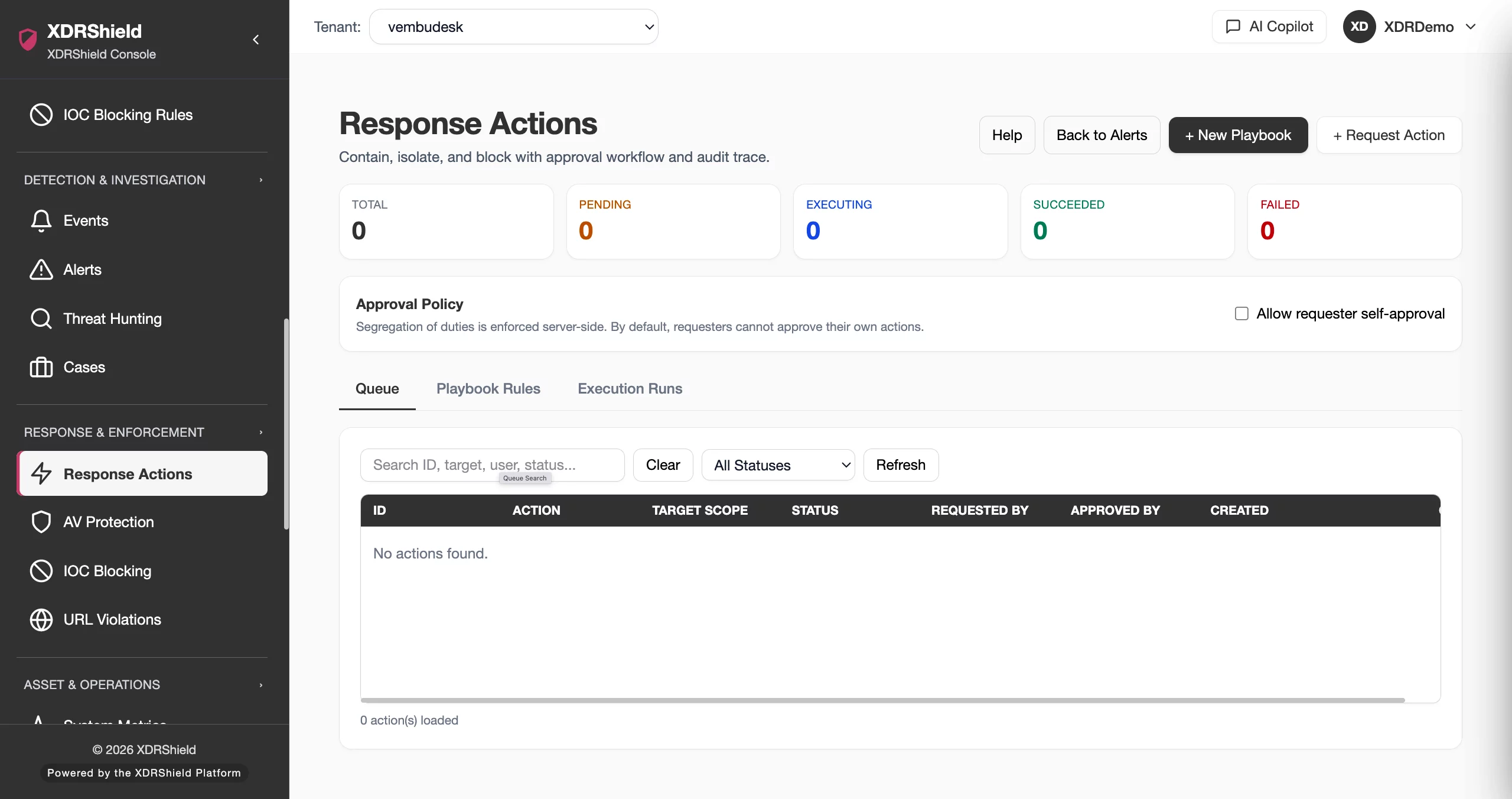
- Security alerts, cases, threat hunting, and governed response create reviewable records around suspicious activity and decisions.
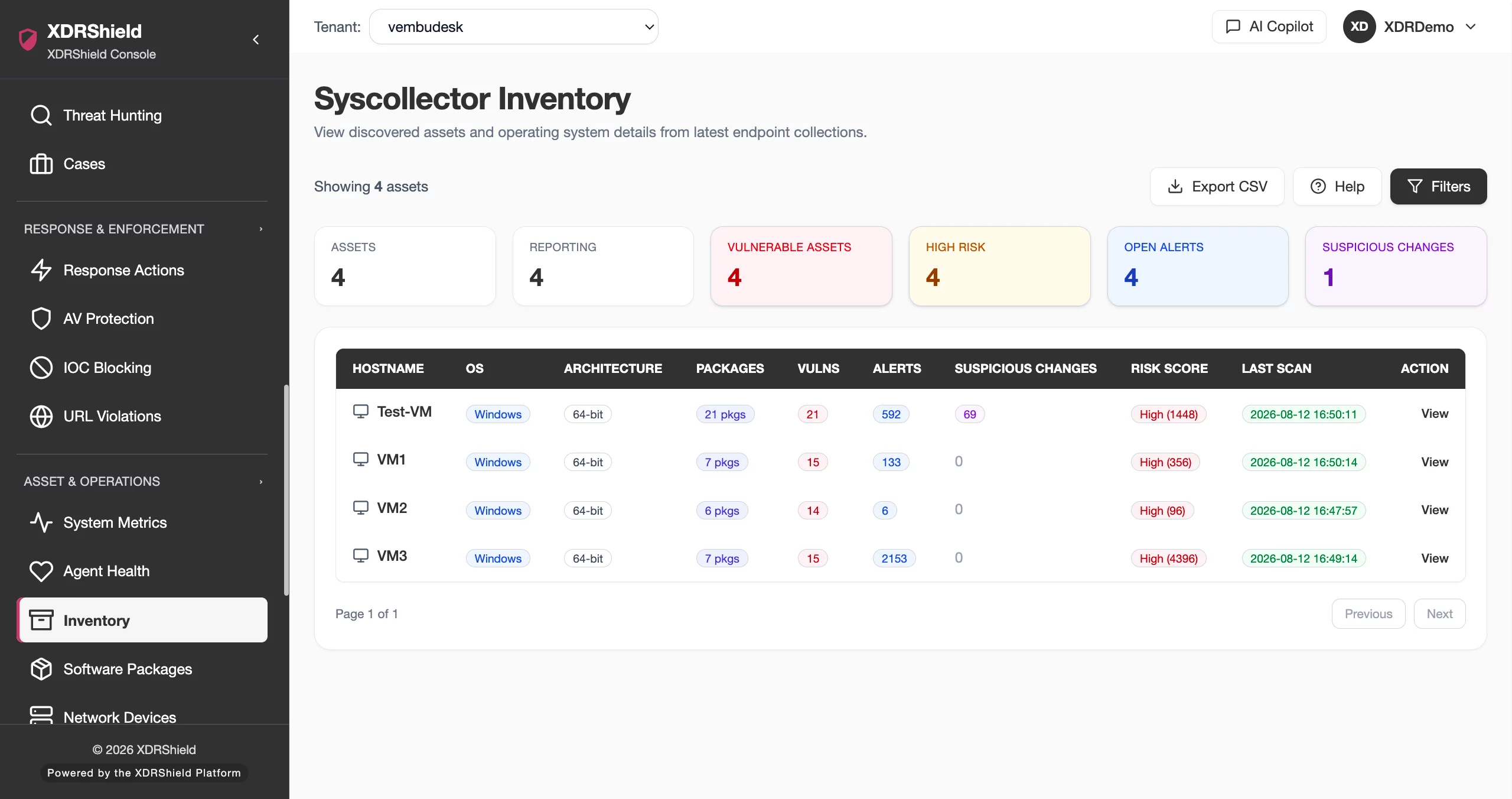
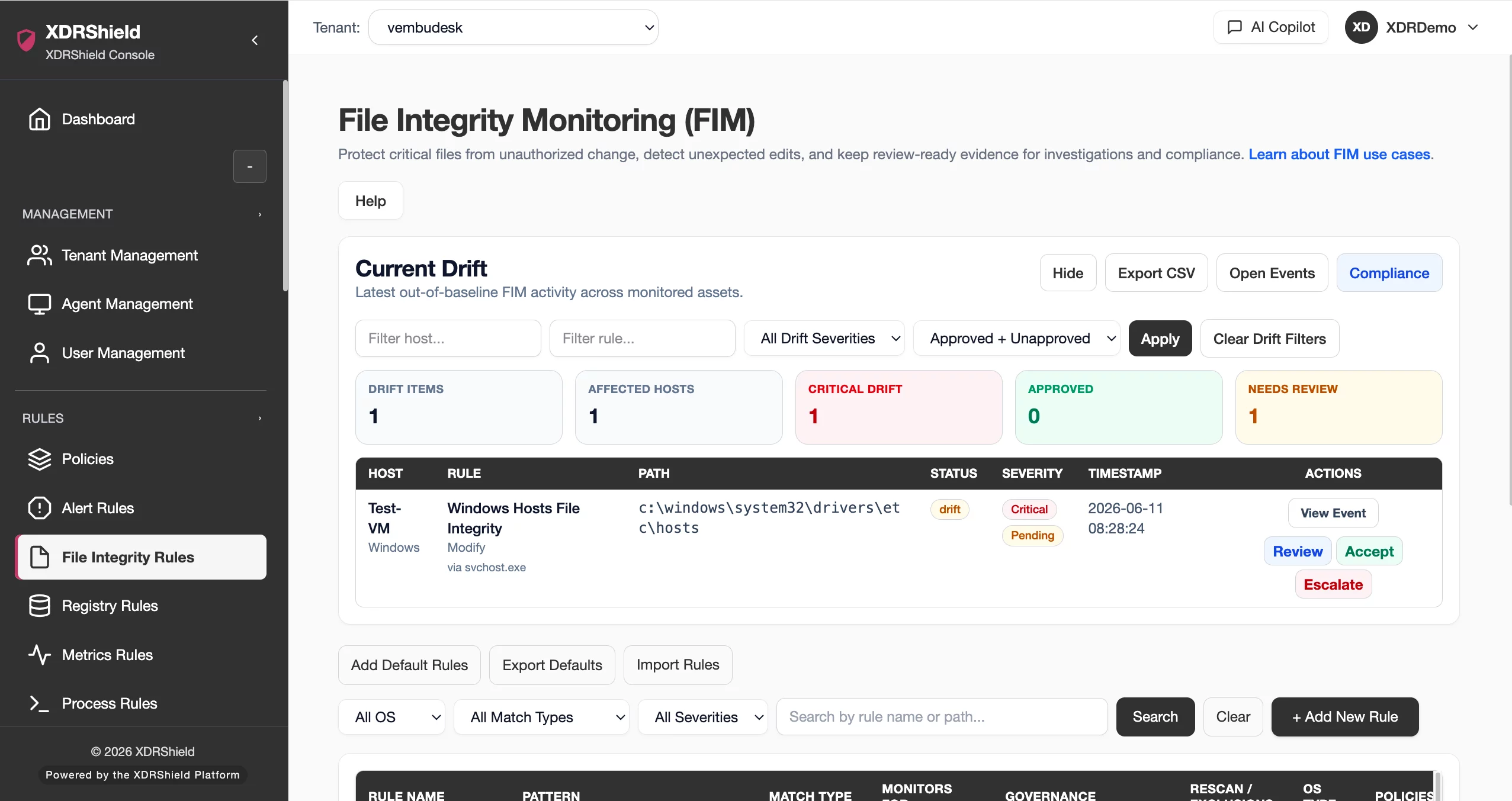
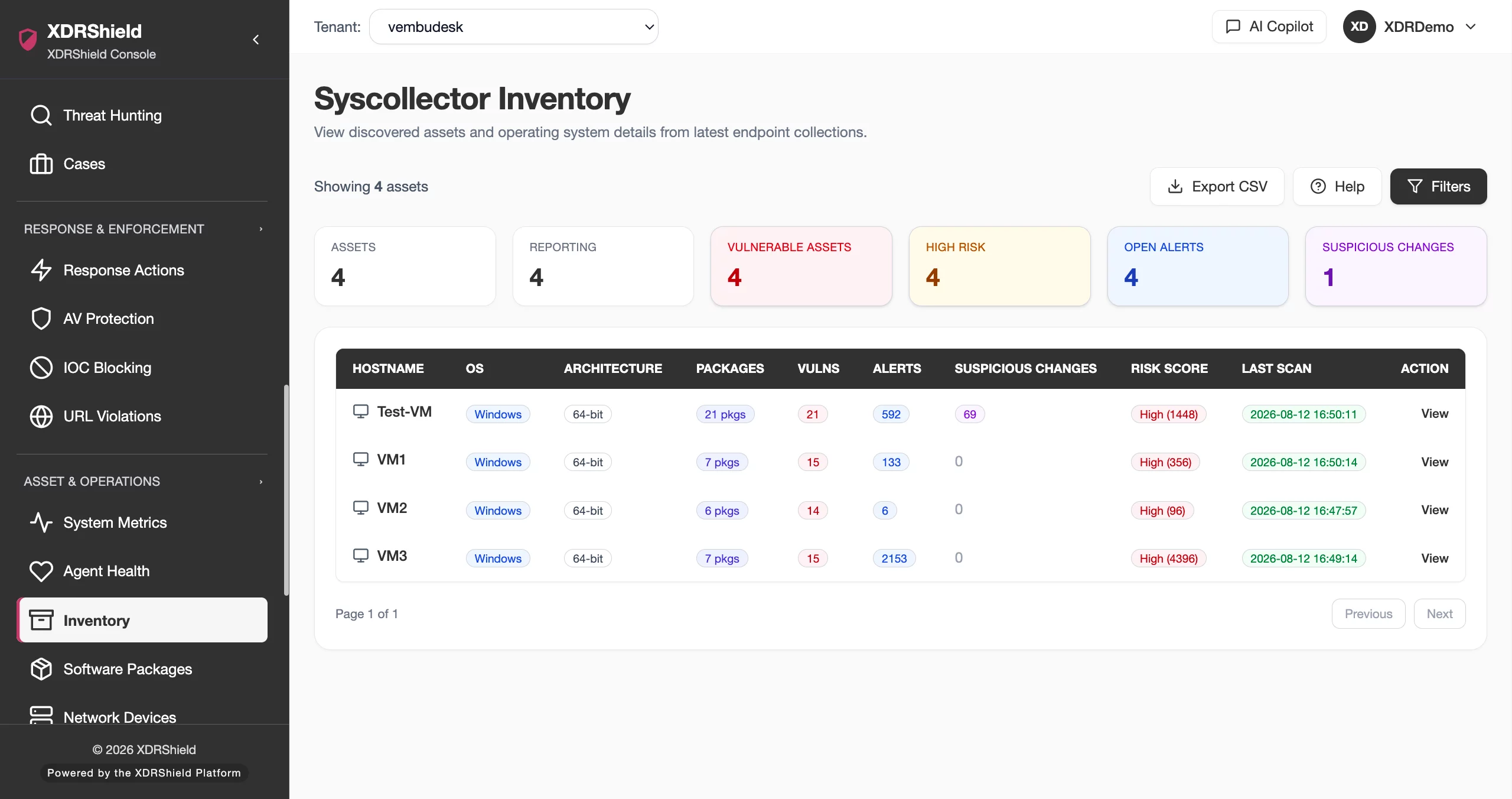
- Vulnerabilities, installed packages, FIM, process, and IOC evidence support risk and change review.
What XDRShield helps teams prepare for audits and reviews.
These workflows help turn endpoint security operations into evidence that can be reviewed and explained.
Audit logs and activity history
Review administrative changes, policy updates, access-sensitive actions, and operational activity.
User and access governance
Manage roles, permissions, tenant scope, and lifecycle evidence for administrator and analyst access.
Policy and rule accountability
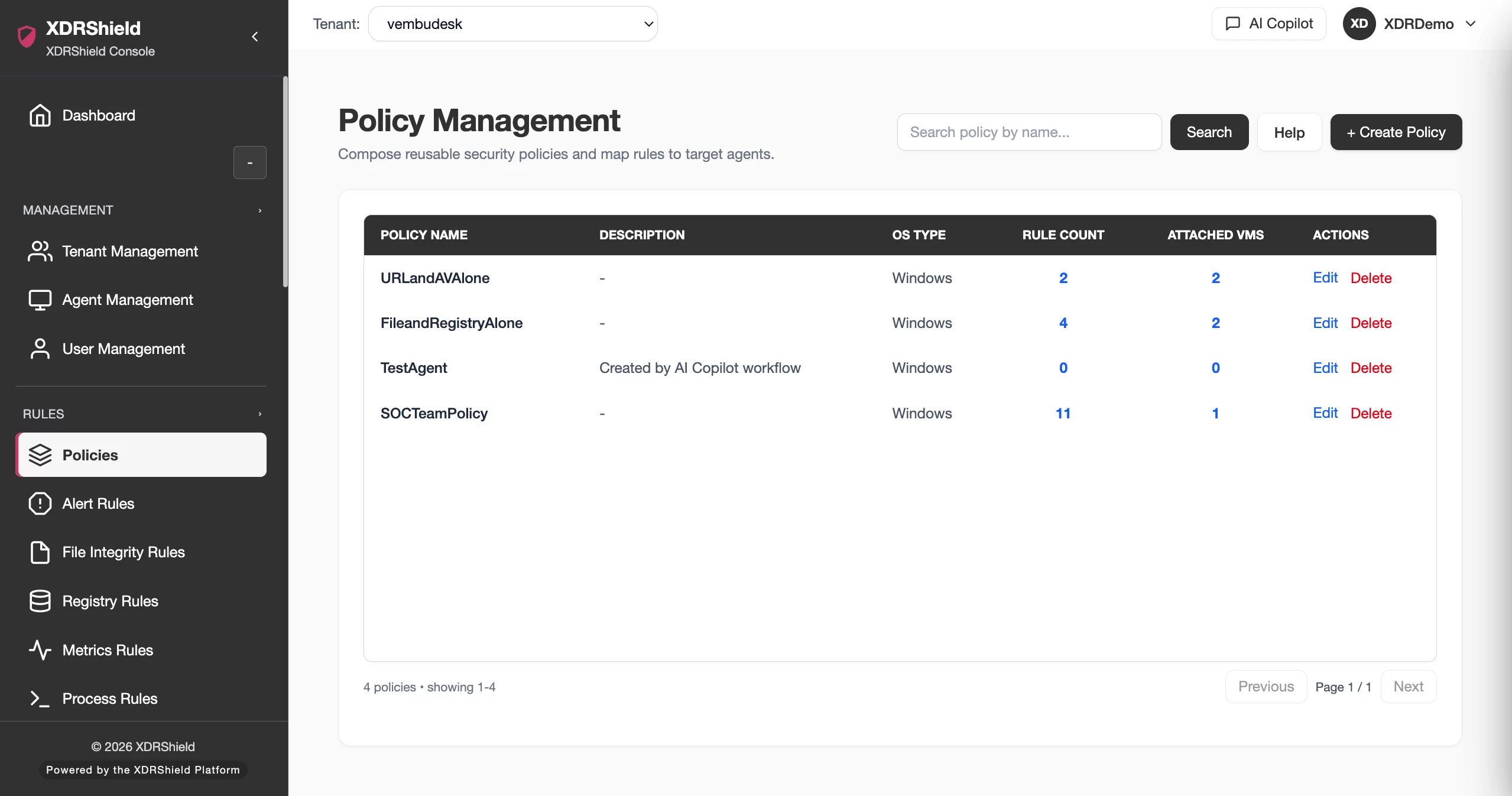
Show which policies and monitoring rules were configured, assigned, and changed.
Endpoint and operations health
Validate whether agents, operations, dashboards, and evidence freshness support review conclusions.
Alert and case evidence
Preserve security alert review, investigation decisions, and case timelines for later explanation.
Threat hunting and investigation records
Use hunts and cases to document scope, findings, and follow-up for suspicious activity.
Timezone and reporting consistency
Keep review windows, timestamps, and service reporting aligned with business context.
Tenant and customer separation
Support tenant-scoped evidence for MSP and multi-organization review workflows.
From control question to reviewable evidence.
A repeatable audit-readiness workflow keeps evidence tied to operations rather than one-off screenshots.
Define the review question
Clarify whether the request is about access, endpoint coverage, policy, alerts, vulnerabilities, response, or customer scope.
Select the correct scope
Choose tenant, customer, endpoint group, time window, user, policy, or case context.
Collect operational evidence
Use dashboards, audit logs, cases, policies, health, vulnerabilities, and reports as appropriate.
Validate freshness and ownership
Check timestamps, timezone, agent health, user access, and responsible owner before sharing conclusions.
Document findings
Use cases, exports, summaries, or service review notes that avoid exposing credentials or sensitive data unnecessarily.
Improve controls
Use review findings to tune policies, notifications, access, vulnerability remediation, or response workflows.
Where compliance and audit readiness helps most.
Use XDRShield when review requests need operational security evidence, not just policy language.
Administrative activity review
Show who changed users, policies, rules, settings, or response-related workflows.
Endpoint coverage evidence
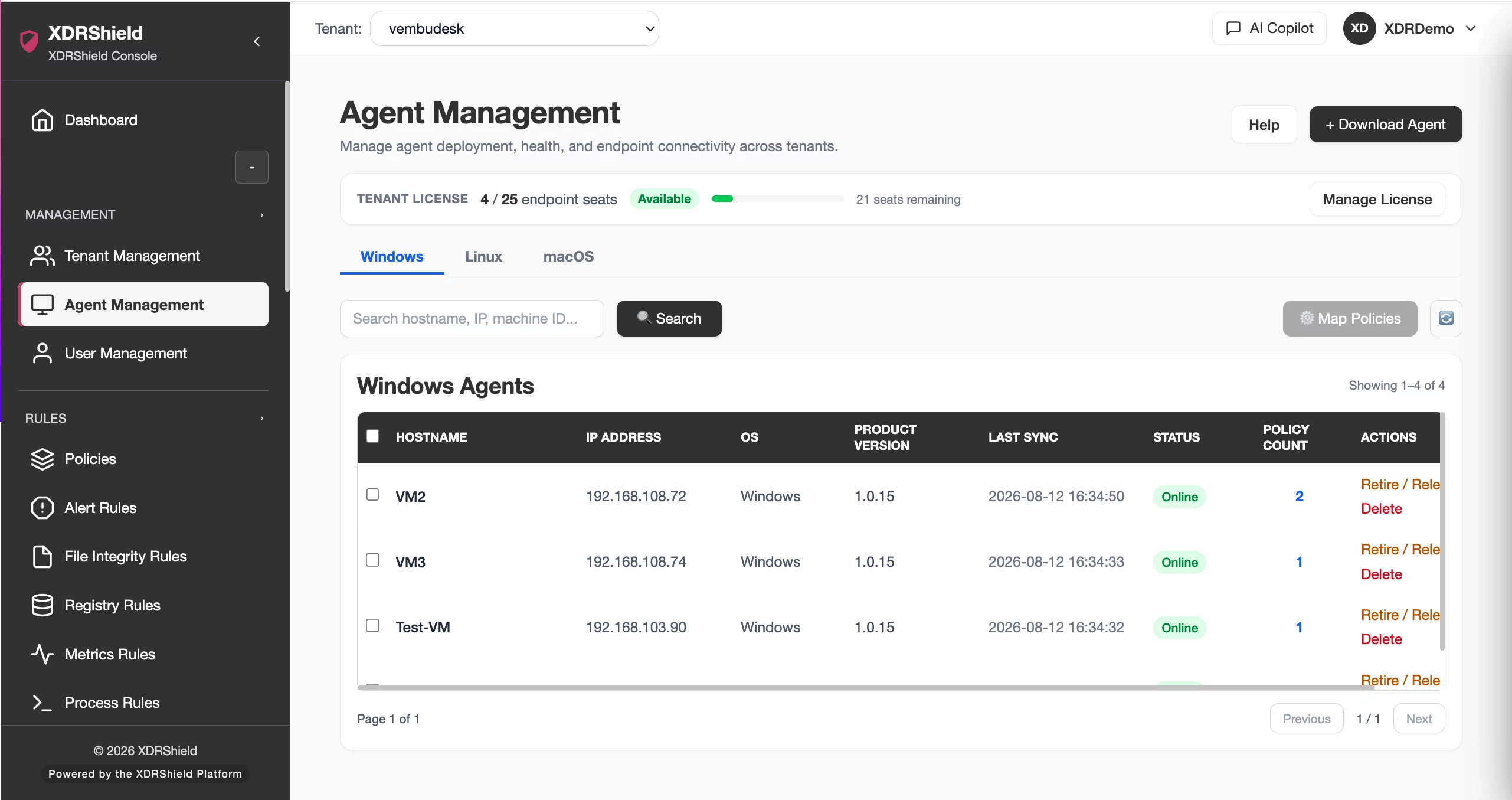
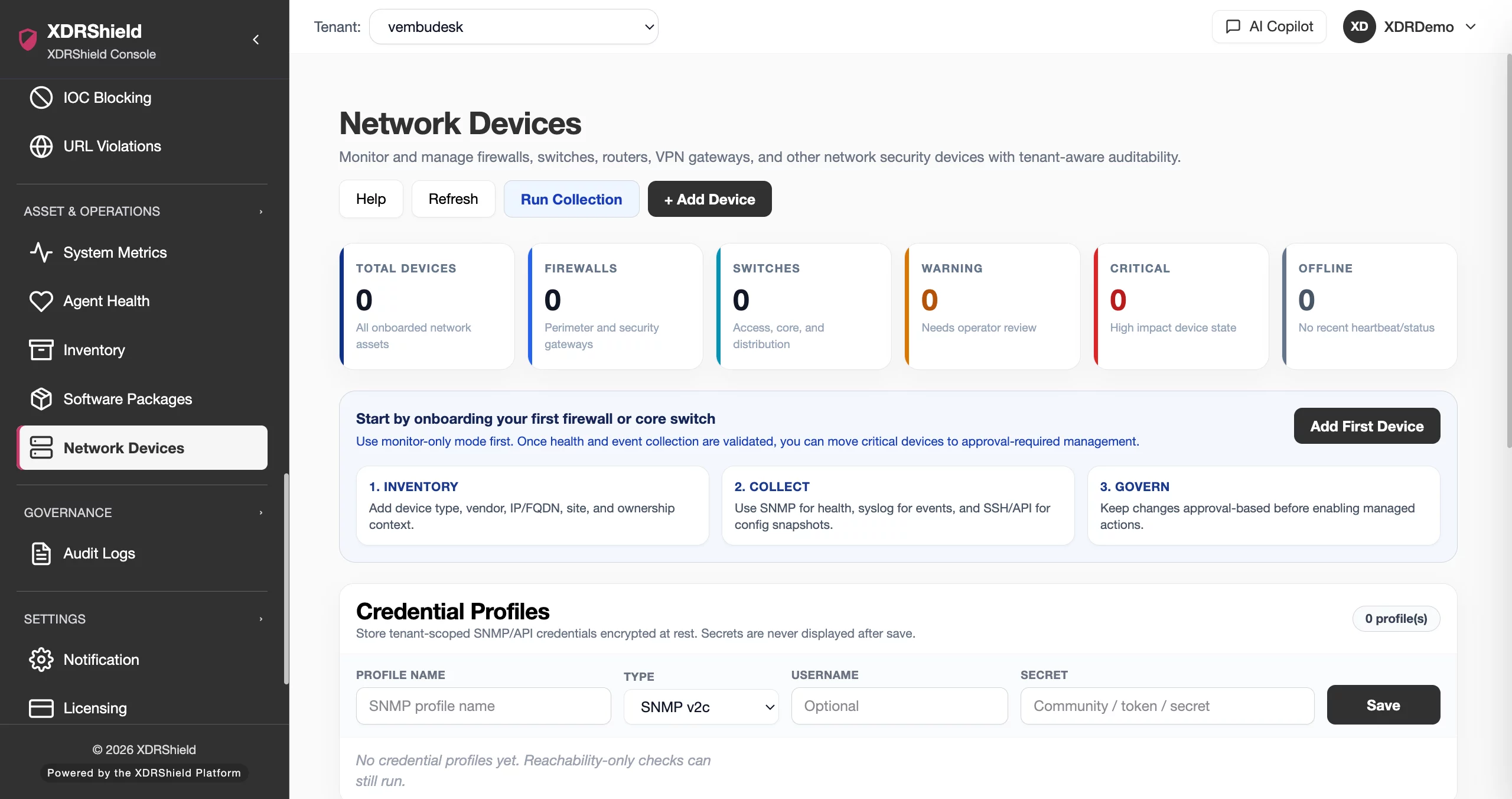
Validate health, inventory, policy assignment, and operational readiness.
Incident and alert review
Explain alerts reviewed, cases opened, actions taken, and evidence preserved.
Access and role governance
Review users, roles, tenant scope, and sensitive permissions.
Vulnerability and risk review
Use vulnerabilities, packages, and remediation evidence to support risk discussions.
Customer audit support
Prepare tenant-specific evidence for MSP/customer service reviews.
Map common audit questions to XDRShield evidence sources.
This table helps teams find the right evidence without overloading reviewers with unrelated data.
| Area | What it means | How teams use it |
|---|---|---|
| Who changed what? | Audit Logs, User Management, Policy Management | Use for administrative changes, access updates, policy/rule changes, and accountability. |
| Are endpoints covered? | Dashboard, Agent Health, Operations Health, Installed Packages | Use for coverage, freshness, health, and inventory evidence. |
| Were alerts investigated? | Security Alerts, Security Events, Cases, Threat Hunting | Use for triage, scope, timelines, decisions, and follow-up. |
| Was risk reduced? | Vulnerabilities, Software Deployment, Governed Response, Audit Logs | Use for remediation planning, response actions, and evidence of change. |
Compliance and audit readiness for security and service teams.
Use these paths when governance, audit, or customer review needs operational proof.
For governance owners
Use this path when review requests require activity history, access evidence, policy records, and documented decisions.
- Start with the exact review question.
- Use audit logs and cases for accountability.
- Validate time window and tenant scope before reporting.
For security operators
Use this path when audit readiness depends on real endpoint security work.
- Validate endpoint health and policy assignment.
- Connect alerts and cases to evidence.
- Use vulnerabilities and response records for risk reduction context.
Compliance and audit readiness FAQs.
What does compliance and audit readiness mean in XDRShield?
It means using XDRShield operational records to support reviews of endpoint coverage, access, policy changes, alerts, cases, vulnerabilities, response actions, and tenant-scoped evidence.
Does XDRShield provide compliance certification?
No. XDRShield supports evidence collection and review workflows, but it does not replace formal compliance programs, auditors, legal guidance, or certification processes.
Which evidence sources are most useful for audits?
Audit logs, user management, policy management, dashboards, agent health, operations health, cases, vulnerabilities, and response records are commonly useful evidence sources.
How should teams prepare evidence for review?
Start with the review question, select the correct tenant/time scope, validate freshness, gather only relevant evidence, and avoid exposing secrets or unnecessary sensitive data.
How does this support MSPs?
MSPs can prepare customer-specific evidence using tenant boundaries, customer context, audit logs, dashboards, cases, and service review workflows.
Can audit findings improve security operations?
Yes. Review findings can guide policy tuning, access cleanup, notification routing, vulnerability remediation, and response workflow improvements.
Use daily endpoint operations to support audit, governance, and customer review with clearer evidence and less last-minute effort.
XDRShield helps teams make security operations easier to verify, explain, and improve.