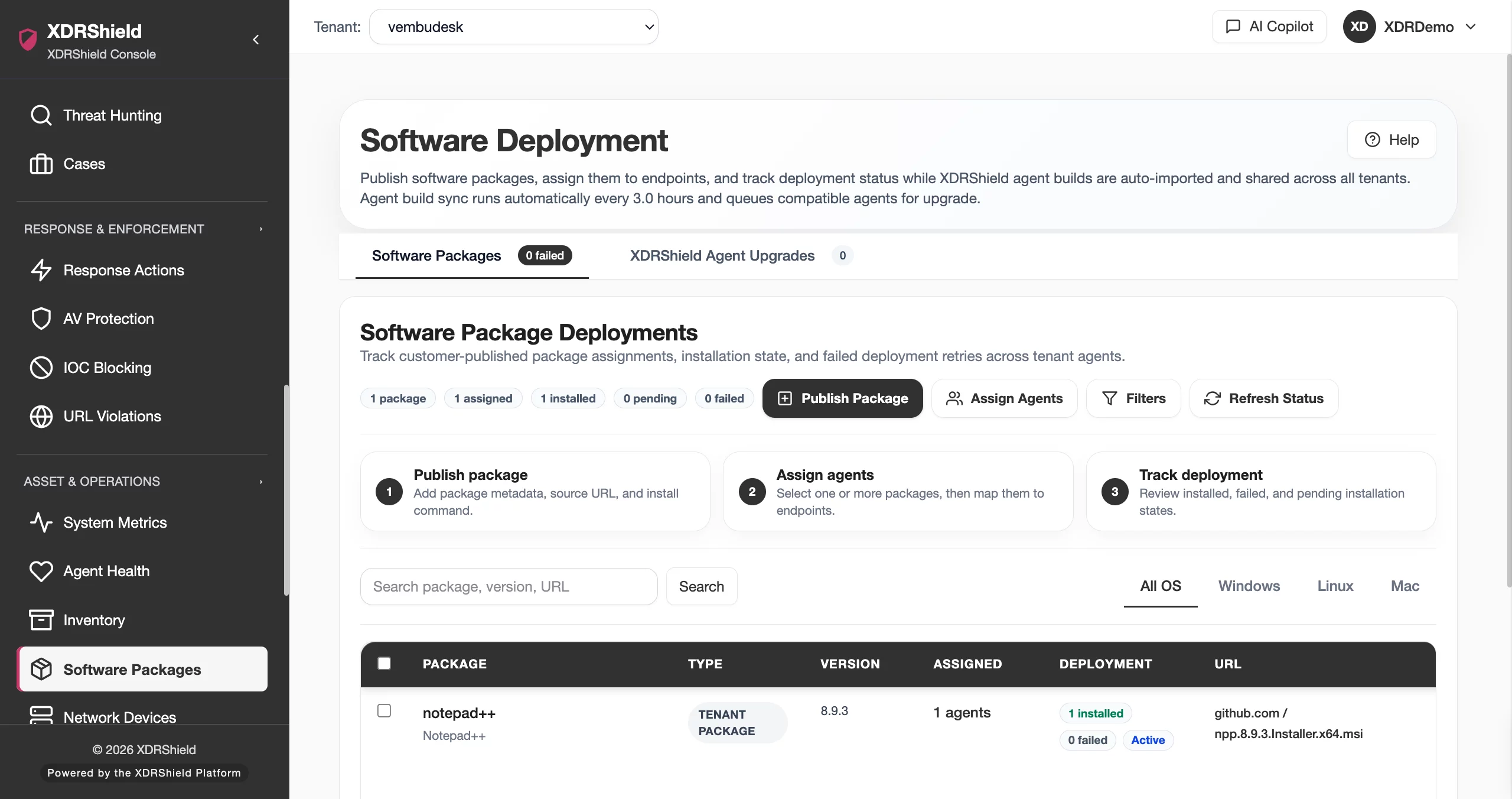
Multi-tenant endpoint security for MSPs
XDRShield helps managed service providers monitor customer endpoints, triage alerts, manage policies, investigate cases, and maintain tenant-separated evidence without turning every customer environment into a separate operational island.
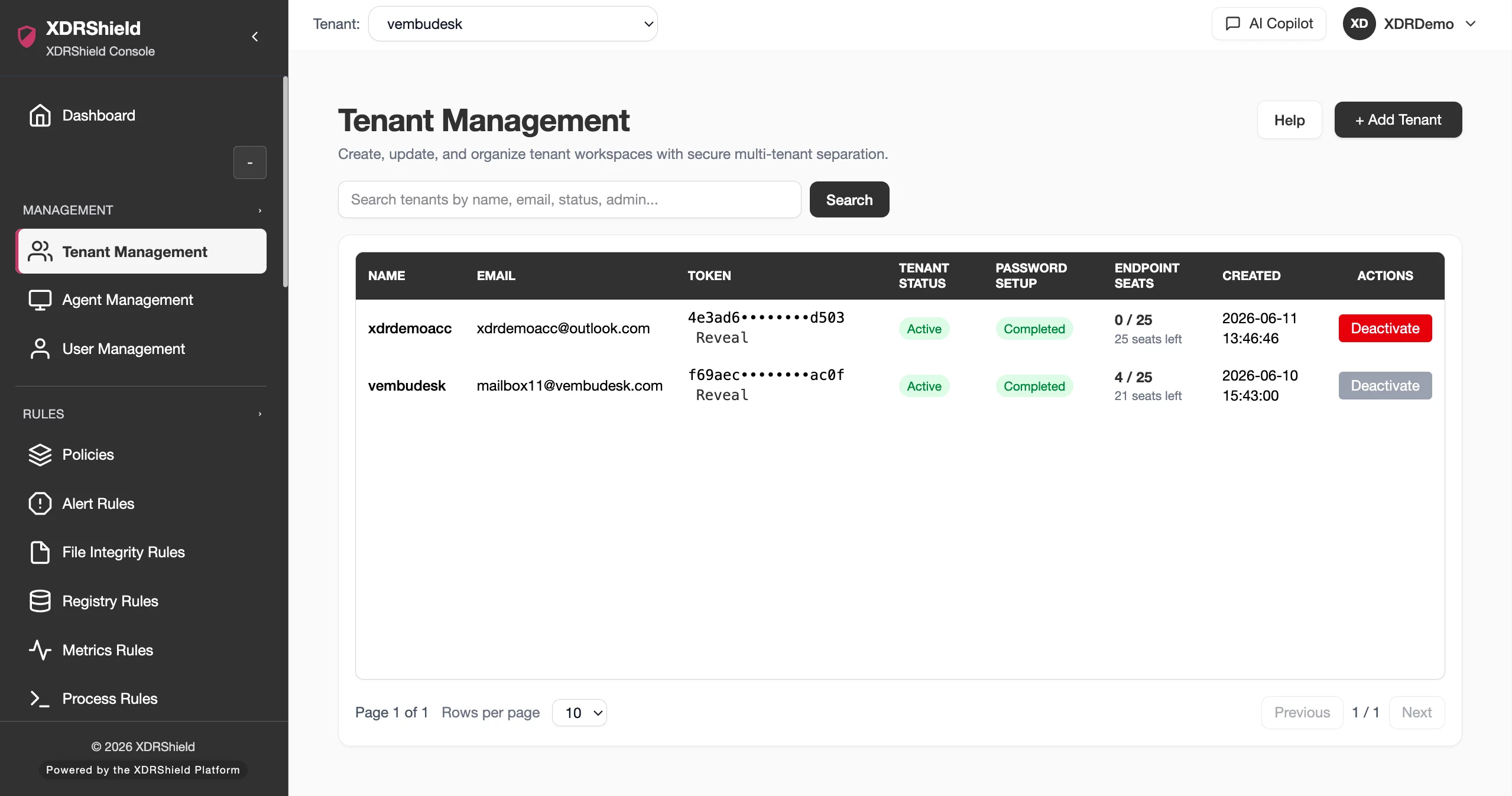
MSPs need security operations that scale without mixing customer context.
Service providers must move quickly across many customer environments while preserving strict separation, repeatable workflows, and evidence that can be explained during service reviews. XDRShield is built around tenant-aware security operations so teams can reduce risk, manage workload, and keep customer trust intact.
A service-provider operating model for endpoint security.
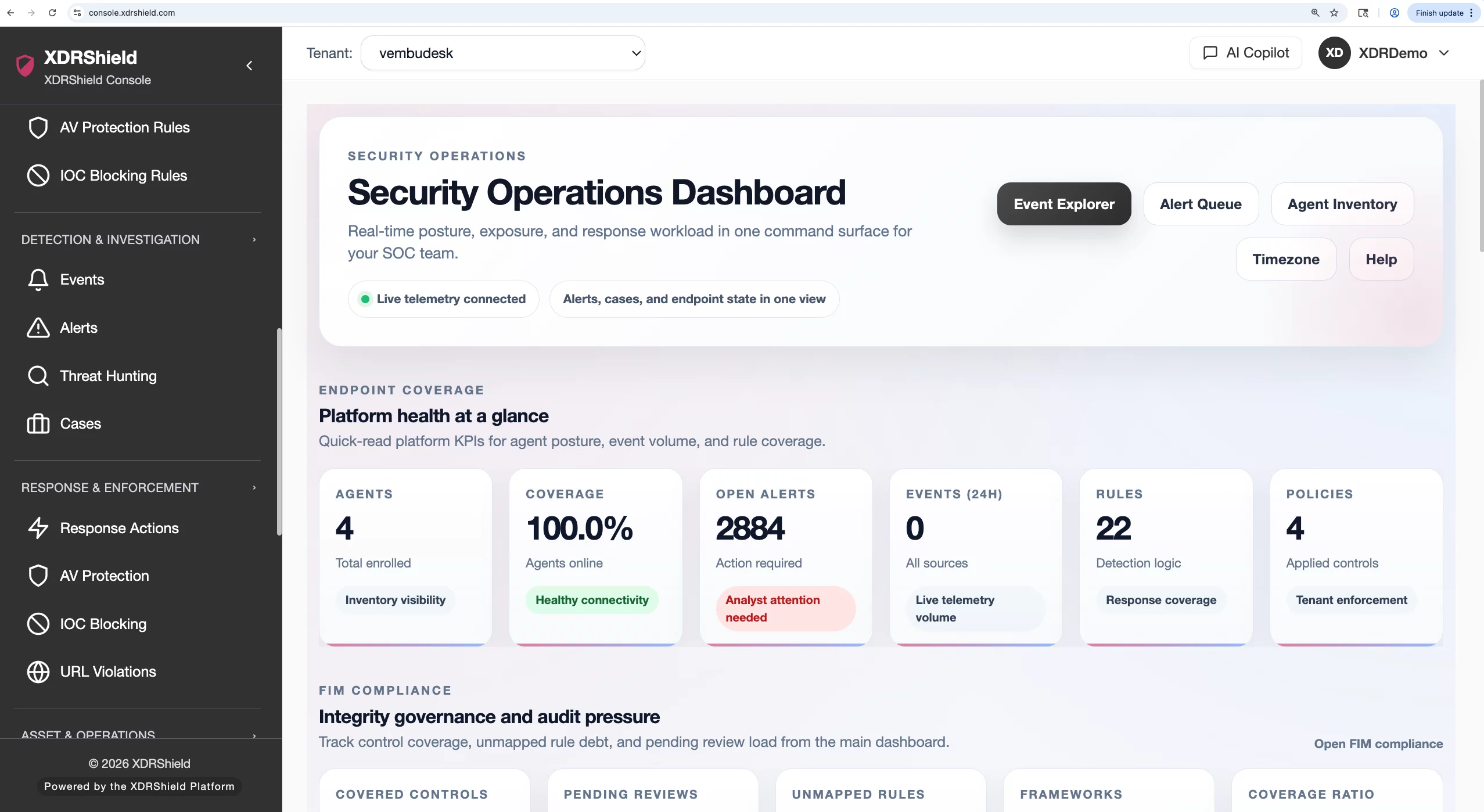
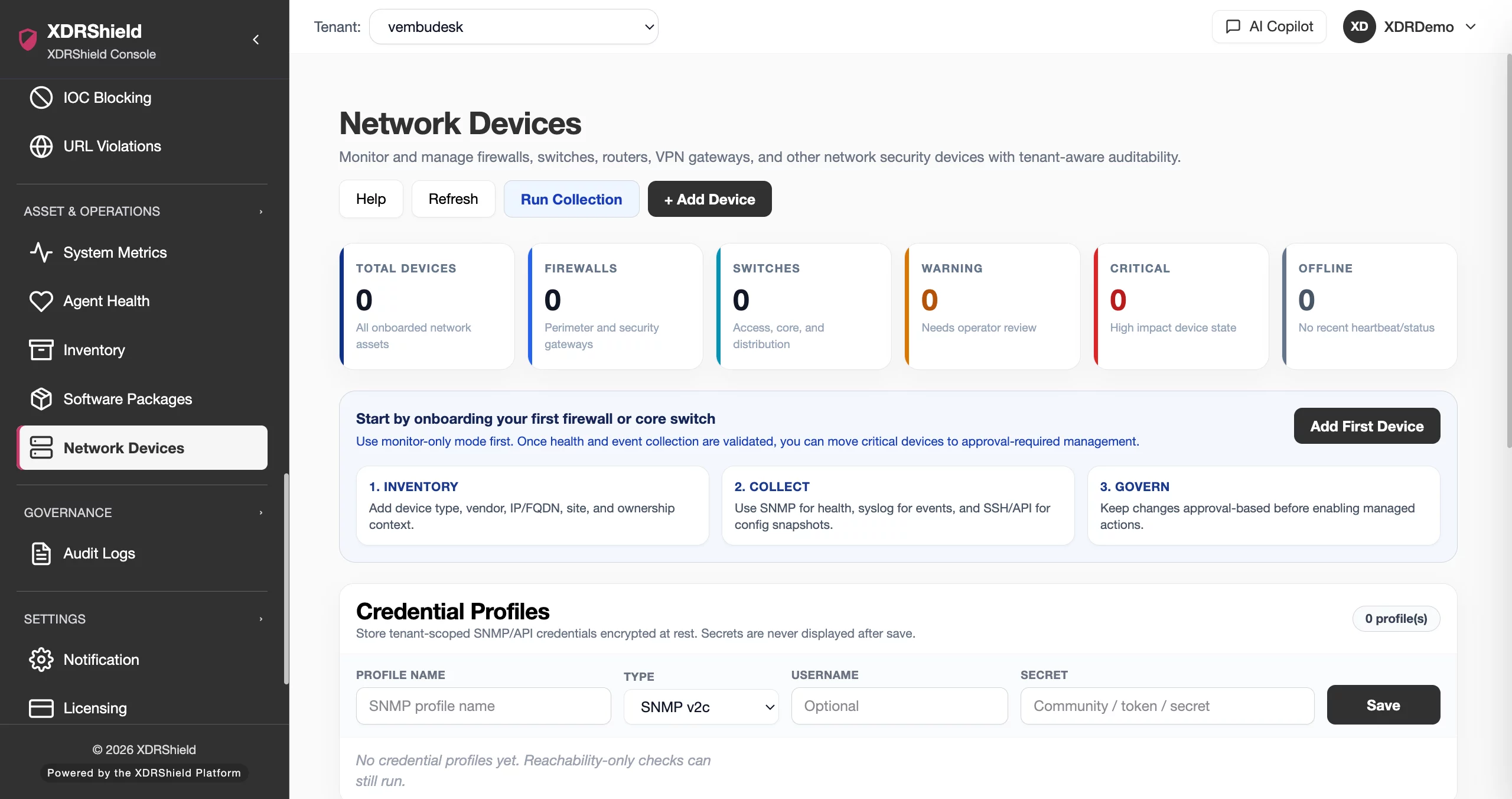
For MSP teams, XDRShield should act as the operational layer between customer environments, endpoint telemetry, analyst workflows, and service governance. The platform brings together tenant management, agent health, alert triage, policy control, investigation, response, vulnerability context, and reporting so teams can deliver security services with consistent evidence and clear ownership.
- Tenant and customer separation keeps each environment isolated while allowing repeatable operations.
- Agent health, operations health, installed software, vulnerabilities, and dashboard views help teams understand service readiness.
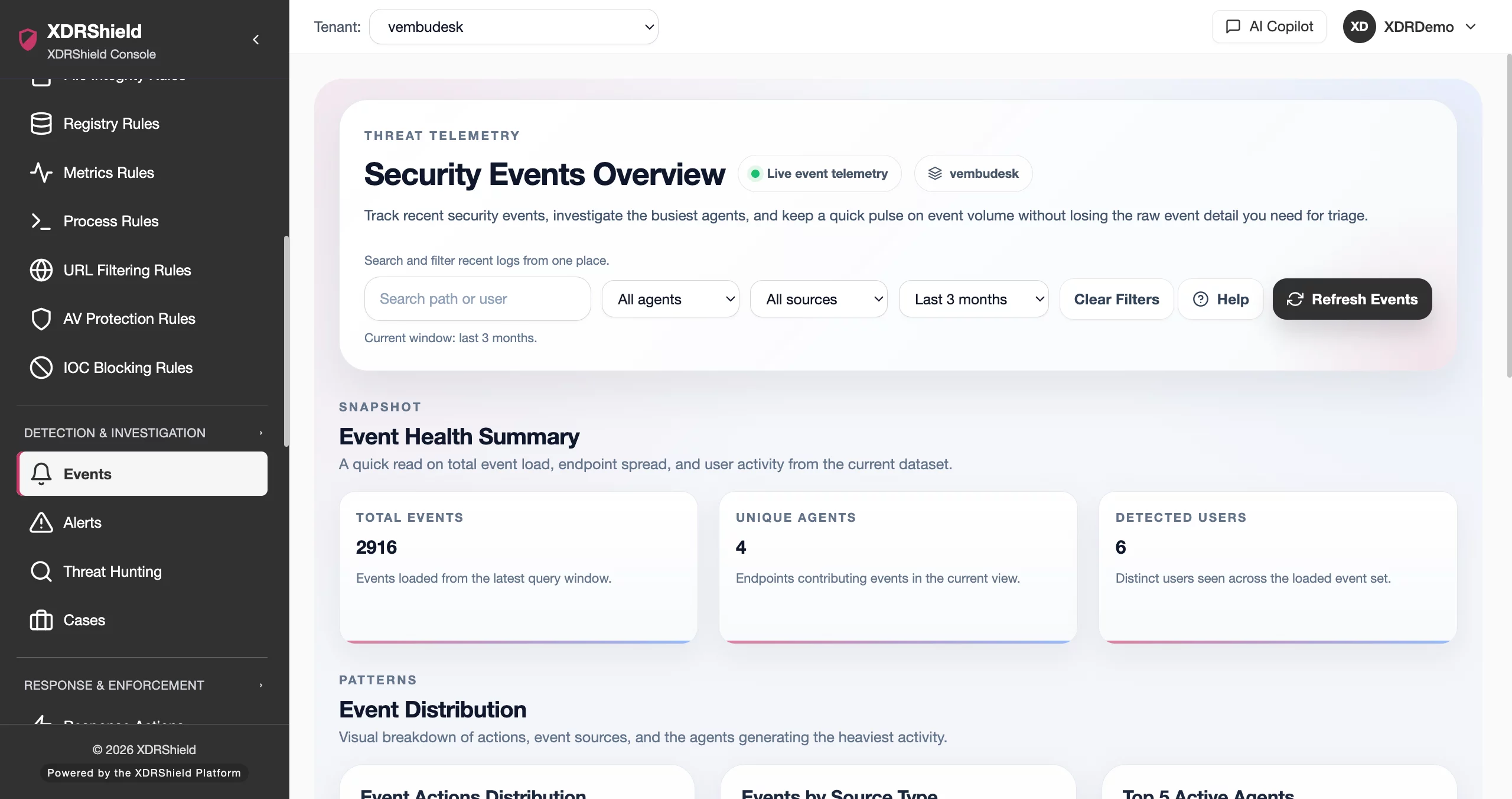
- Alerts, events, hunts, cases, and response workflows let analysts investigate and act with traceable context.
- Audit logs, user management, notification settings, and reporting support governance and customer accountability.
What XDRShield helps MSP teams operationalize.
The MSP solution combines completed XDRShield feature areas into customer-ready service workflows rather than isolated tools.
Tenant and customer management
Operate each customer environment with tenant boundaries, customer records, role-aware access, and scoped evidence.
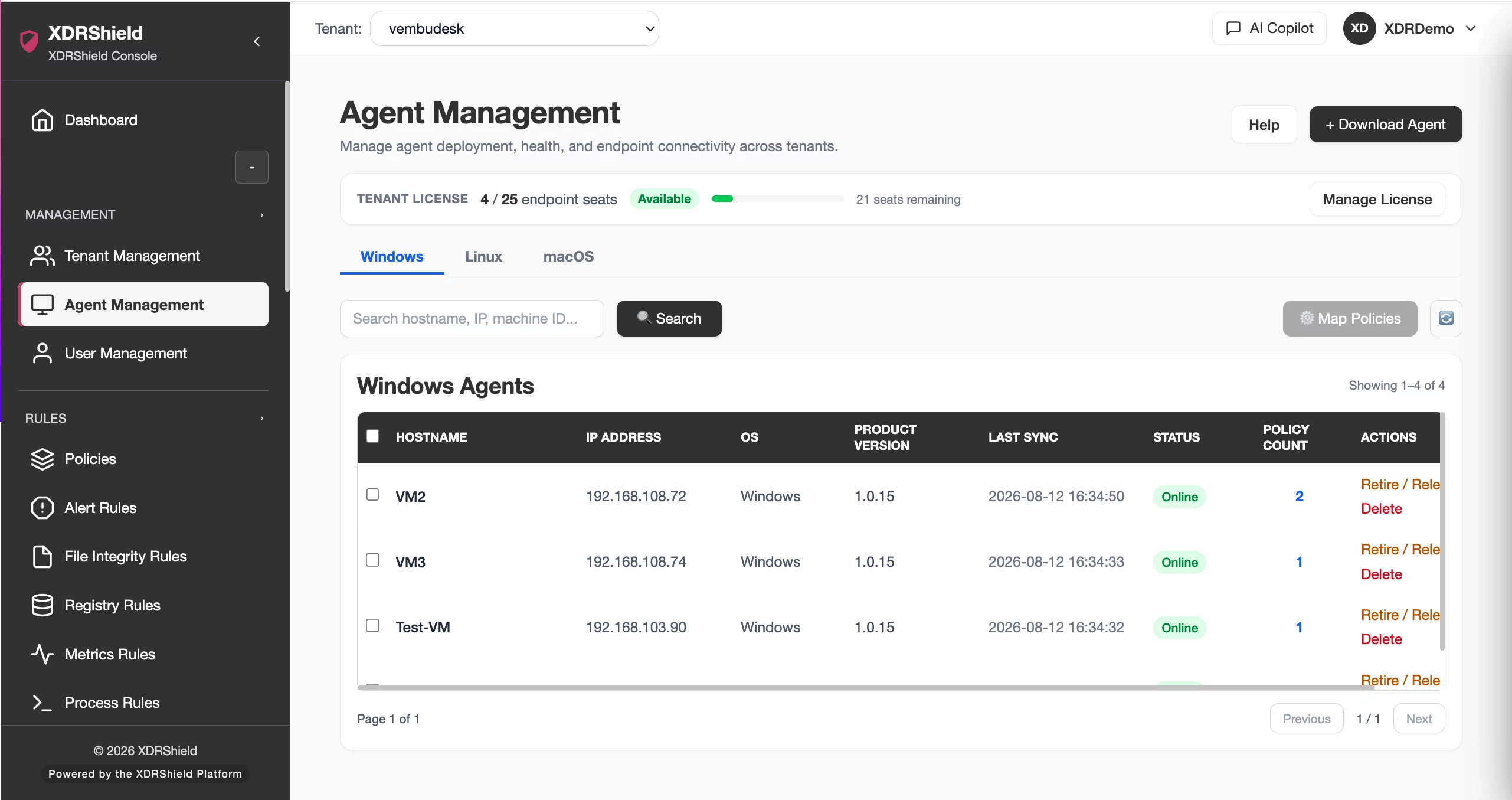
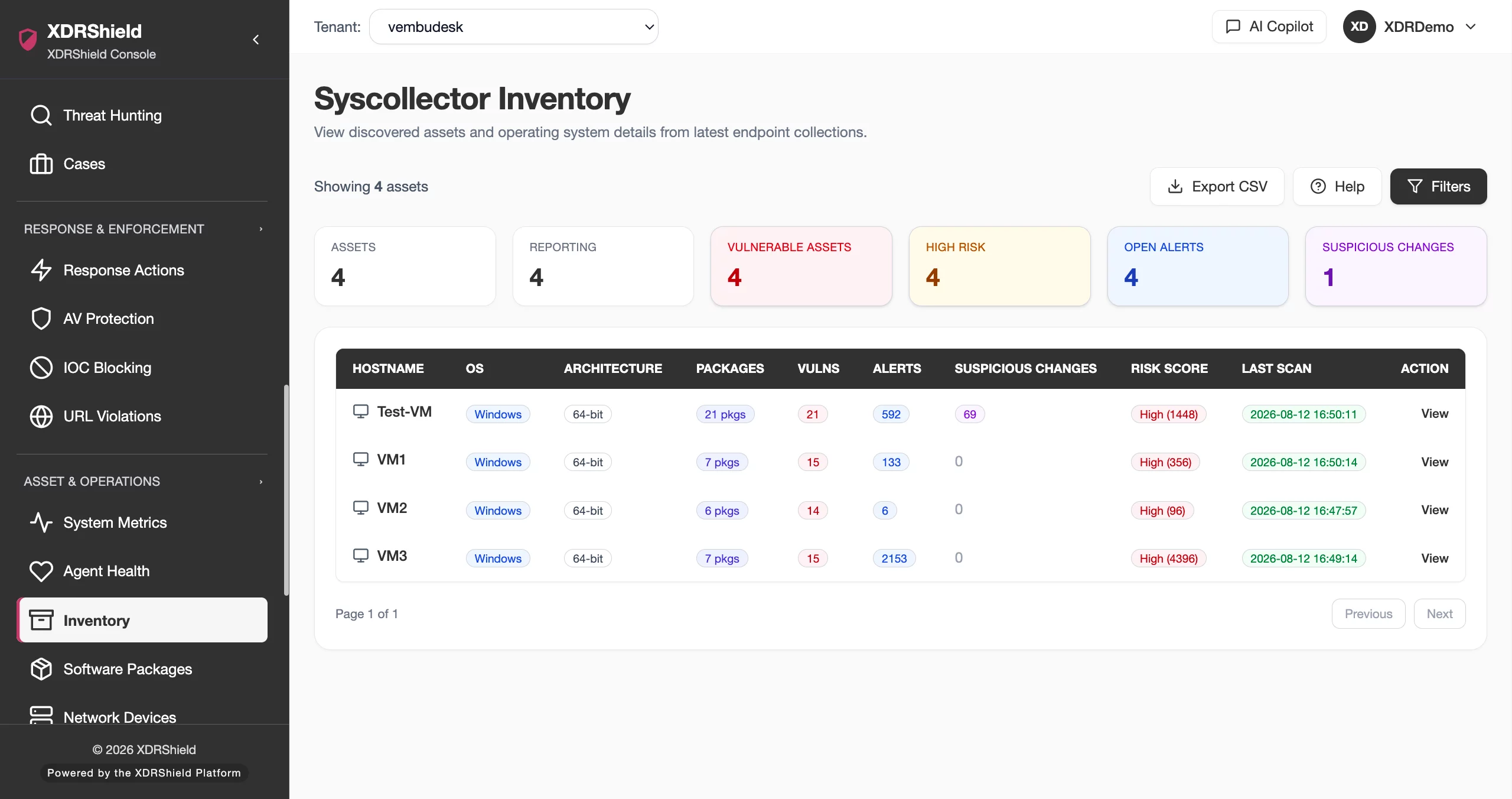
Endpoint onboarding and health
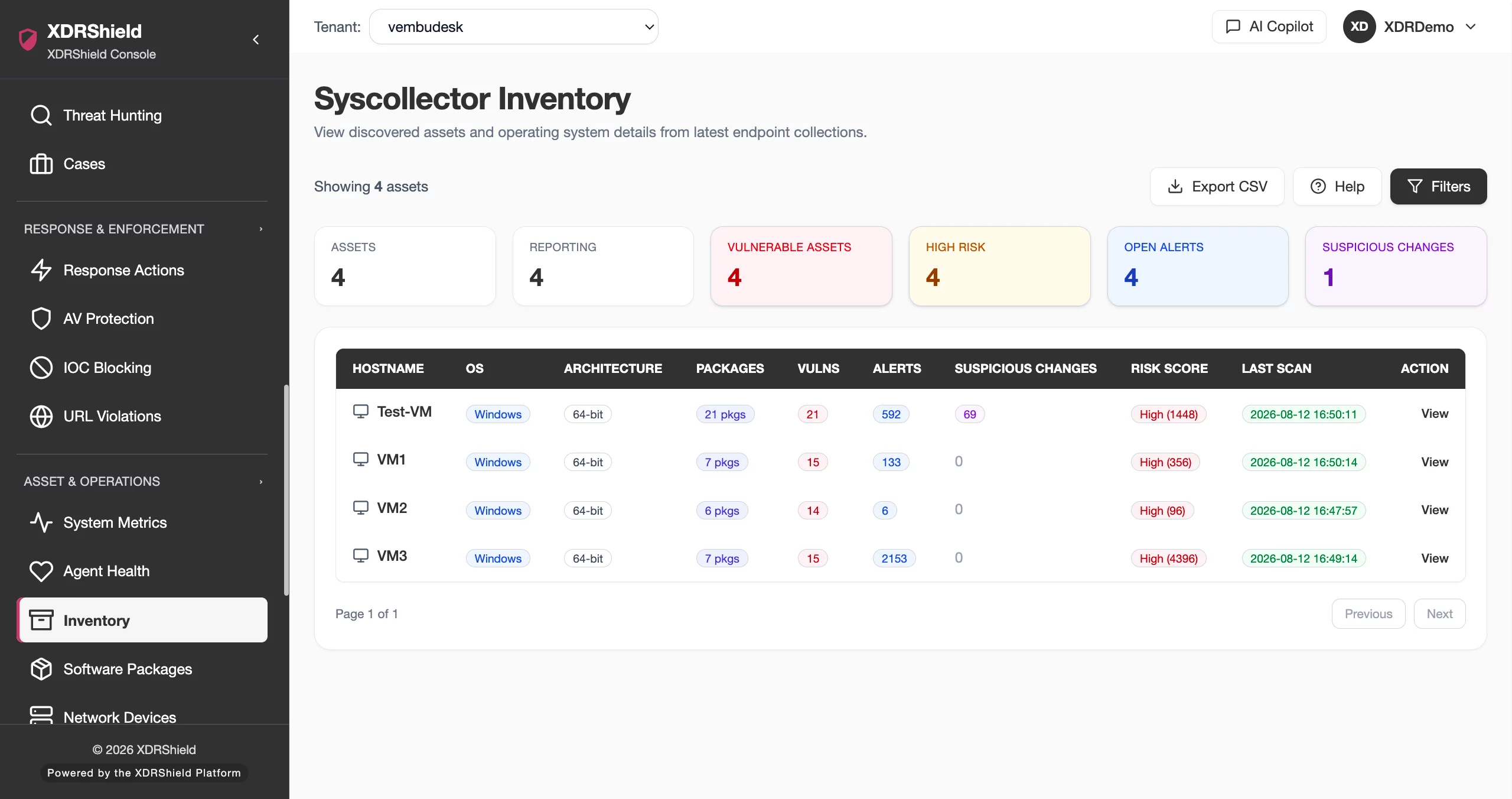
Track agents, endpoint readiness, operations health, package evidence, and service coverage before customer reviews.
Alert triage and event review
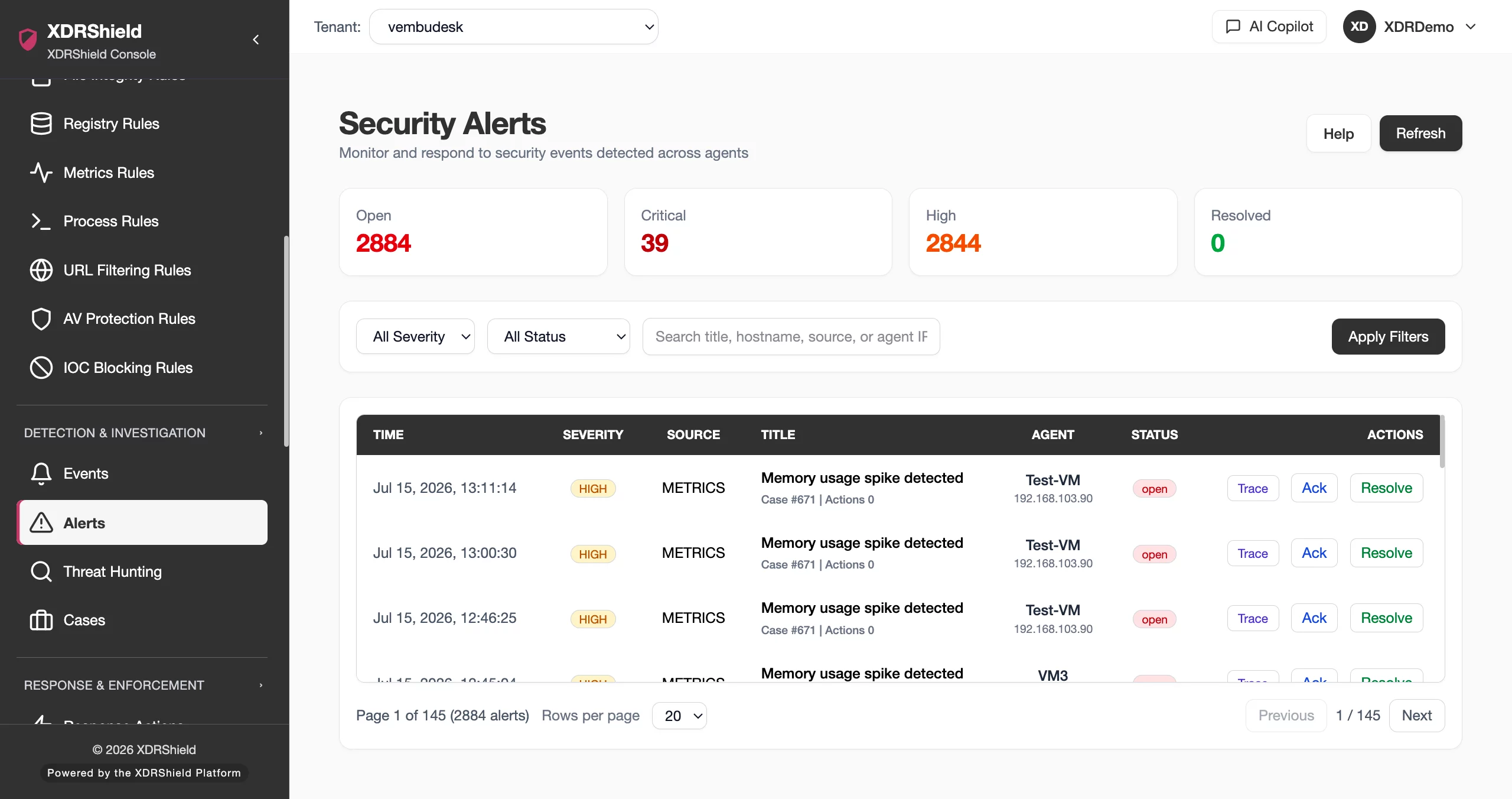
Prioritize alerts, review security events, and connect recurring issues to cases or rule tuning.
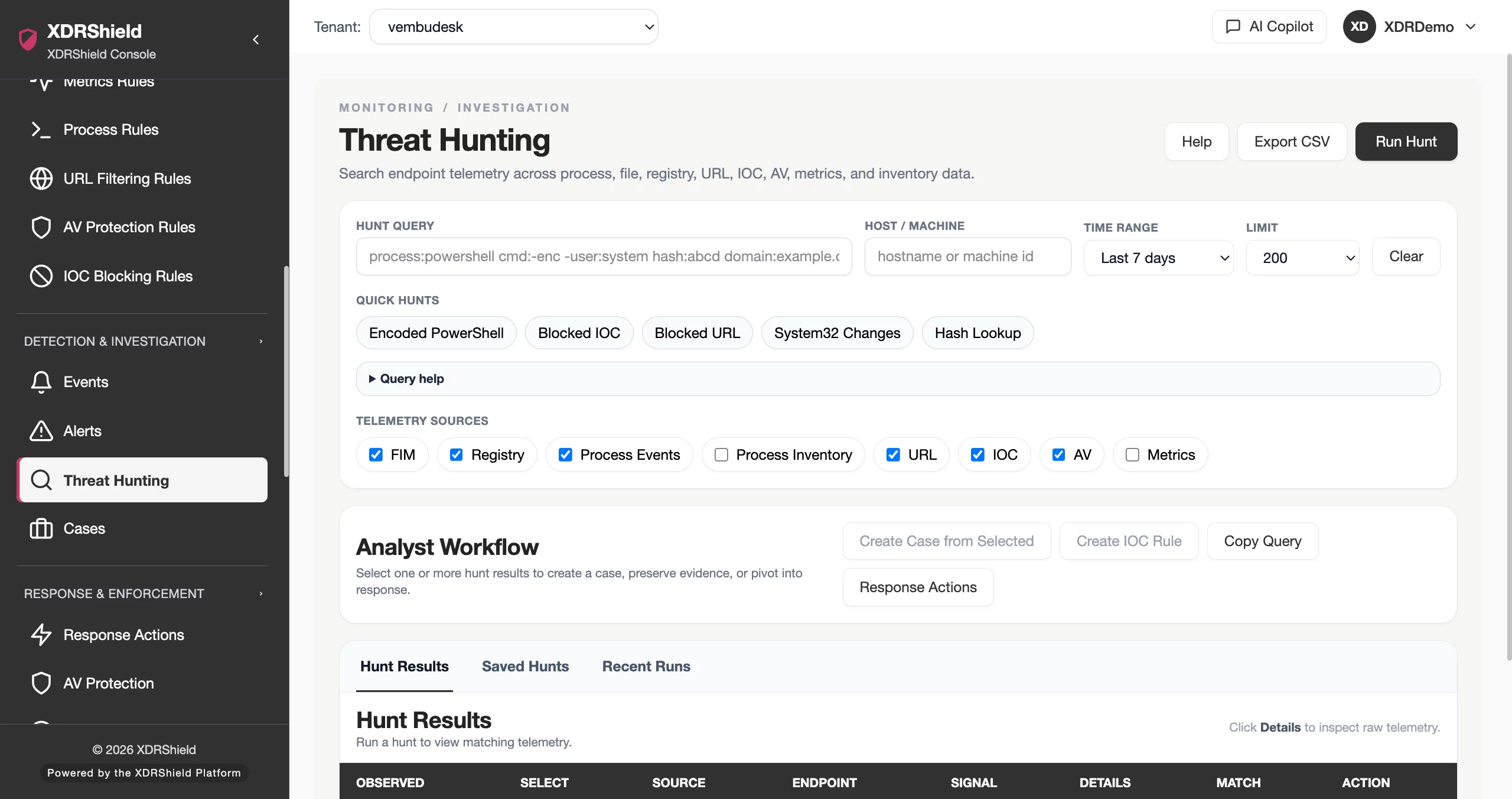
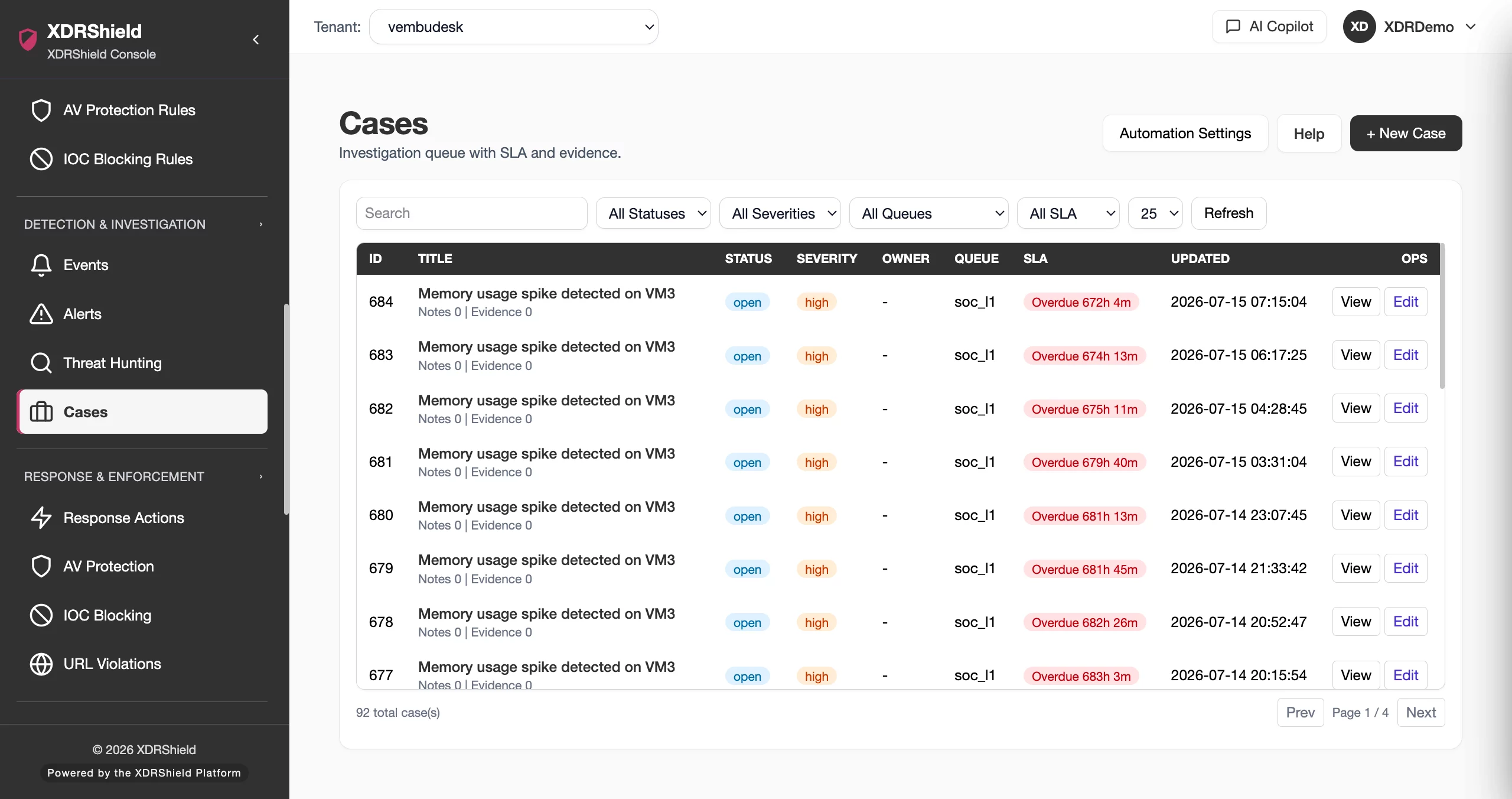
Threat hunting and case investigation
Investigate suspicious activity, scope impact, and preserve case evidence across customer endpoints.
Policy and rule management
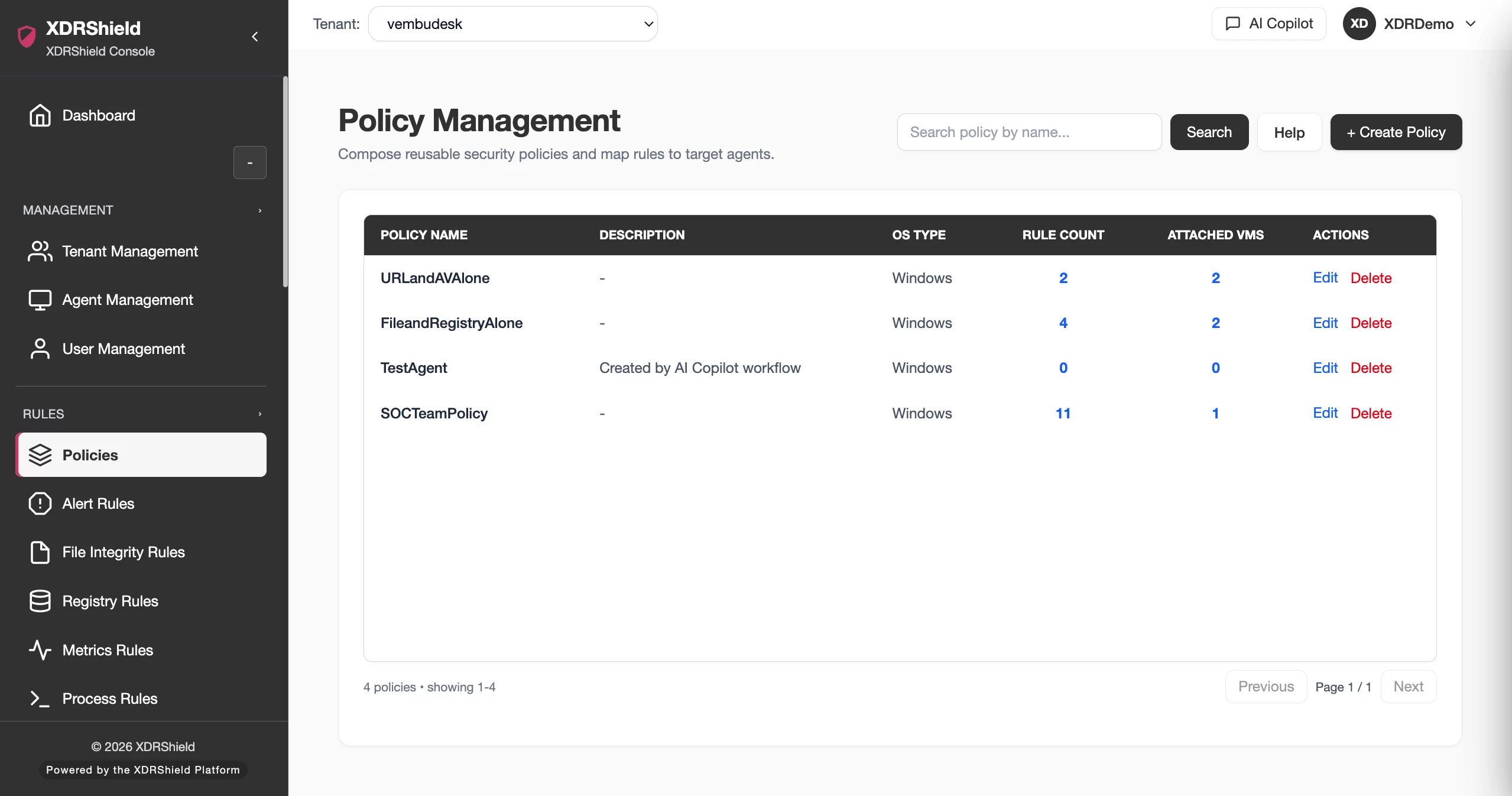
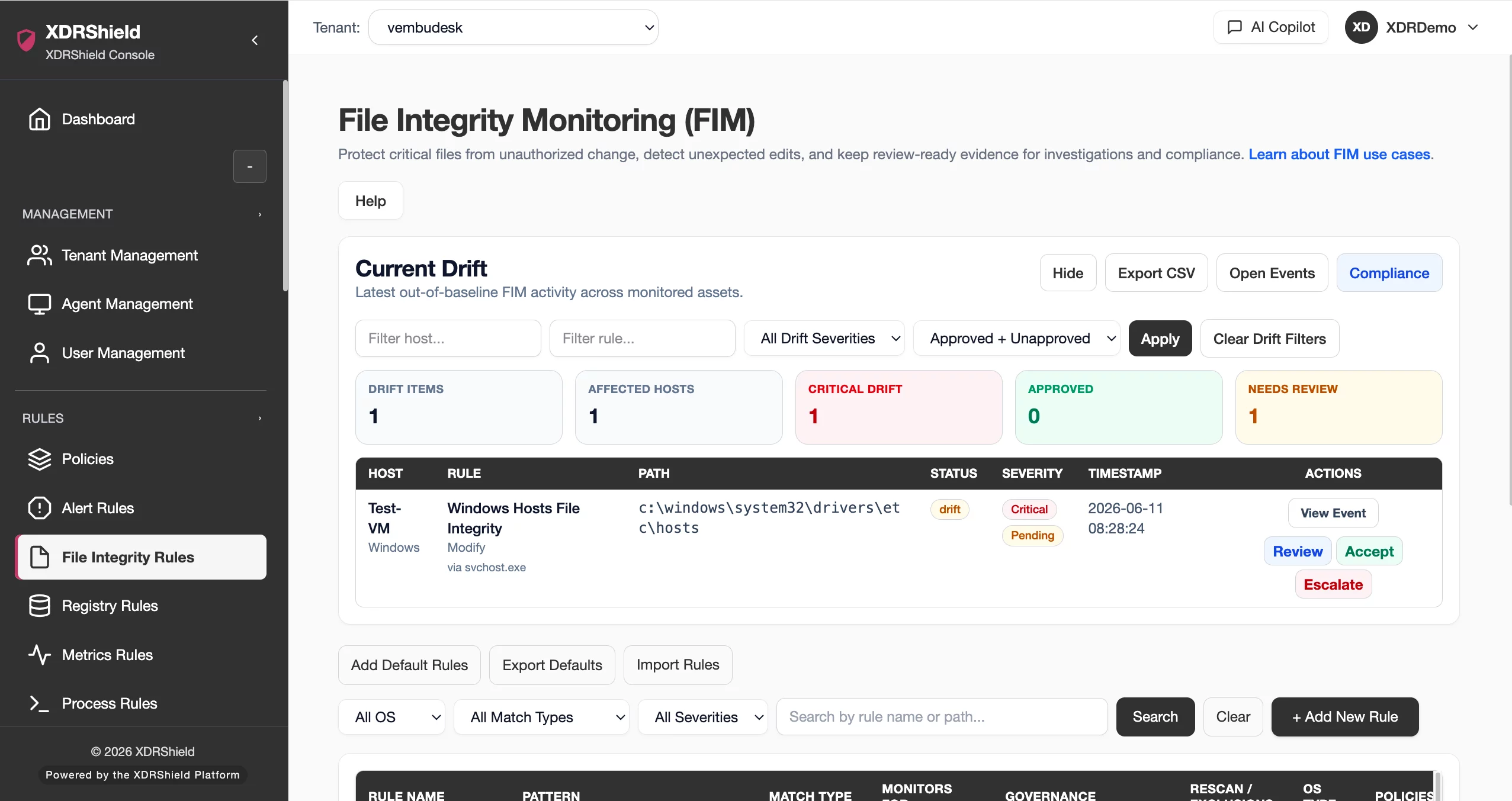
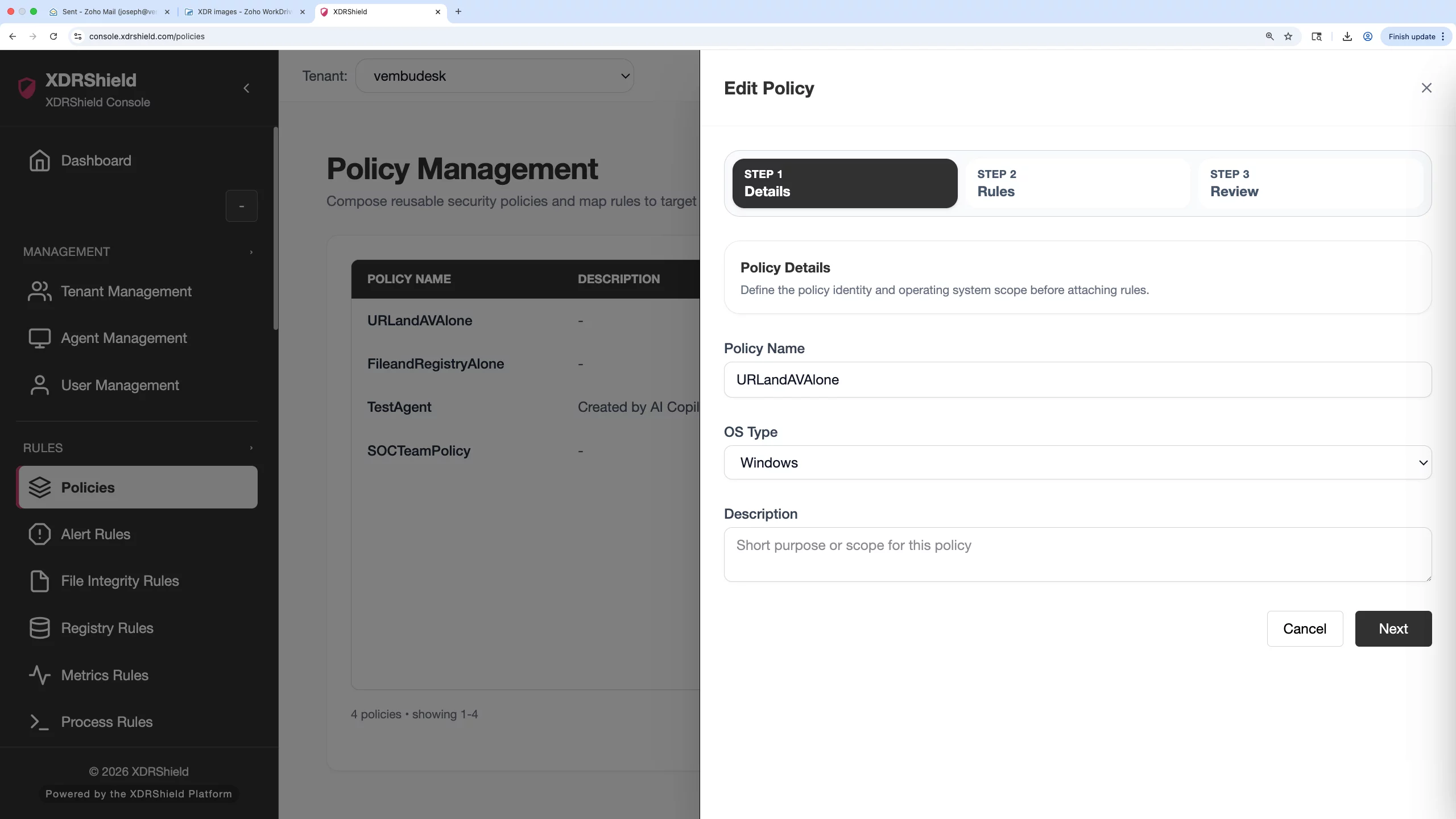
Standardize alert, IOC, FIM, process, metrics, AV, URL filtering, and other rules through governed policy assignment.
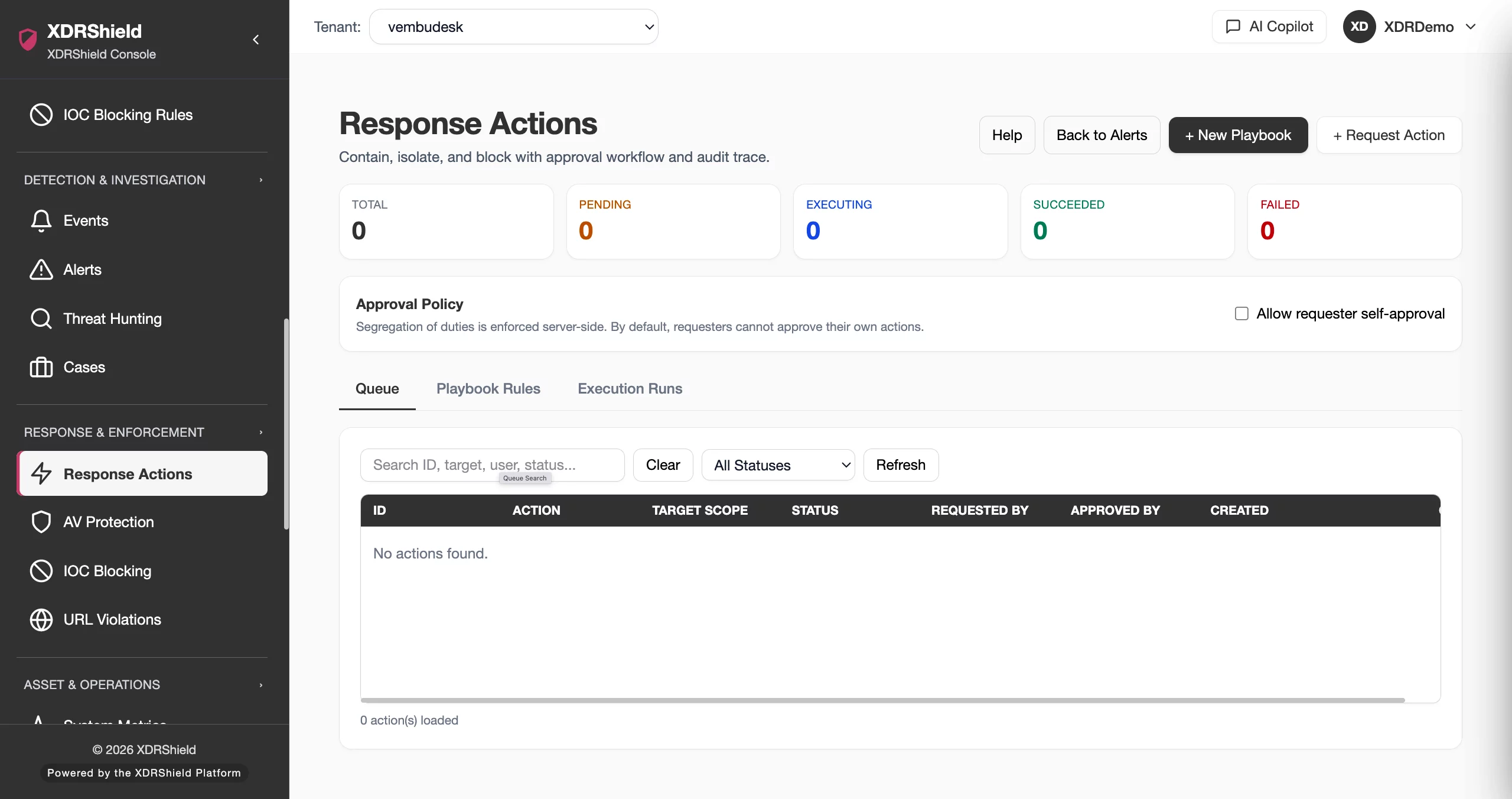
Governed response control
Use response actions and containment decisions with authorization, tenant scope, and audit context.
Service review evidence
Use dashboards, audit logs, cases, vulnerabilities, and reports to support customer-ready service conversations.
Operational readiness signals
Use health, freshness, notification, timezone, and deployment context to confirm security services are working as expected.
From customer onboarding to ongoing security operations.
A repeatable workflow helps MSPs deliver endpoint security services without losing scope or accountability.
Create tenant and customer context
Set up the tenant/customer boundary, users, roles, branding needs, and operating timezone.
Deploy and validate endpoint coverage
Roll out agents or required software, then verify health, inventory, and operations status.
Apply policies and detection rules
Assign standard or customer-specific rules for alerts, IOC blocking, FIM, process, AV, URL filtering, and metrics.
Monitor dashboards and alerts
Review customer health, security alerts, events, vulnerabilities, and operational readiness.
Investigate and respond
Use hunts, cases, timelines, and governed response actions when suspicious activity requires follow-up.
Report and improve service
Use audit logs, dashboards, cases, notification review, and vulnerability context to refine service delivery.
Where MSPs use XDRShield most.
These are the service-provider use cases that benefit from a single tenant-aware operating model.
Customer onboarding
Create tenant boundaries, deploy agents, configure policies, and validate first evidence.
Managed detection workflow
Review alerts and events across customers while keeping scope separated.
Incident investigation
Scope suspicious activity, preserve case evidence, and coordinate customer follow-up.
Response and containment support
Take approved actions with tenant, user, and audit accountability.
Compliance and service reviews
Prepare customer-ready evidence from audit logs, cases, health, and vulnerabilities.
Policy standardization
Reuse proven rule and policy patterns while allowing customer-specific exceptions.
Map common service-provider needs to the XDRShield workflows that support them.
This table helps MSP teams decide which XDRShield area to use for each operational responsibility.
| Area | What it means | How teams use it |
|---|---|---|
| Customer separation | Tenant Management, Customer Management, User Management | Use for tenant boundaries, customer context, access control, and delegated administration. |
| Coverage assurance | Agent Health, Operations Health, Software Deployment, Installed Packages | Use to confirm that endpoints are onboarded, reporting, and ready for security workflows. |
| Detection and investigation | Security Alerts, Security Events, Threat Hunting, Cases | Use to triage signals, investigate suspicious activity, and preserve evidence. |
| Policy and response governance | Policy Management, Rule pages, Governed Response, Audit Logs | Use to standardize control, document change, and keep response actions accountable. |
MSP solution fit and related XDRShield workflows.
Use these related pages when shaping or validating the managed service workflow for a customer environment.
For MSP service owners
Use this path when you are designing the service model, customer onboarding flow, and review evidence.
- Start with tenant and customer boundaries.
- Validate endpoint and operations health before review.
- Use dashboards, vulnerabilities, audit logs, and cases for service reporting.
For SOC and response teams
Use this path when alerts, cases, hunts, and response decisions need tenant-scoped evidence.
- Triage alerts in the correct customer scope.
- Move important findings into cases.
- Use governed response for approved containment workflows.
MSP security operations FAQs.
What is XDRShield for MSPs?
XDRShield for MSPs is the managed-service operating model for using XDRShield across customer environments with tenant separation, endpoint monitoring, alert triage, cases, response, policy management, and service evidence.
How does XDRShield help keep customer environments separated?
Tenant management, customer context, scoped users, policy assignment, dashboards, alerts, cases, and audit evidence help teams operate inside the intended customer boundary.
Which workflows matter most during MSP onboarding?
MSPs should set up tenant/customer records, user access, endpoint deployment, policy assignments, agent health validation, notification routing, and dashboard/service review evidence.
Can MSPs standardize policies across customers?
Yes. MSP teams can reuse policy and rule patterns, but assignments and exceptions should be validated by tenant, platform, customer need, and operational risk.
How does XDRShield support customer reporting?
Dashboards, audit logs, cases, operations health, vulnerabilities, installed packages, and alert history can support customer-ready service review evidence.
Does this replace the individual feature pages?
No. The MSP solution page explains the service-provider operating model and links into the detailed feature pages used to run each workflow.
Give MSP teams the operating structure to monitor, investigate, respond, and report across customers without losing separation or accountability.
Use XDRShield to standardize service delivery, protect customer context, and keep endpoint security operations ready for review.