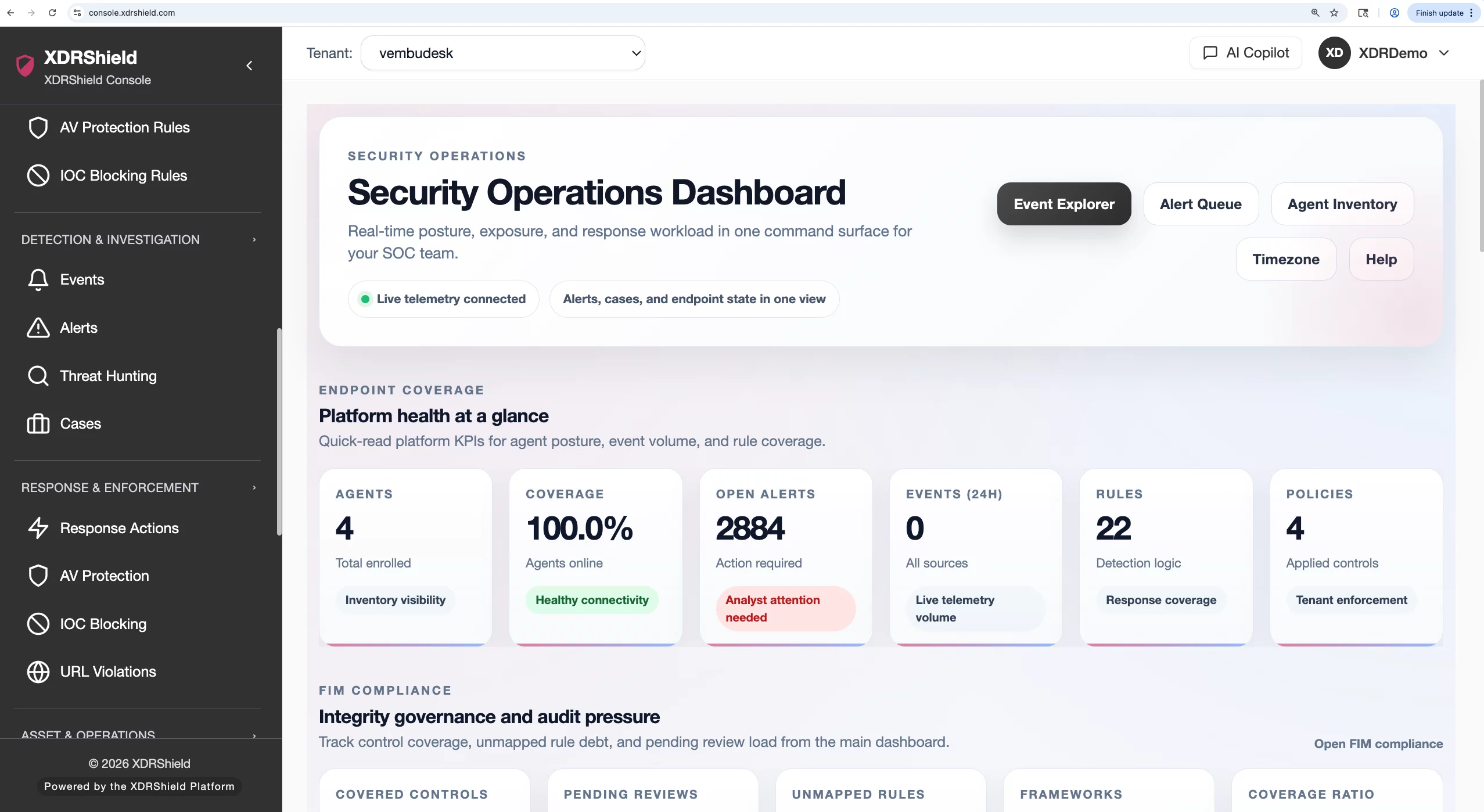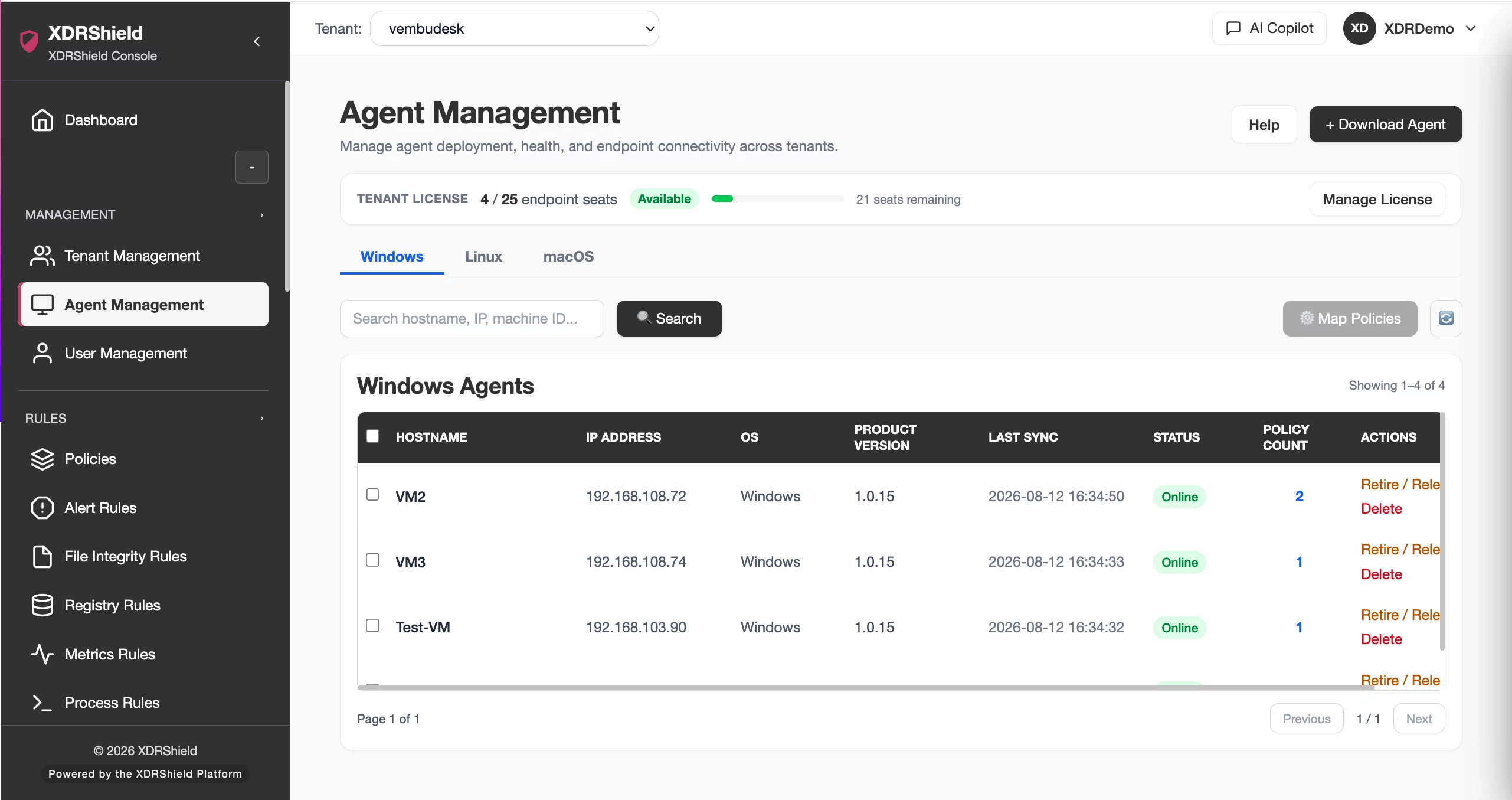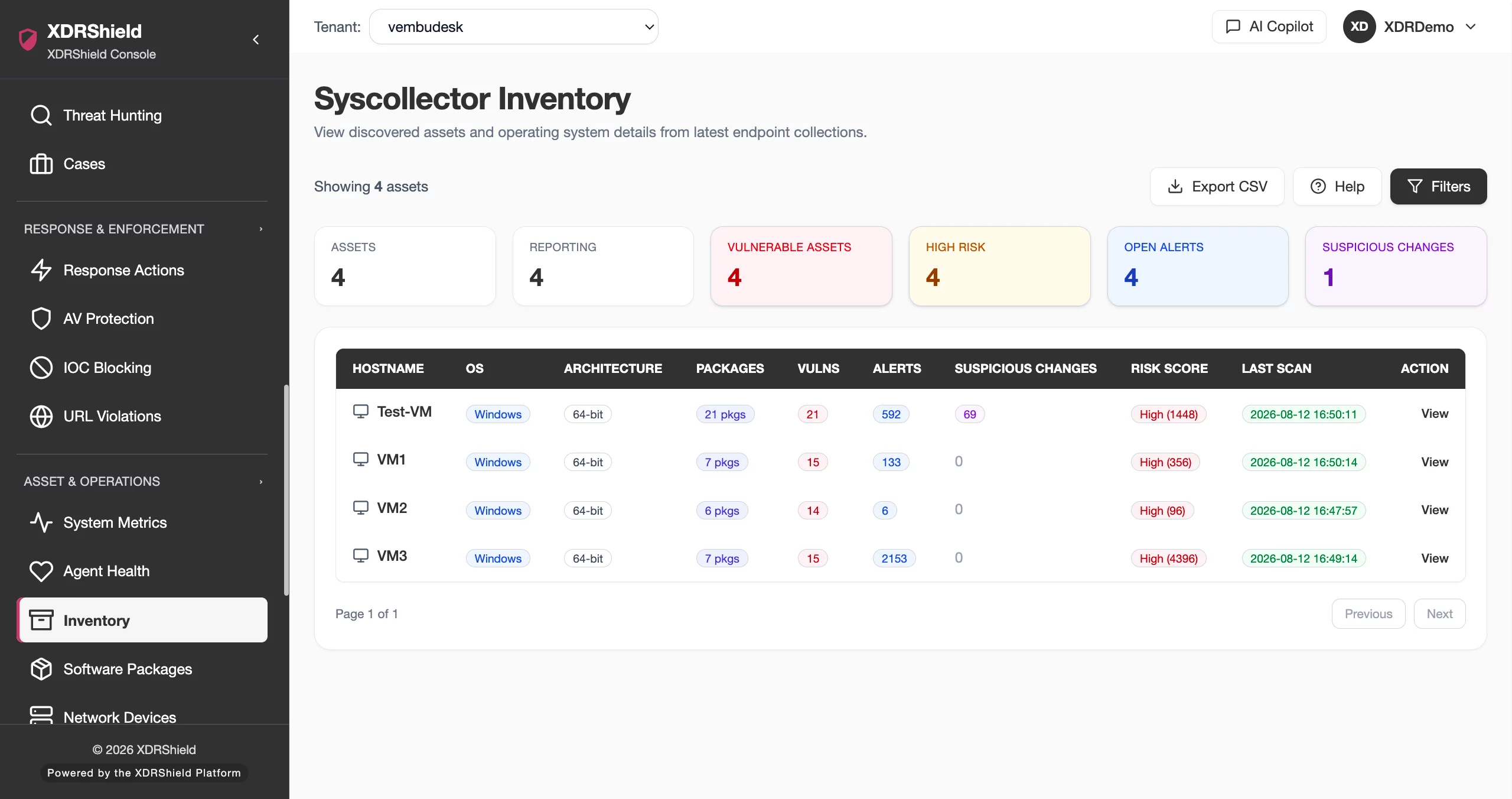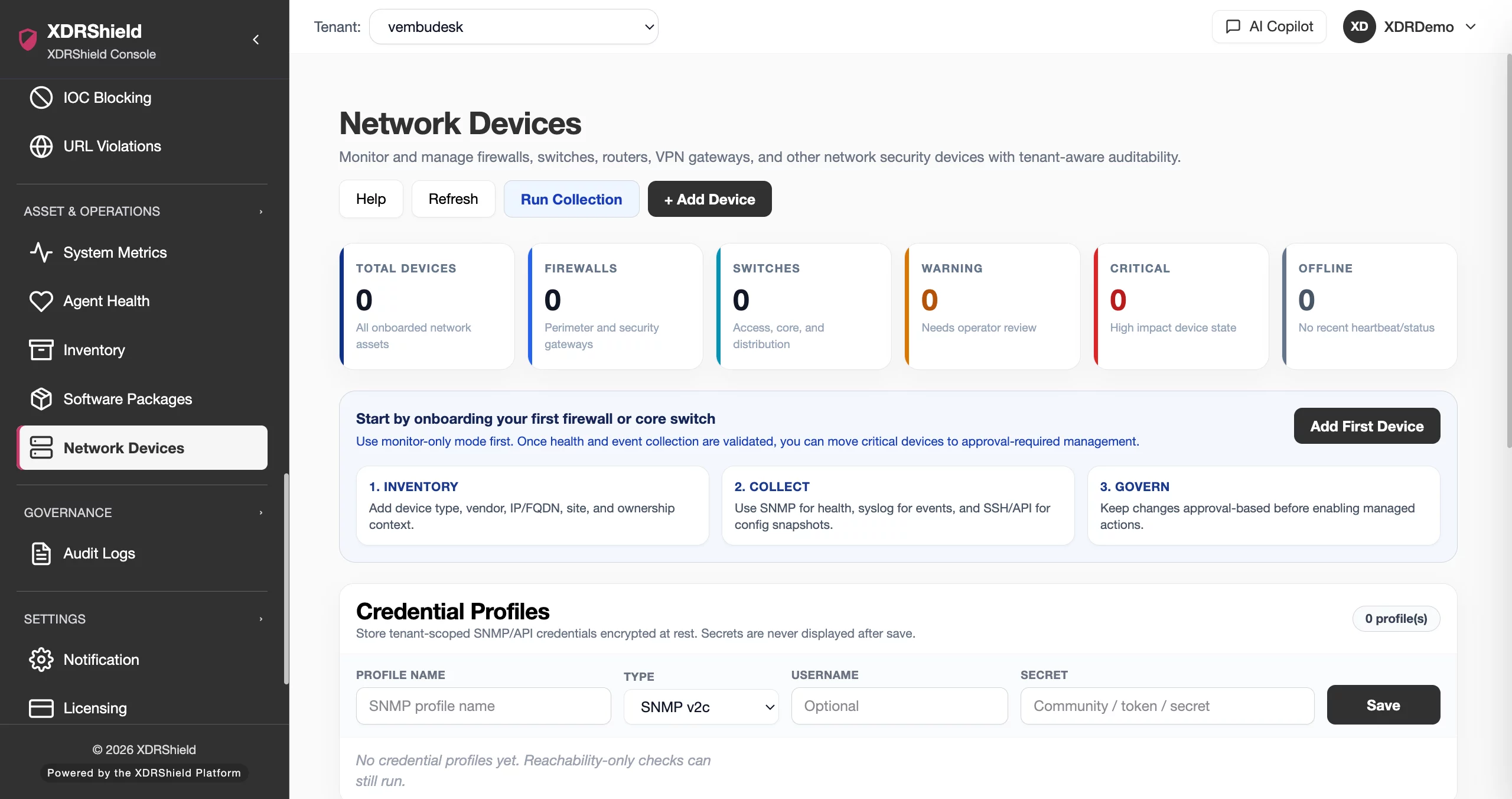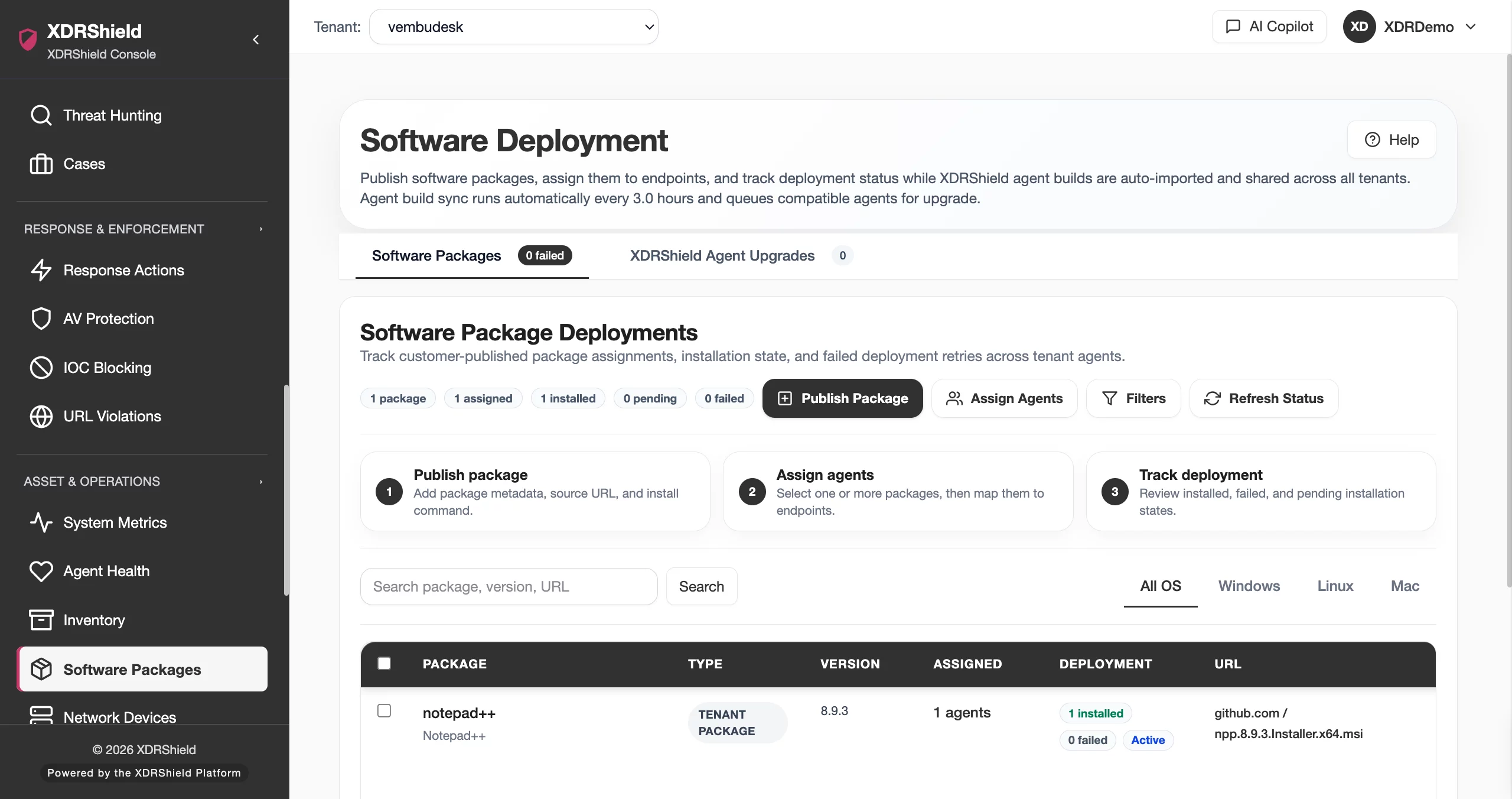
Endpoint detection and monitoring across the signals that matter.
XDRShield helps teams monitor supported endpoint evidence, web-control activity, antivirus findings, IOC results, and endpoint health from a connected security operations workflow.
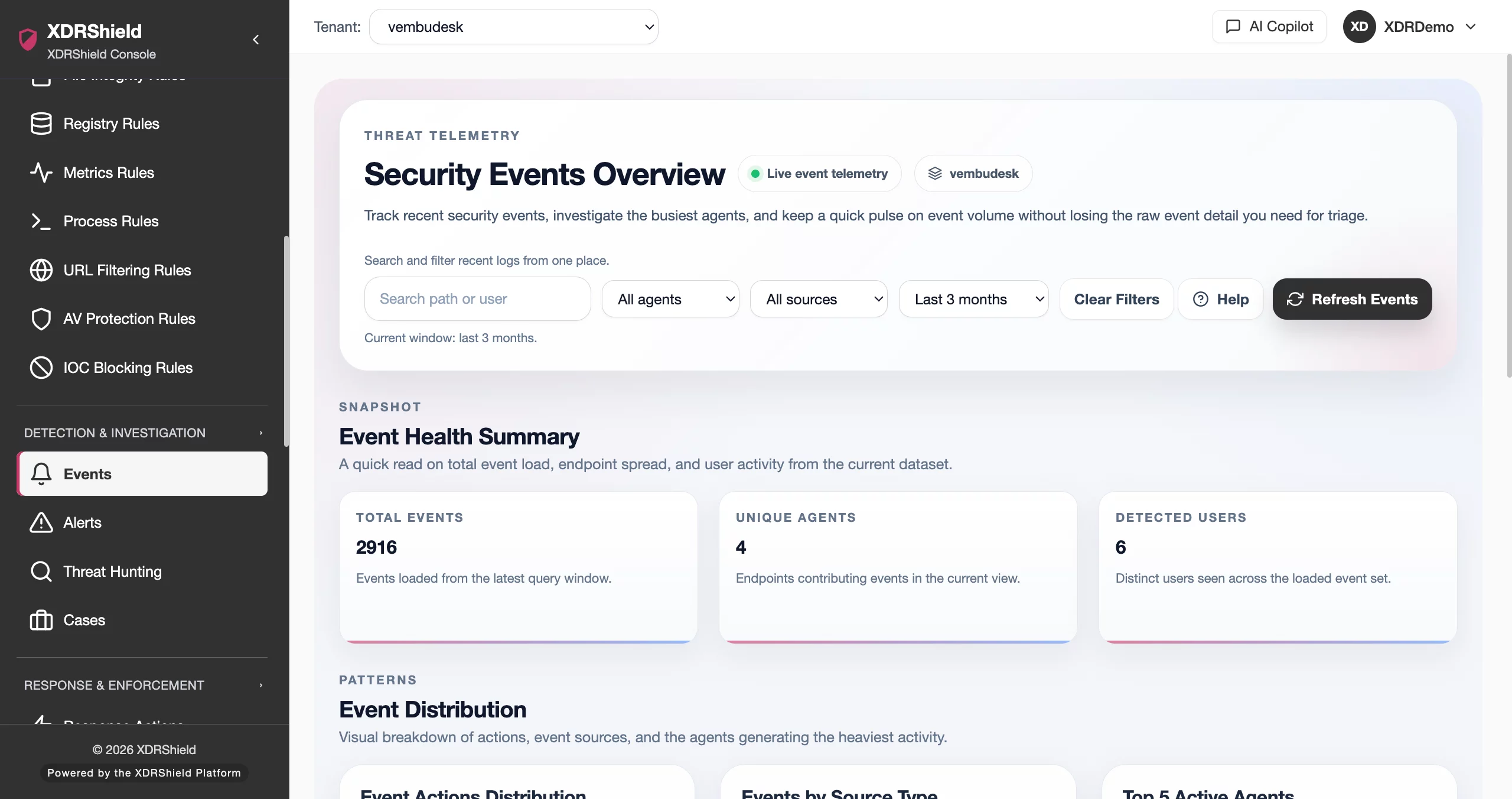
Endpoint signals are most useful when they stay connected to scope, policy, and investigation.
Security teams need more than isolated alerts. XDRShield brings endpoint monitoring, policy-driven detection, evidence freshness, and investigation context together so analysts can understand what changed, where it happened, and what should happen next.
Monitor endpoint activity from multiple detection layers.
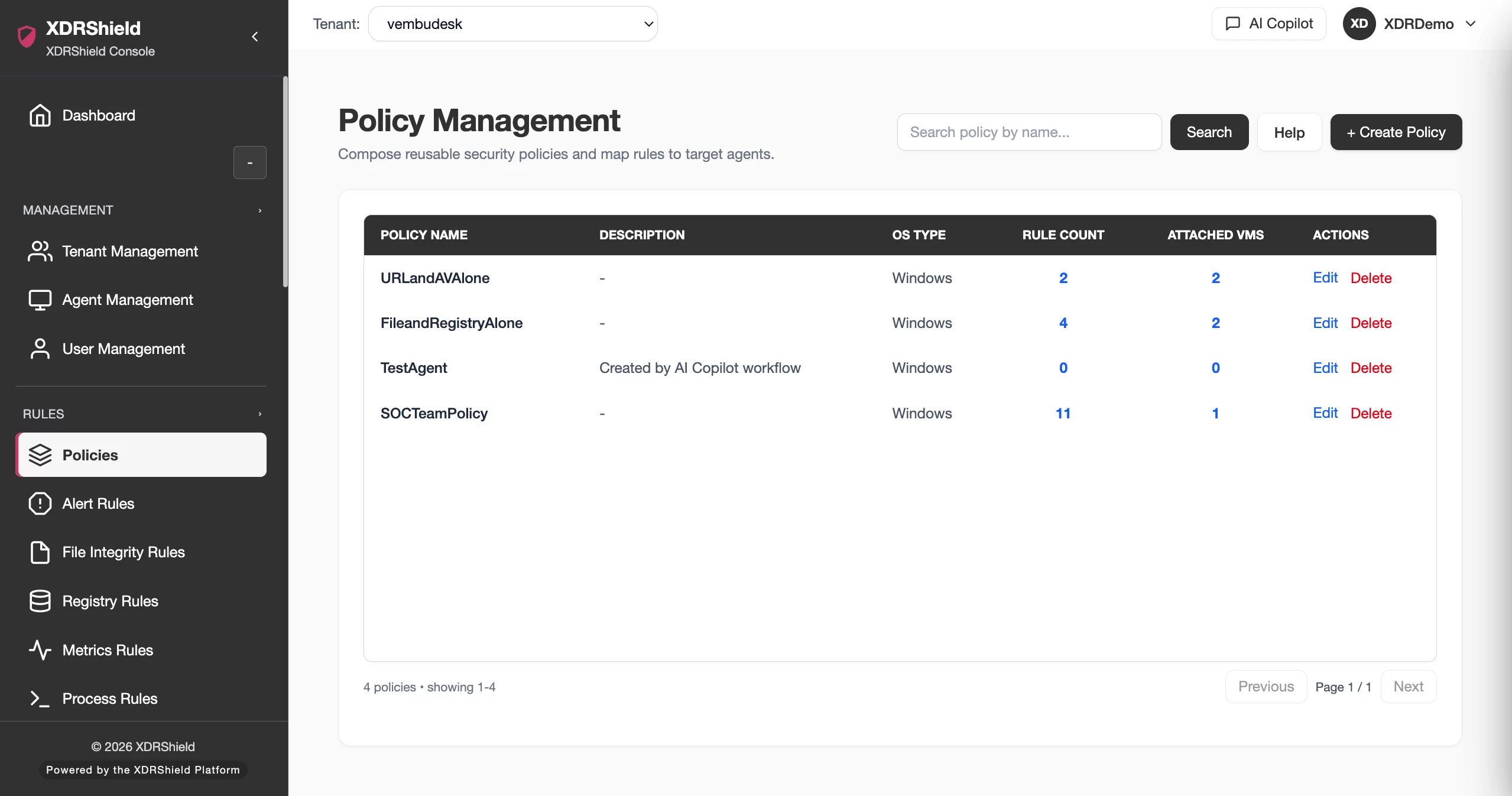
XDRShield uses centrally managed rules and policies to help teams standardize what is monitored across compatible endpoints. The result is broader visibility into endpoint behavior without forcing analysts to rebuild context across separate tools.
- File integrity, registry, process, metric, URL, antivirus, and IOC evidence
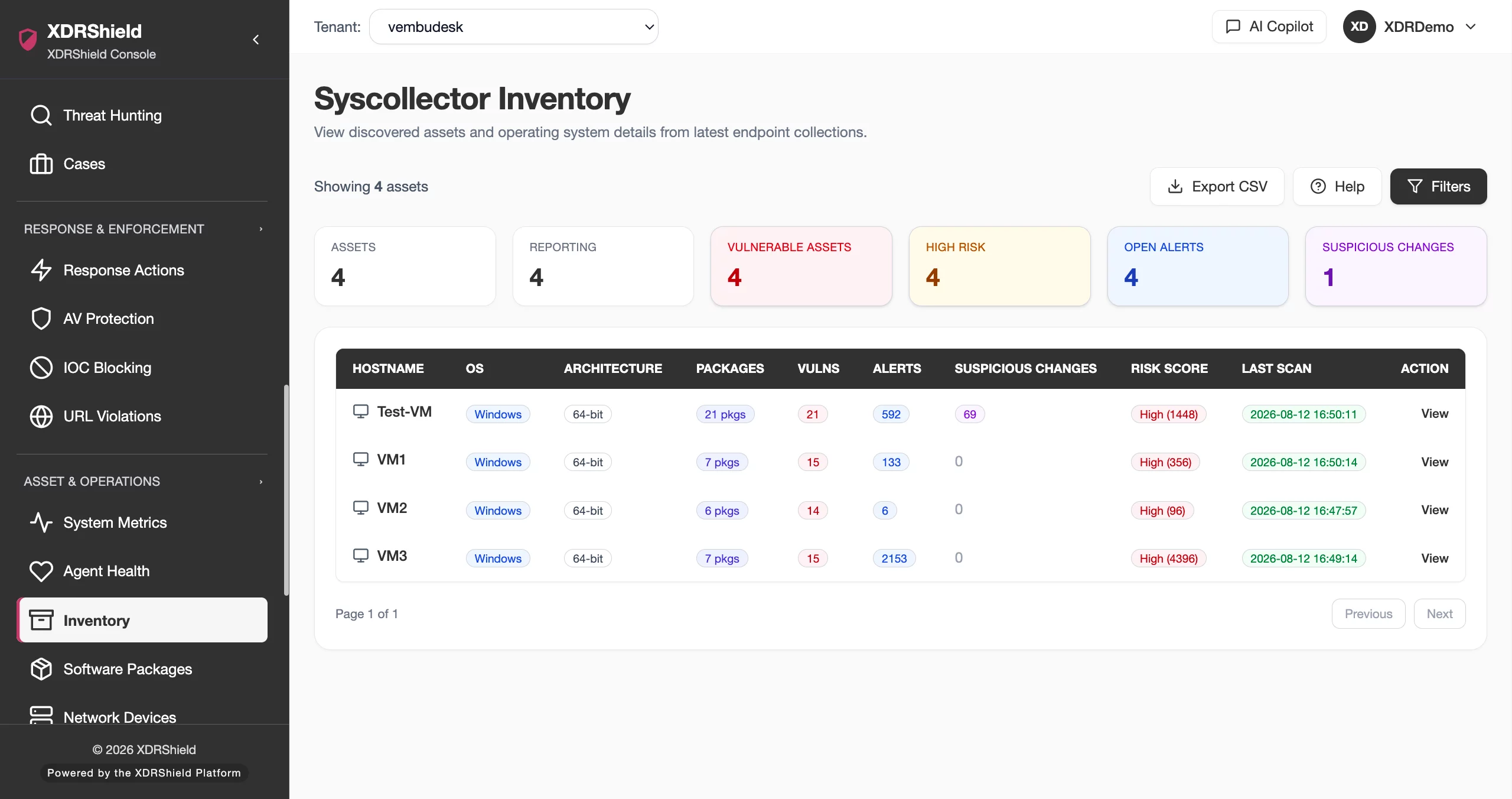
- Agent health, sync, inventory, software, and vulnerability context
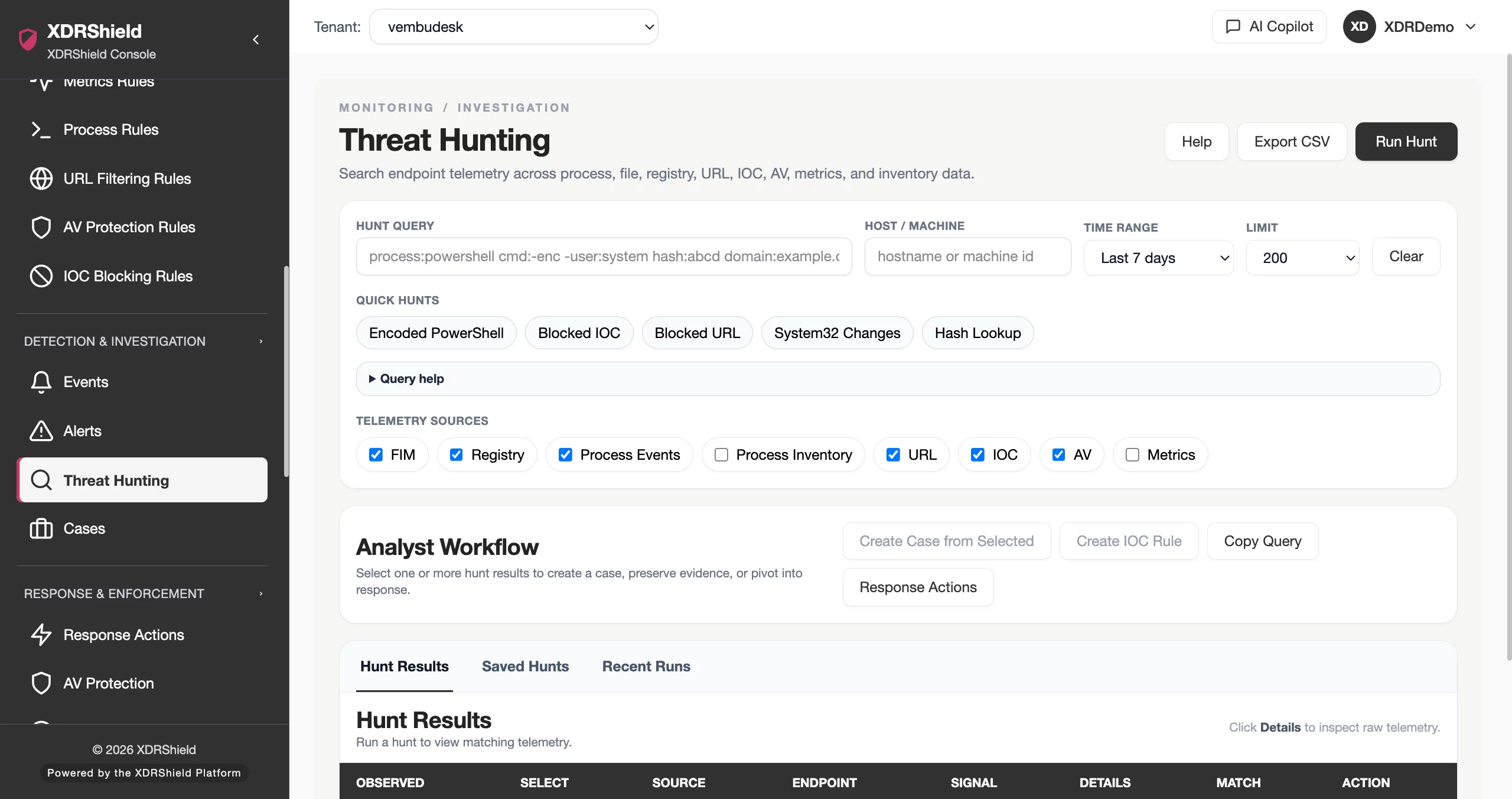
- Security events, alerts, threat hunts, cases, and timelines
- Tenant-aware policy assignment for enterprise, MSP, and service-provider operations
What XDRShield can help teams monitor.
Each monitoring layer supports a specific operational question, from “what changed on this endpoint?” to “which policy or indicator explains this activity?”
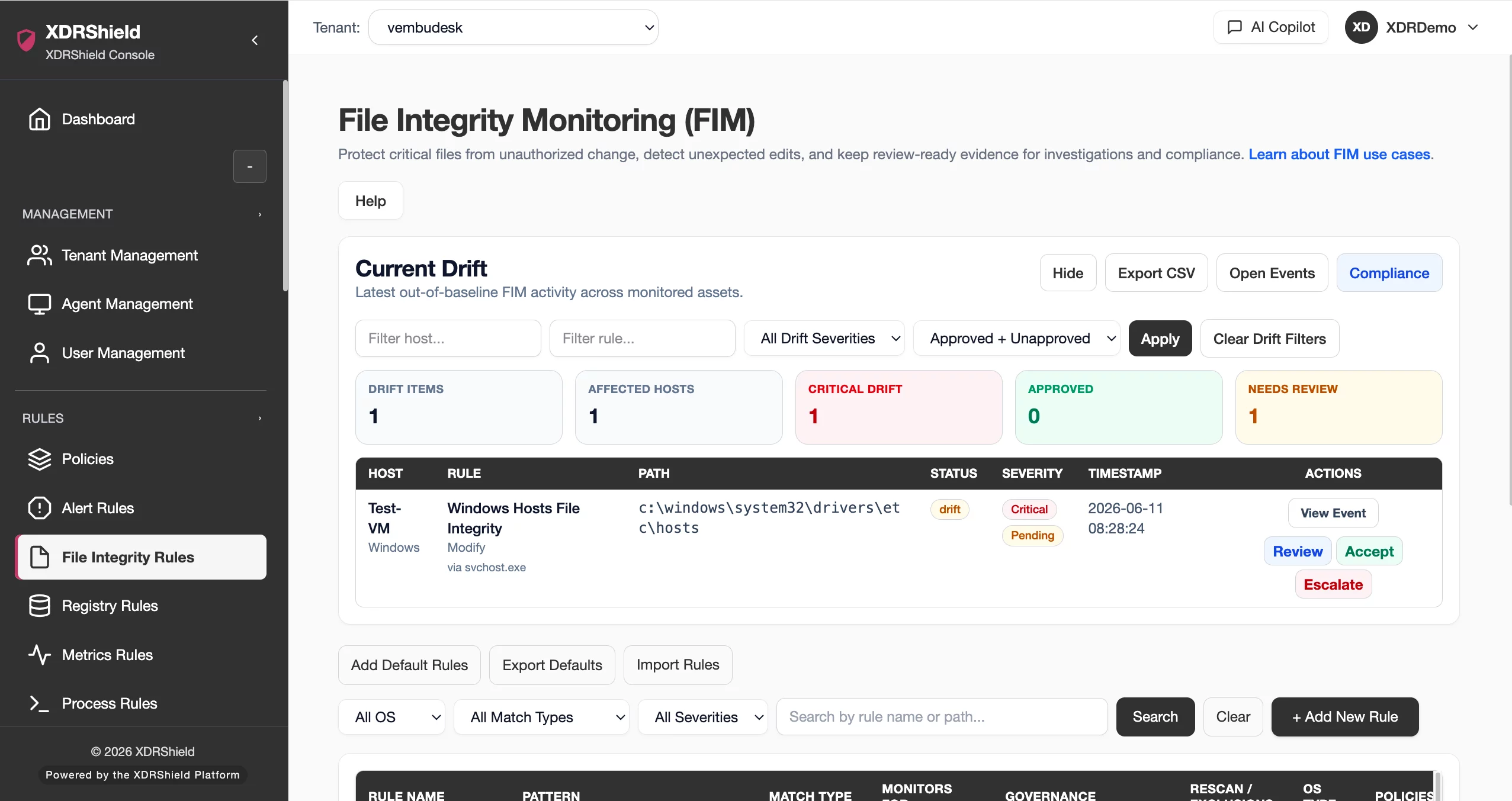
File Integrity Monitoring
Track important file and directory changes so security teams can review unexpected creation, modification, or deletion activity with endpoint context.
Registry Key Monitoring
Monitor configured Windows registry locations to detect suspicious configuration changes, persistence behavior, and policy-relevant endpoint activity.
Process Monitoring
Review process execution and process-state evidence so analysts can investigate suspicious command lines, users, and host activity.
System Metrics Monitoring
Use CPU, memory, disk, network, heartbeat, and sync context to separate security signals from operational endpoint health issues.
URL Filtering and Violations
Define trusted and blocked destinations, review web-control violations, and keep URL activity available for investigation.
Antivirus Integration and Findings
Bring supported antivirus status, findings, and policy context into the same endpoint monitoring and investigation workflow.
IOC Monitoring and Supported Blocking
Use indicators of compromise for monitoring or supported blocking workflows while retaining rule, policy, and endpoint evidence.
Endpoint Inventory and Vulnerability Context
Connect hardware, software, package, OS, network, service, and vulnerability context to investigation and exposure review.
From endpoint signal to investigation-ready evidence.
XDRShield keeps detection and monitoring work connected to the steps analysts and administrators already follow during endpoint security operations.
Define coverage
Create and assign rules for file, registry, process, metric, URL, antivirus, IOC, and alert conditions.
Monitor endpoint state
Review agent health, synchronization, system metrics, inventory, and event freshness before relying on a signal.
Review evidence
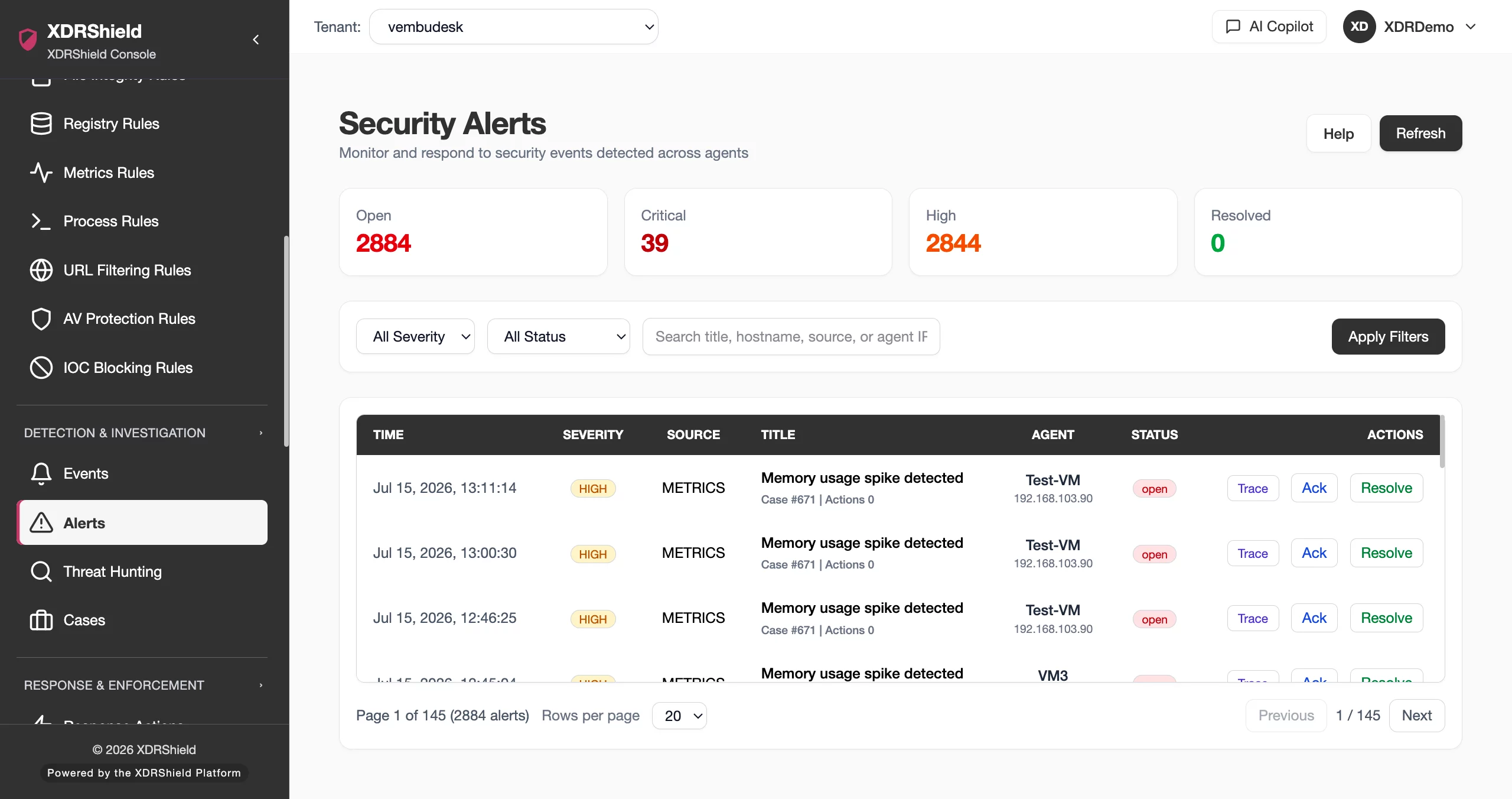
Use security events, alerts, and supporting endpoint context to understand what happened and where.
Investigate activity
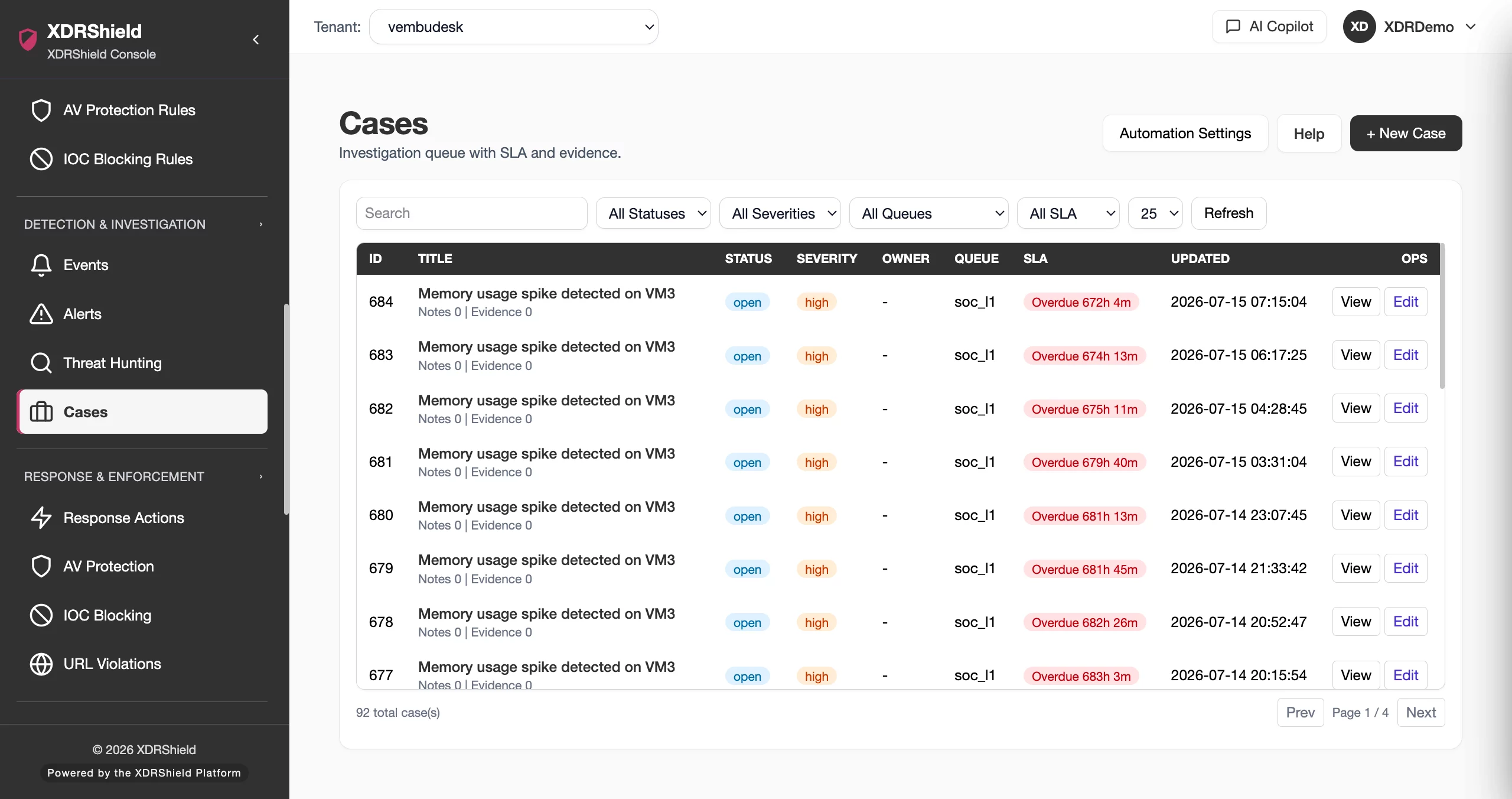
Move important findings into threat hunting, cases, timelines, ownership, and priority workflows.
Coordinate action
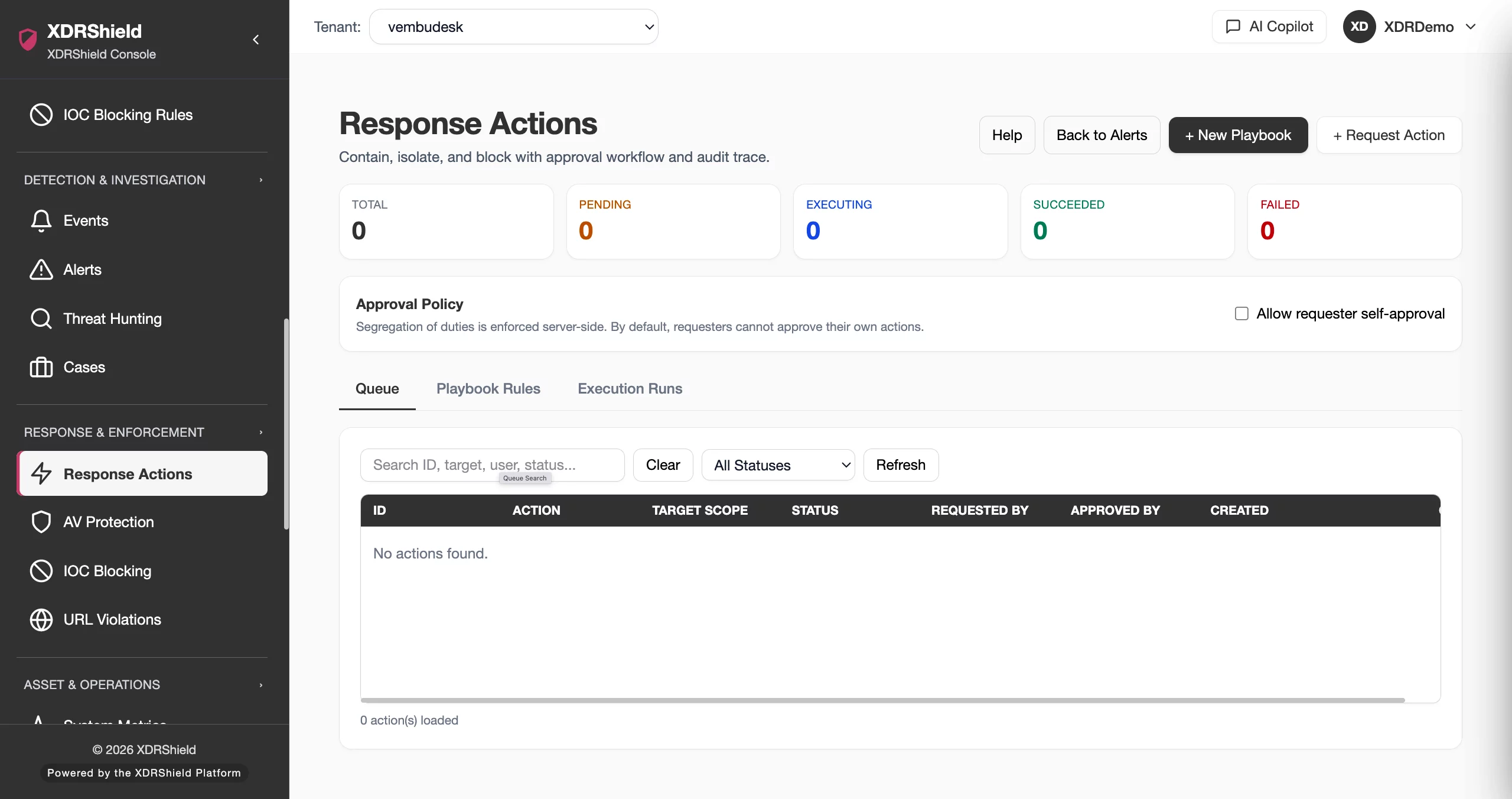
Use governed response workflows where supported, with approvals and action history when required.
Improve readiness
Tune policies, strengthen coverage, and keep operational records available for future review.
Centralize rules without losing endpoint context.
Detection quality depends on both the rule and the environment where it runs. XDRShield helps teams manage coverage centrally while preserving customer, tenant, endpoint, and synchronization context.
For security administrators
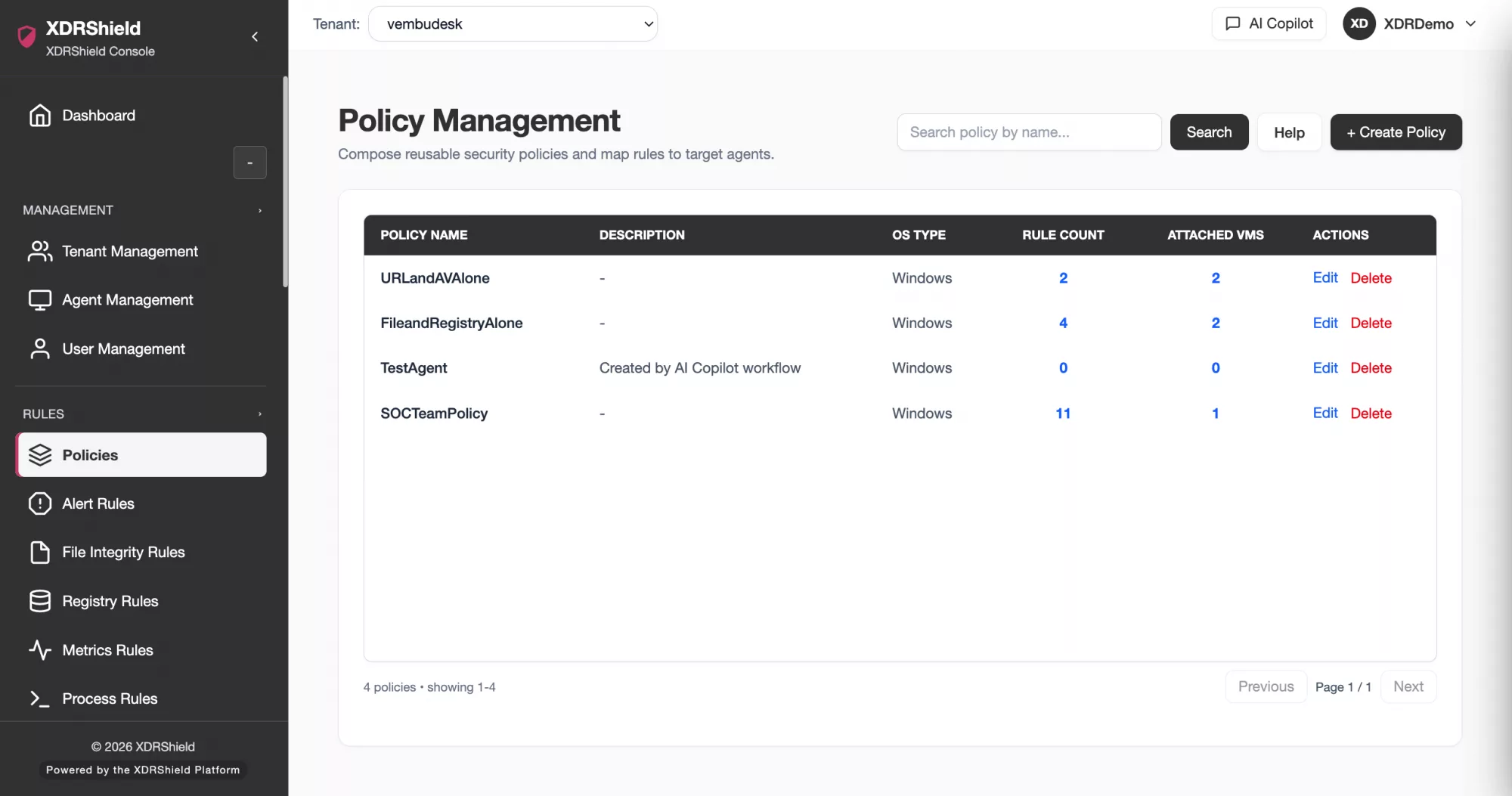
Create reusable detection rules, attach them to policies, assign compatible endpoints, and review synchronization state before treating coverage as complete.
For analysts and responders
Investigate endpoint activity with supporting events, alerts, hunts, cases, and timelines so response decisions are based on evidence instead of isolated notifications.
Where this capability helps most.
Use this capability when endpoint visibility, detection consistency, and investigation handoff need to work across real operational boundaries.
MSPs and service providers
Operate endpoint monitoring across customer and tenant boundaries while keeping scoped visibility, assignment, and activity records clear.
IT and security teams
Connect endpoint health, change activity, system behavior, URL activity, and supported protection findings in one workflow.
SOC and incident teams
Move from events and alerts into hunts, cases, timelines, and governed response without losing endpoint evidence.
Endpoint monitoring feature directory.
These XDRShield feature families sit inside multi-layer endpoint detection and monitoring. Review how each layer contributes evidence, policy control, investigation context, and operational readiness.
File Integrity Monitoring
Track important file and directory changes so analysts can review unexpected creation, modification, or deletion activity with endpoint context.
- Observe supported file and directory changes on enrolled endpoints
- Use review workflows to separate expected change from suspicious activity
- Connect file-change evidence with alerts, cases, and investigation timelines
Registry Key Monitoring
Monitor configured Windows registry locations to detect suspicious configuration changes, persistence behavior, and policy-relevant endpoint activity.
- Track supported registry locations through reusable rules
- Review registry evidence alongside process and endpoint context
- Use policy assignment to standardize monitoring across compatible agents
Process Monitoring
Review process execution and process-state evidence so analysts can investigate suspicious command lines, users, and host activity.
- Investigate suspicious execution and process-state changes
- Review users, command context, and affected host information
- Connect process evidence with hunts, cases, and timelines
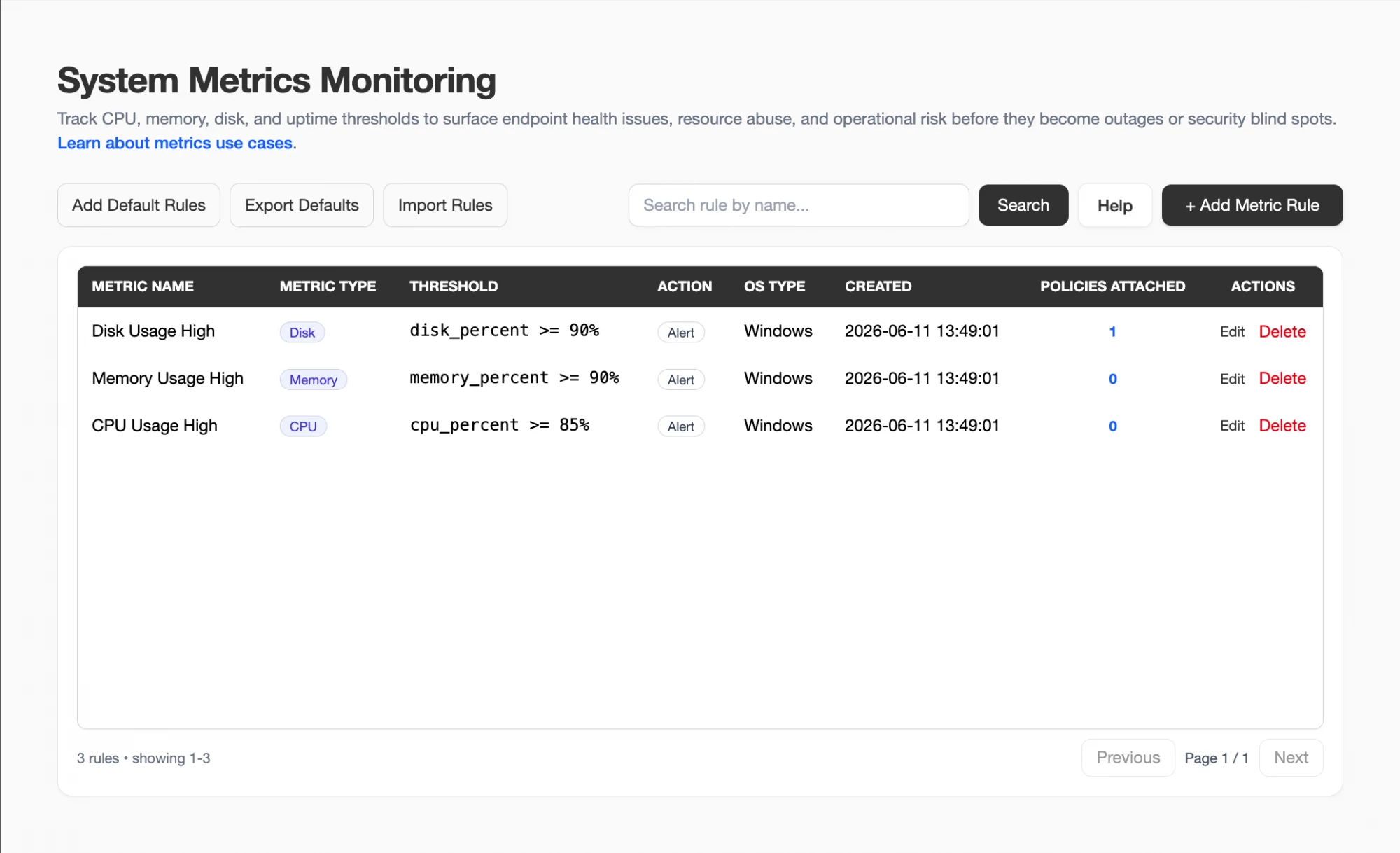
System Metrics Monitoring
Use CPU, memory, disk, network, heartbeat, and sync context to separate security signals from operational endpoint health issues.
- Spot resource abuse and endpoint health anomalies
- Understand freshness before relying on endpoint observations
- Support operations teams during triage and remediation
URL Filtering and Violation Monitoring
Define trusted and blocked destinations, review web-control violations, and keep URL activity available for investigation.
- Manage URL rules, policy behavior, categories, and enforcement settings
- Review violation evidence with affected endpoint and policy context
- Support investigation of suspicious or blocked web access attempts
Antivirus Integration and Findings
Bring supported antivirus status, findings, and policy context into the same endpoint monitoring and investigation workflow.
- Review supported AV findings and protection status where configured
- Connect antivirus evidence with alerts, cases, and endpoint context
- Validate provider, OS, agent-version, and configuration dependencies
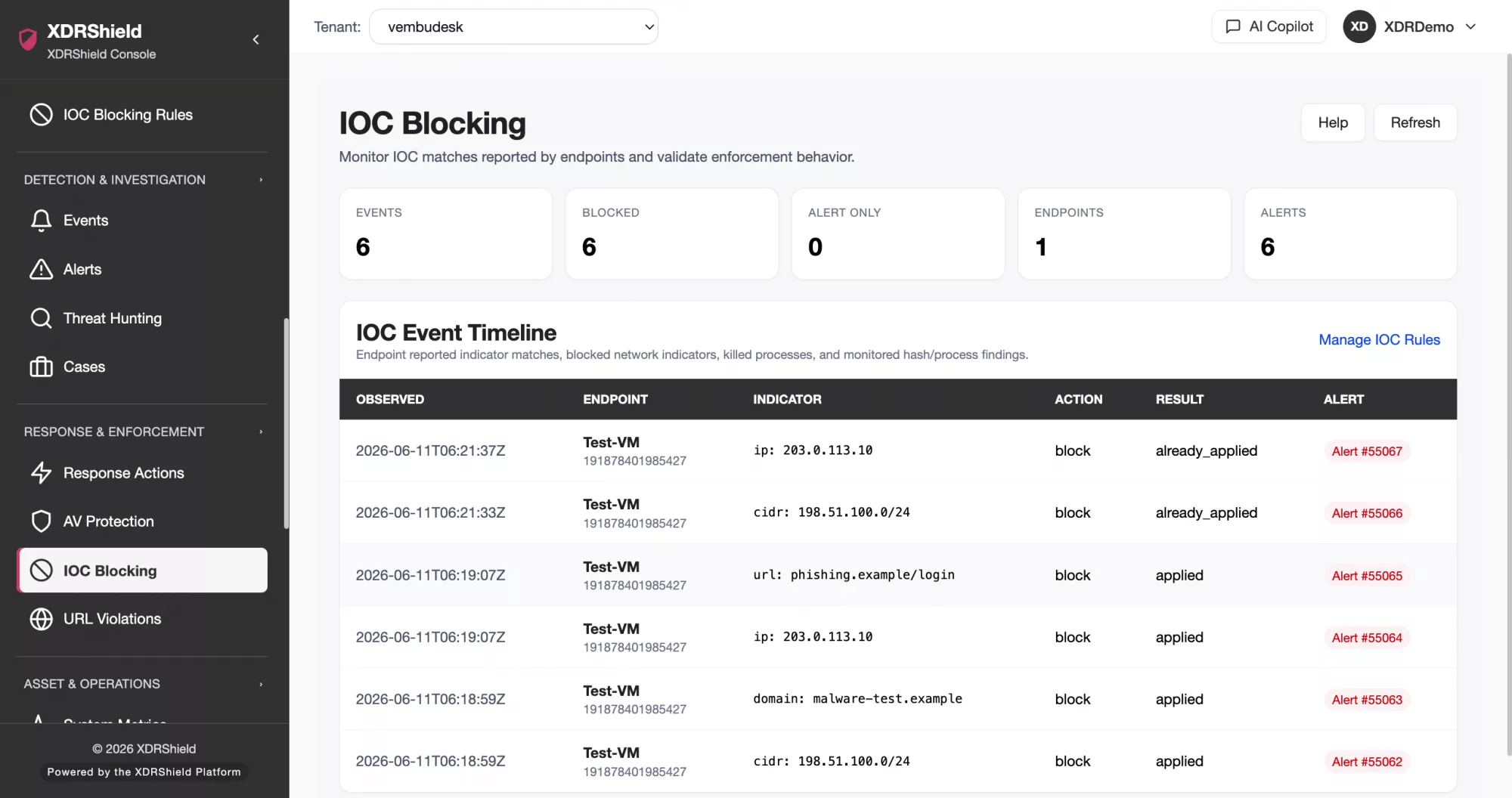
IOC Monitoring and Supported Blocking
Use indicators of compromise for monitoring or supported blocking workflows while retaining rule, policy, and endpoint evidence.
- Define supported indicators for monitoring or blocking workflows
- Review IOC findings, enforcement state, and affected endpoint context
- Route high-impact actions through governed response where supported
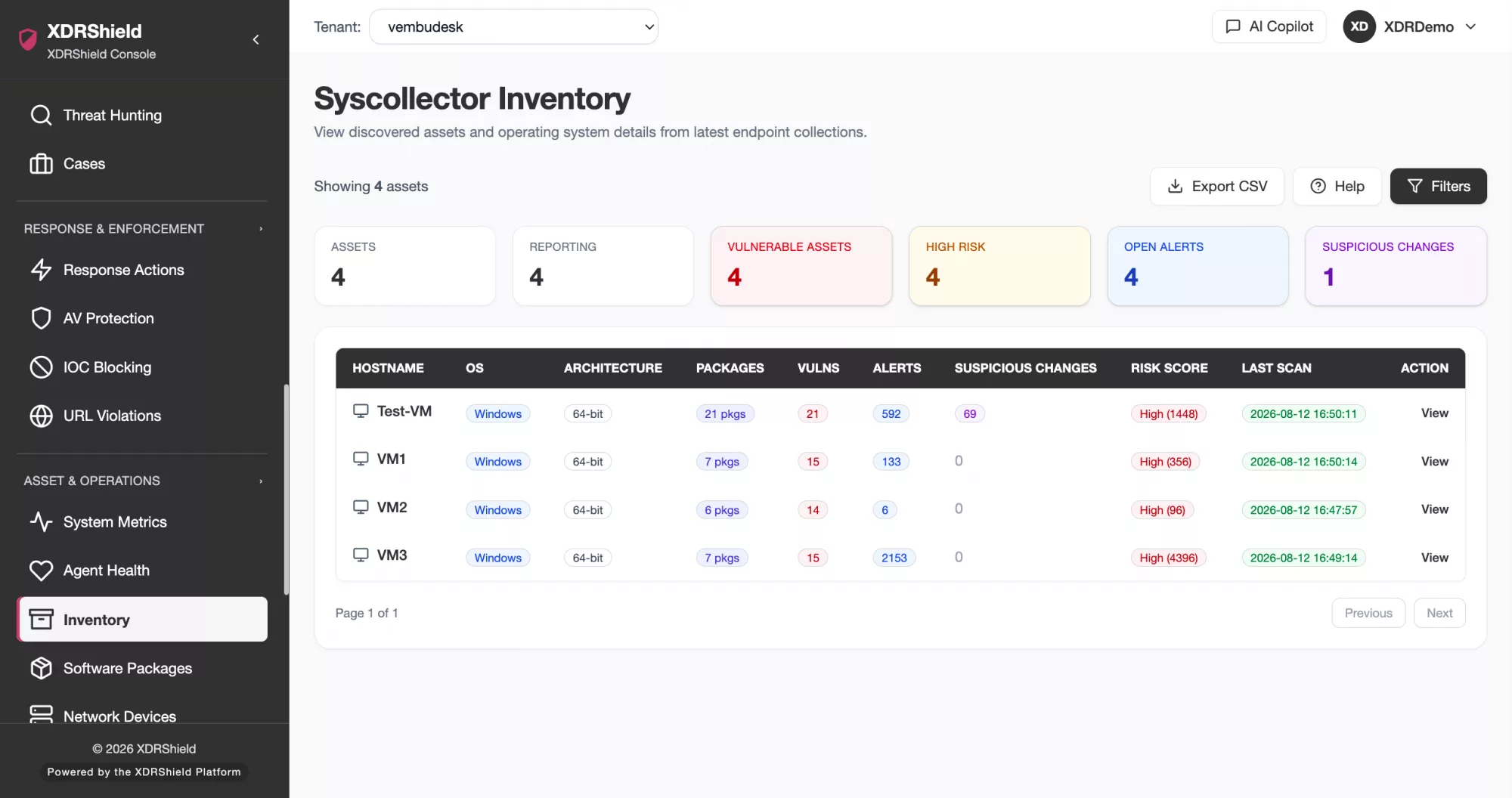
Endpoint Inventory and Vulnerability Visibility
Connect hardware, software, package, OS, network, service, and vulnerability context to investigation and exposure review.
- Review asset and software details alongside security evidence
- Use supported vulnerability visibility to understand exposure context
- Distinguish current, stale, and missing endpoint observations before action
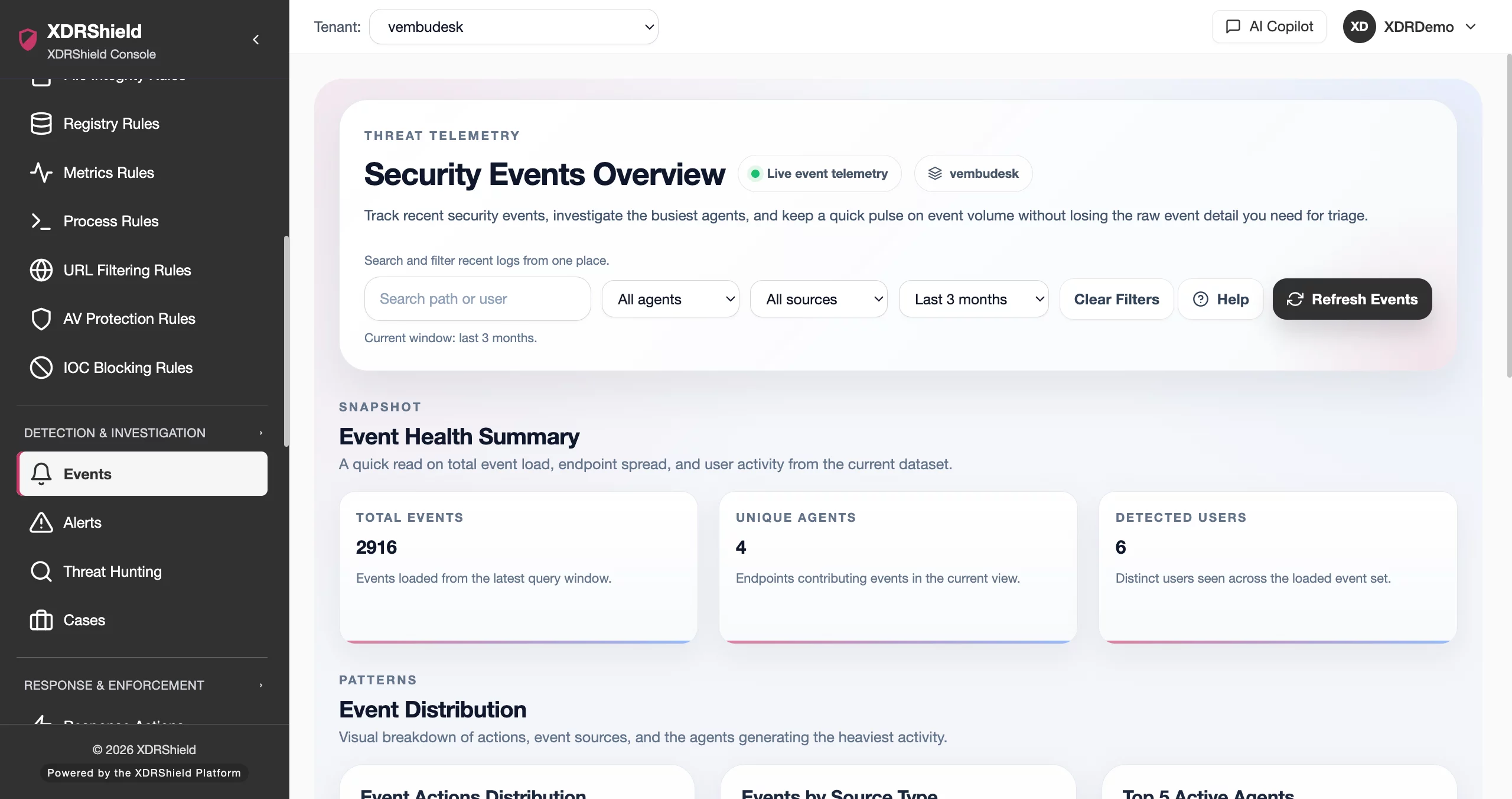
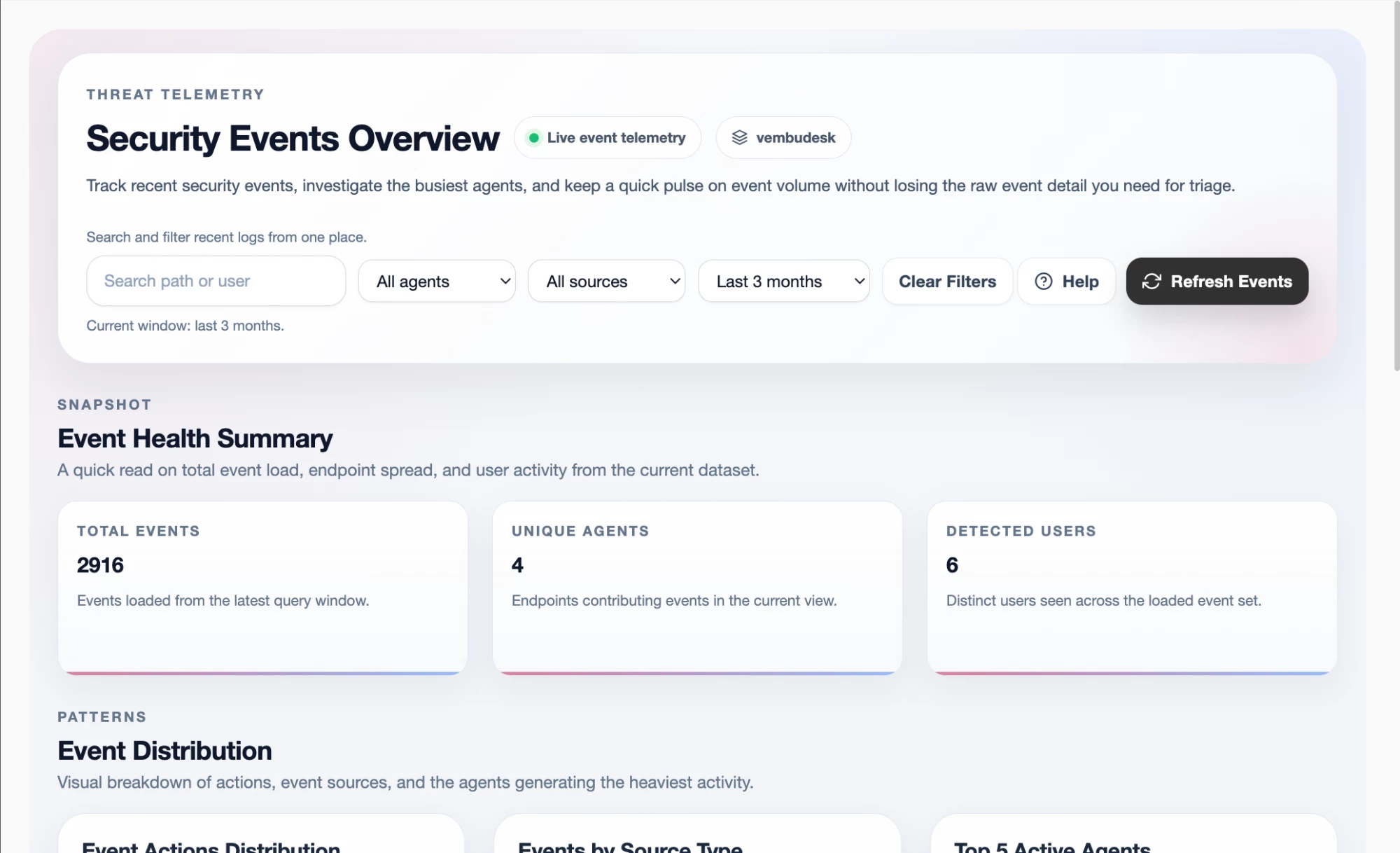
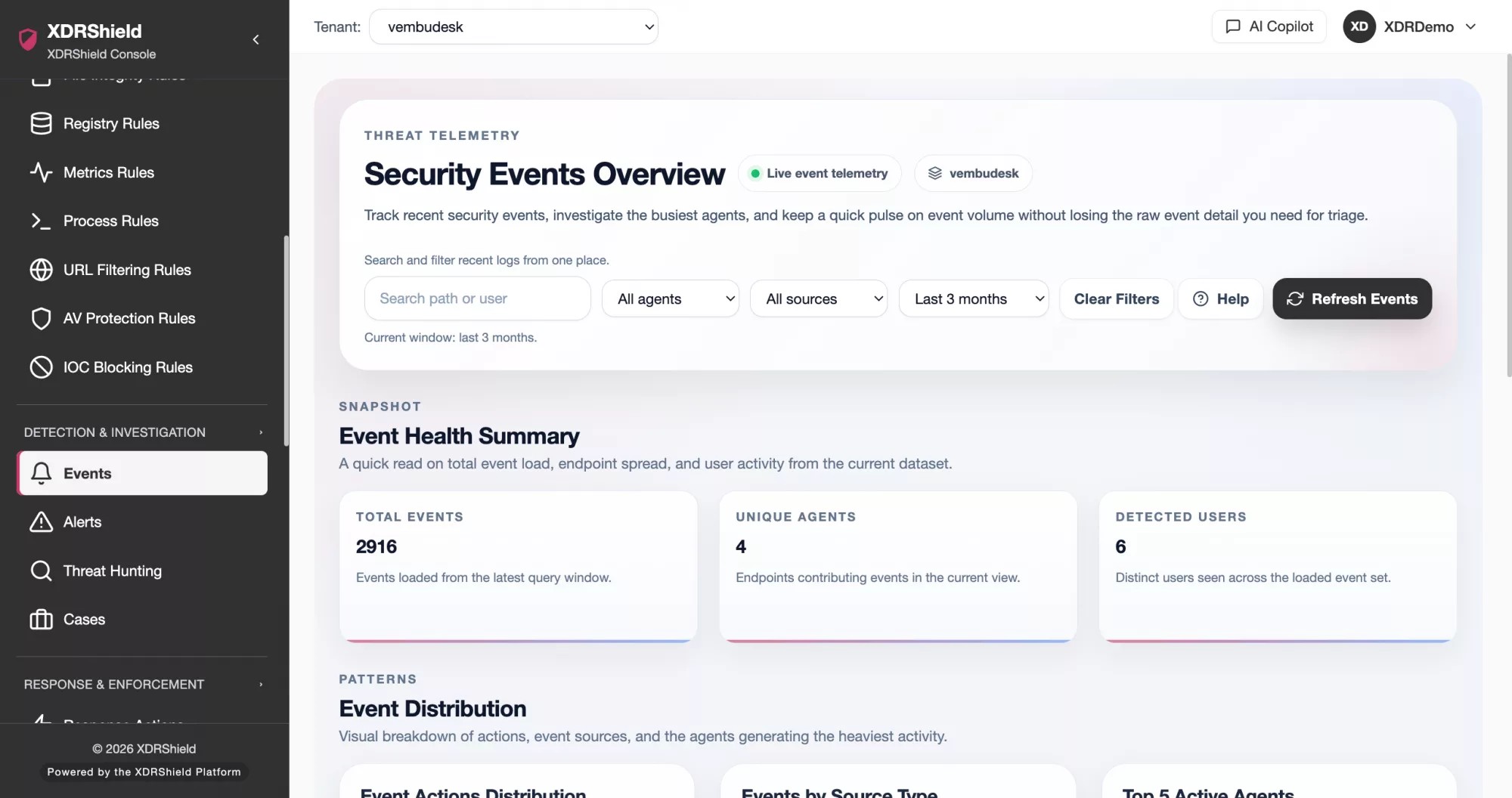
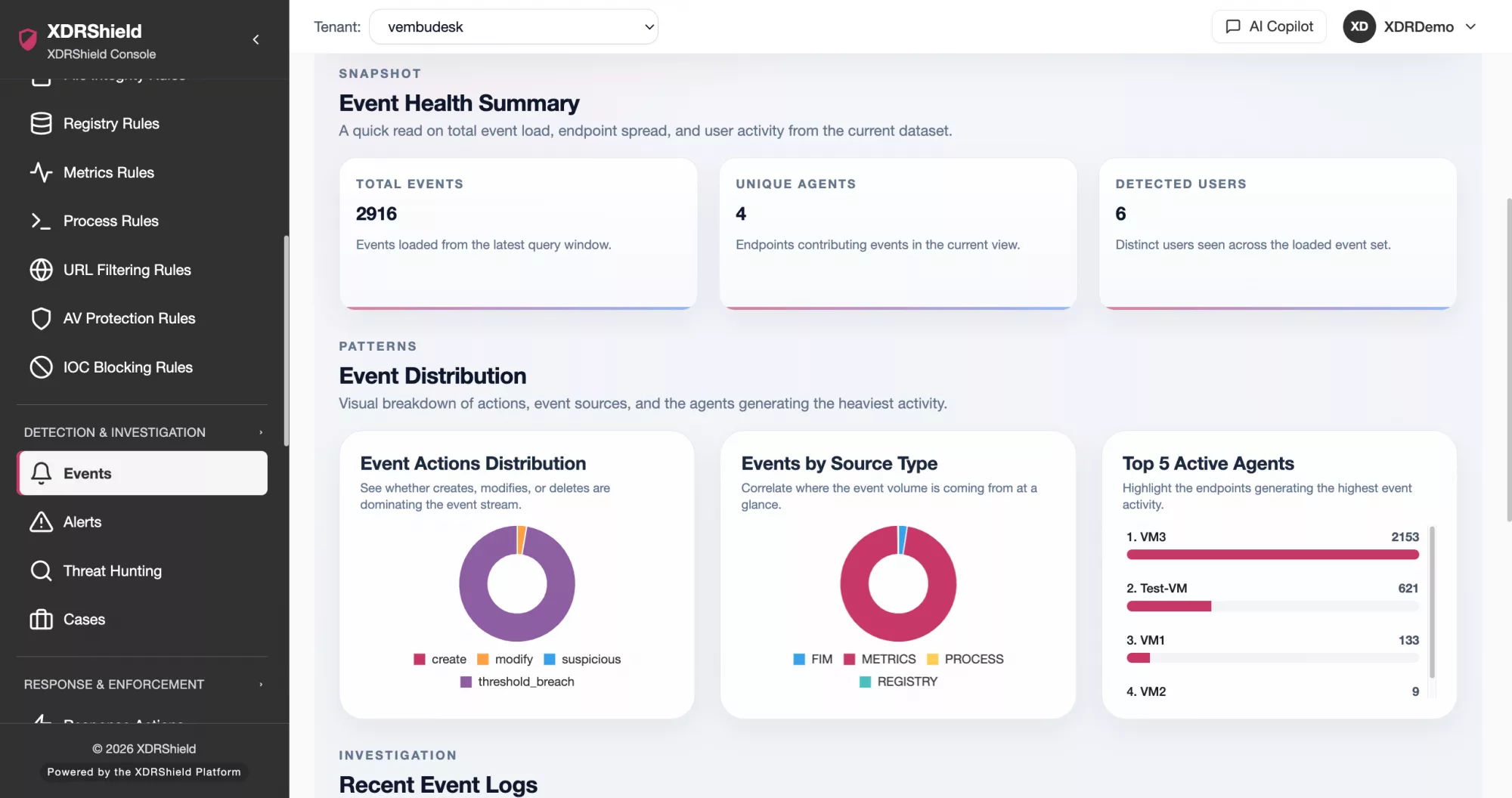
Event Search, Ingestion, and Evidence Freshness
Search and filter incoming security evidence while keeping collection time, heartbeat state, and freshness signals visible for reliable investigation decisions.
- Filter and inspect raw event evidence without losing source context
- Use ingestion and freshness context to understand coverage gaps
- Pivot from events into alerts, hunts, cases, and timelines
Detection Rules, Policies, and Synchronization
Create reusable rules, attach them to policies, assign compatible agents, and review synchronization state so detection coverage stays consistent.
- Manage alert, file, registry, process, metric, URL, antivirus, and IOC rules
- Assign policies to compatible agents within authorized tenant scope
- Track synchronization and configuration state before relying on coverage
Endpoint detection and monitoring FAQs.
What does multi-layer endpoint detection and monitoring mean in XDRShield?
It means XDRShield brings multiple endpoint evidence types into one operating workflow: file integrity, registry activity, processes, system metrics, URL activity, antivirus findings, IOC results, endpoint health, inventory, alerts, and events.
Is this only endpoint detection and response software?
XDRShield supports endpoint detection and response workflows, but it also connects endpoint evidence with threat hunting, cases, policy management, governed response, tenant-aware operations, and selected network-device visibility.
How does XDRShield help security teams investigate endpoint activity?
Analysts can move from endpoint signals into security events, alerts, threat hunts, cases, and timelines without losing tenant, endpoint, policy, or evidence context.
Can MSPs use this across multiple customer environments?
Yes. XDRShield is designed for customer, tenant, and workspace boundaries, helping service-provider teams manage endpoint monitoring and investigation while preserving scoped access and operational records.
Are all monitoring and response actions available on every endpoint?
Availability depends on endpoint platform, agent version, policy assignment, role permissions, configuration, and supported release maturity. Teams should validate coverage for their target environment before deployment.
Bring endpoint detection, evidence, and investigation together.
Use XDRShield to connect supported endpoint signals with policy-driven monitoring, searchable evidence, and security operations workflows.