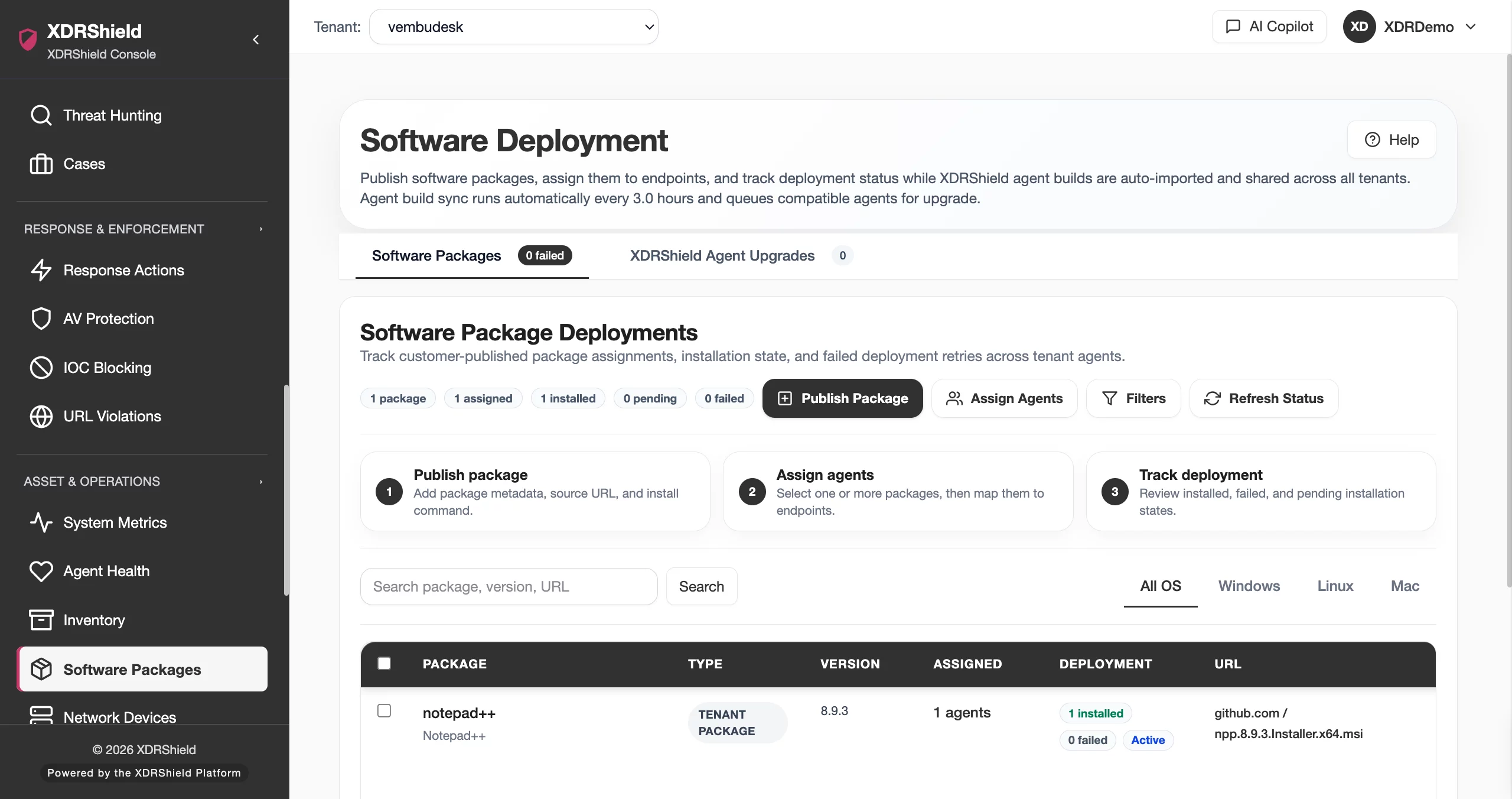
Configure antivirus posture monitoring rules and review protection findings with endpoint context.
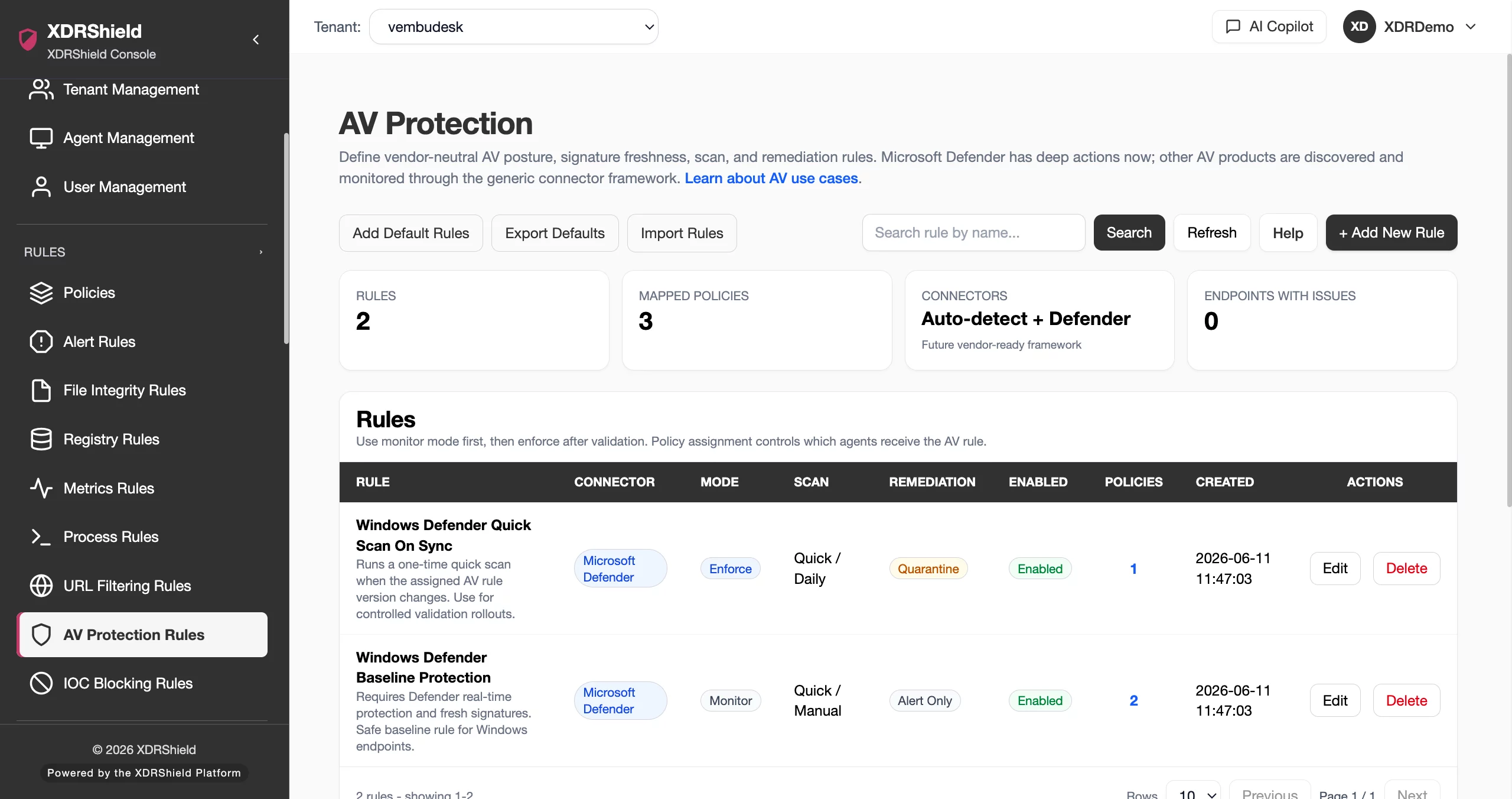
XDRShield AV Protection Rules help teams define how supported antivirus posture should be monitored, attach rules to endpoint policies, and review findings such as real-time protection state, engine availability, stale signatures, and endpoint protection health.
Antivirus posture needs continuous validation, not occasional manual checks.
Security teams need to know whether endpoint antivirus protection is present, running, current, and reporting. AV Protection Rules make posture monitoring reusable and policy-driven so weak protection states become reviewable findings.
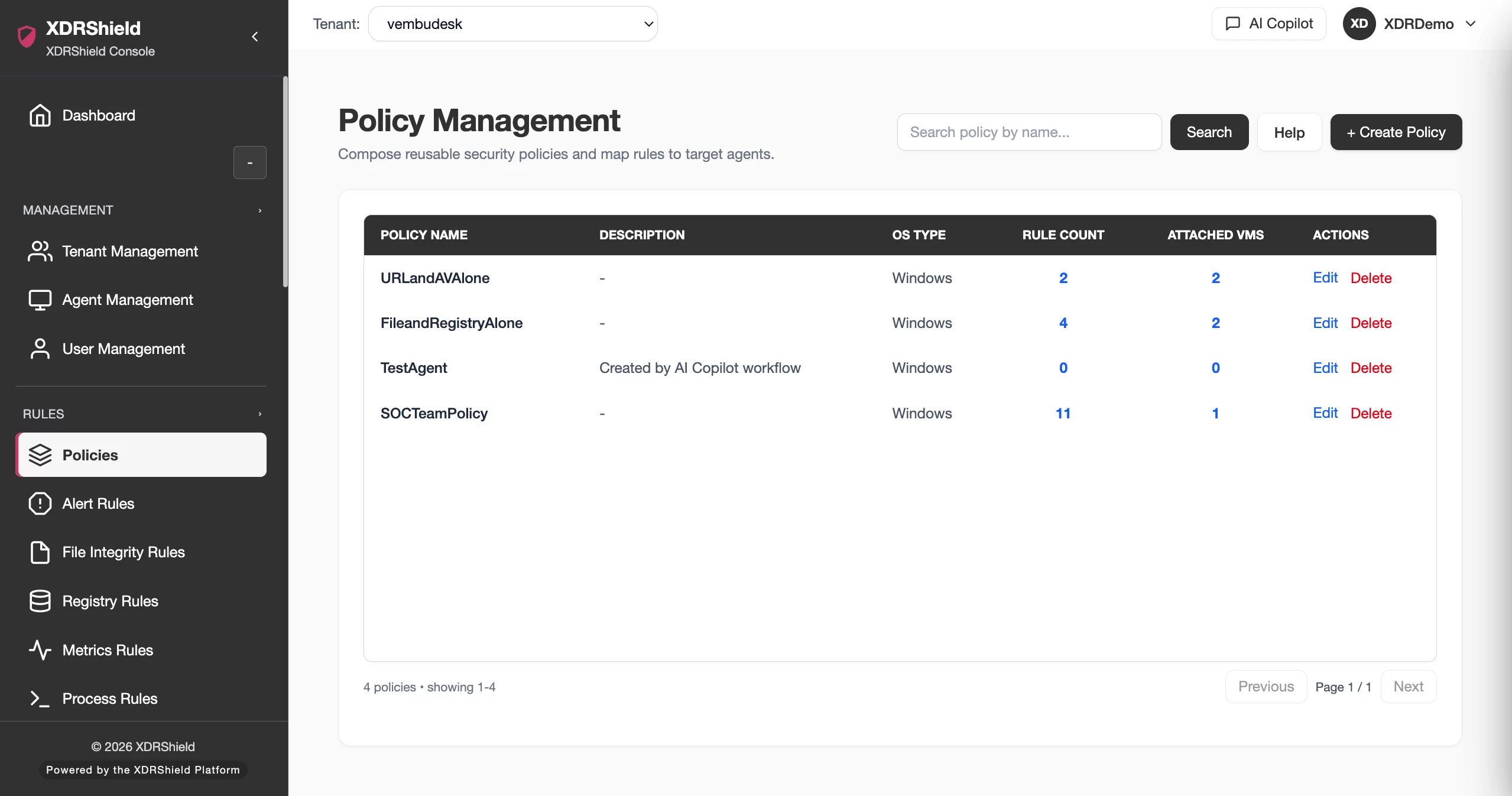
Define AV posture checks and distribute them through endpoint policies.
AV Protection Rules describe the antivirus posture signals to monitor and how findings should be surfaced. Once attached to policies, compatible agents can report applicable AV state and findings for review in protection monitoring and alert workflows.
- Define supported AV posture checks such as engine state, real-time protection, signature freshness, and finding severity.
- Attach rules to policies for compatible endpoint platforms and agents.
- Review findings with endpoint, provider, product, policy, and last-report context.
- Validate rule behavior before assuming every platform or provider reports identical data.
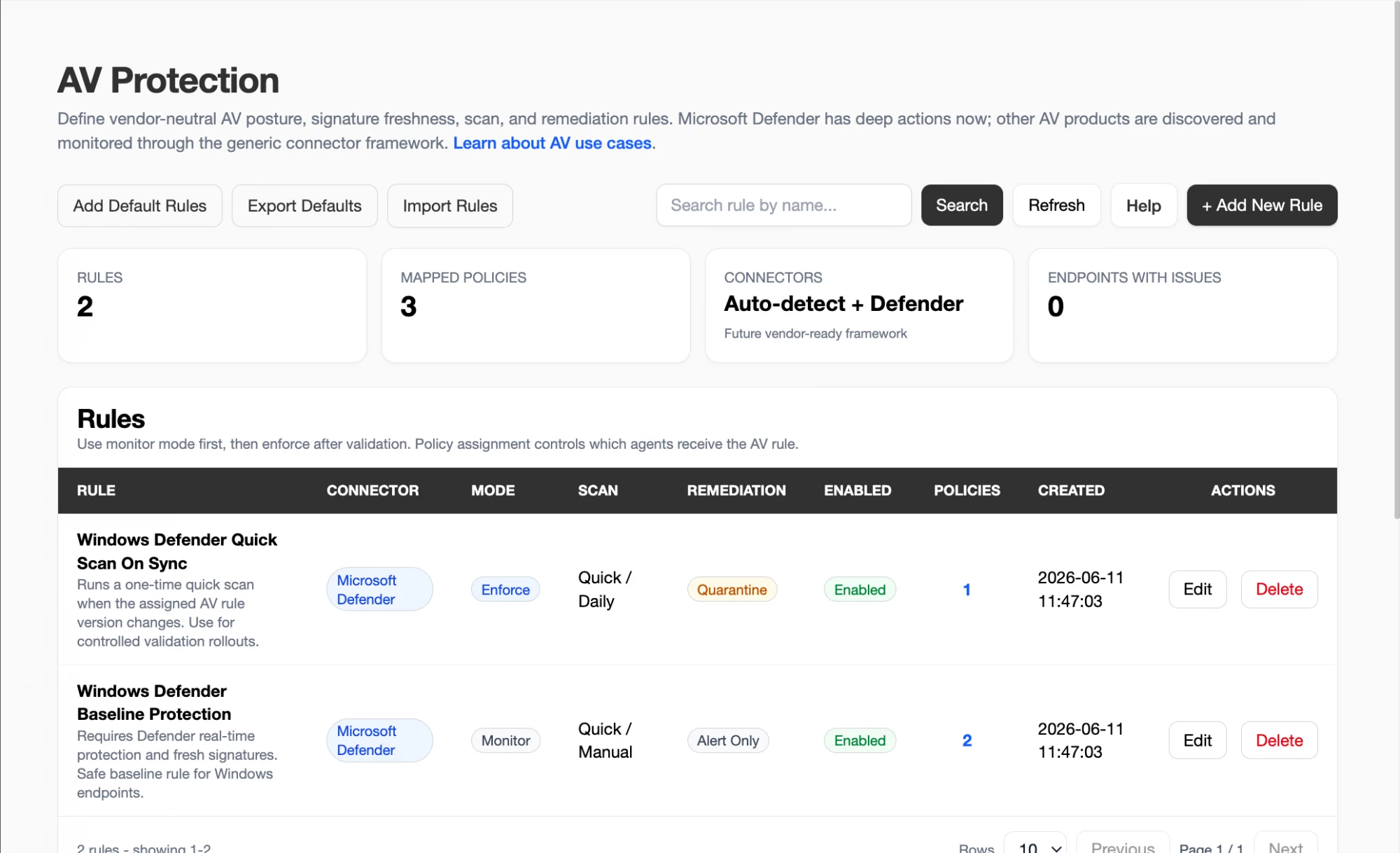
What XDRShield AV Protection Rules helps teams do.
Each capability supports the operating workflow for av protection rules, from configuration and validation to investigation, governance, and follow-up.
Protection posture checks
Monitor supported AV state such as real-time protection, engine availability, signatures, and findings.
Rule configuration
Create reusable AV monitoring rules with clear provider and platform expectations.
Policy distribution
Attach AV rules to endpoint policies for governed rollout.
Endpoint posture review
Review latest endpoint AV posture, provider, product, state, and last report.
Finding severity
Use warning and critical states to prioritize protection failures or stale signatures.
Troubleshooting filters
Filter endpoints by provider, health state, tenant, platform, and findings.
Freshness validation
Check last report before treating AV posture as current.
Tenant-scoped AV governance
Standardize AV posture monitoring across customers while preserving tenant separation.
From AV posture requirement to monitored endpoint finding.
A repeatable av protection rules workflow keeps configuration deliberate, validated, and traceable.
Define posture expectations
Decide which supported AV states and findings should be monitored.
Create focused rule
Configure provider, platform, and finding expectations clearly.
Attach through policy
Map the AV rule to endpoint policies for compatible agents.
Review reported posture
Check endpoint AV posture, findings, and last report after rollout.
Investigate weak states
Prioritize warning, critical, stale, or not-configured endpoints.
Tune and document
Adjust scope or expectations based on provider support and operational feedback.
Where AV Protection Rules helps most.
Use av protection rules where endpoint security outcomes depend on consistent configuration and evidence-backed review.
Protection readiness checks
Confirm endpoints are reporting expected AV posture.
Weak protection triage
Find endpoints with critical or warning protection states.
Stale signature review
Identify endpoints with old signature or outdated protection data.
Policy rollout
Standardize AV posture monitoring across endpoint groups.
Provider-specific troubleshooting
Filter by connector, product, platform, or rule coverage.
MSP customer protection review
Prepare customer-specific AV posture evidence for service reviews.
Know what each posture signal means before rollout.
This table helps operators interpret common AV rule and finding signals.
| Area | What it means | How teams use it |
|---|---|---|
| Healthy | Expected AV posture is reported and no critical finding is present. | Continue monitoring and validate freshness. |
| Warning | A non-critical posture issue, stale signal, or partial protection concern is present. | Review endpoint context and provider state. |
| Critical | High-severity protection failure or finding needs immediate attention. | Prioritize investigation and remediation. |
| Not configured | The endpoint has not reported applicable AV posture or lacks rule assignment. | Check policy assignment, provider support, and agent compatibility. |
AV Protection Rules for security, IT, and MSP teams.
AV Protection Rules supports day-to-day operations while keeping tenant scope, evidence, and accountable change control clear.
For security and IT teams
Use this feature to keep endpoint protection, detection evidence, and operational decisions aligned with the current environment.
- Validate configuration before broad rollout.
- Review evidence before changing rules or policies.
- Use related alerts, events, cases, and activity logs for context.
For MSP and service-provider teams
Use tenant-scoped operation so customer environments stay separated while common workflows remain repeatable.
- Confirm customer or tenant scope before bulk changes.
- Standardize configuration patterns across customers.
- Preserve customer-specific audit and review evidence.
AV Protection Rules FAQs.
What are AV Protection Rules in XDRShield?
AV Protection Rules define reusable antivirus posture monitoring checks that can be attached to endpoint policies and reviewed through protection findings.
What AV posture can be monitored?
Supported signals may include real-time protection state, AV engine availability, signature freshness, provider/product context, findings, and last report time.
Do all AV providers report identical data?
No. Availability depends on supported provider, endpoint operating system, agent version, integration state, and release maturity.
How are AV rules assigned?
AV rules are attached to policies and distributed to compatible endpoint agents within the selected tenant and scope.
How should teams investigate AV findings?
Review finding severity, provider, product, endpoint health, policy assignment, and last report before remediation.
Strengthen endpoint protection posture
Monitor AV health with reusable policy-driven rules.