Define reusable detection logic that turns endpoint evidence into actionable alerts.
XDRShield Alert Rules help teams configure detection conditions, severity, scope, and policy attachment so endpoint activity becomes reviewable alerts with enough context for triage and investigation.
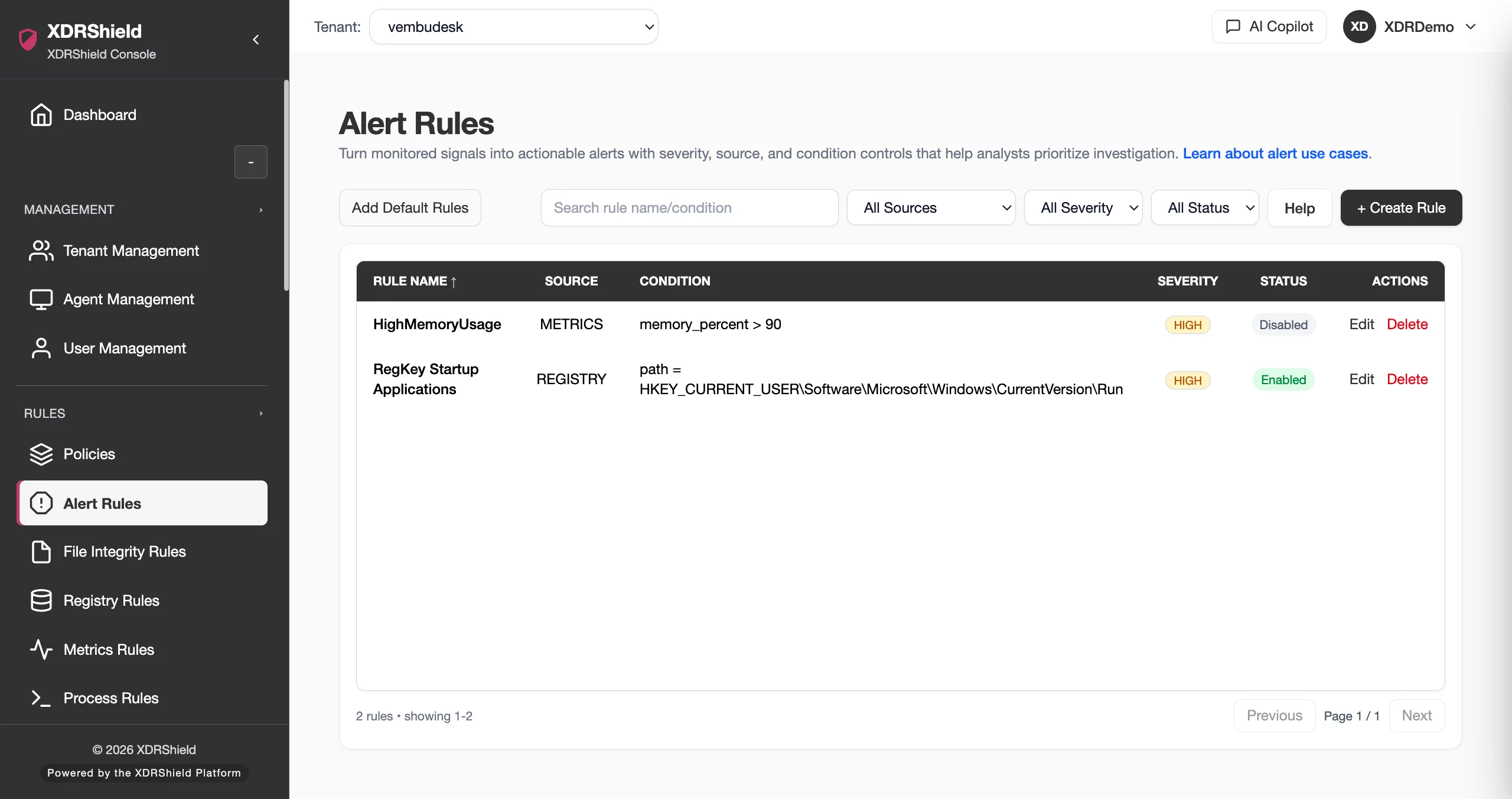
Alert quality starts with focused rule design.
Broad or vague alert rules create noise. Focused rules help teams surface meaningful endpoint behavior, assign appropriate severity, and preserve the evidence analysts need to decide whether to acknowledge, investigate, or respond.
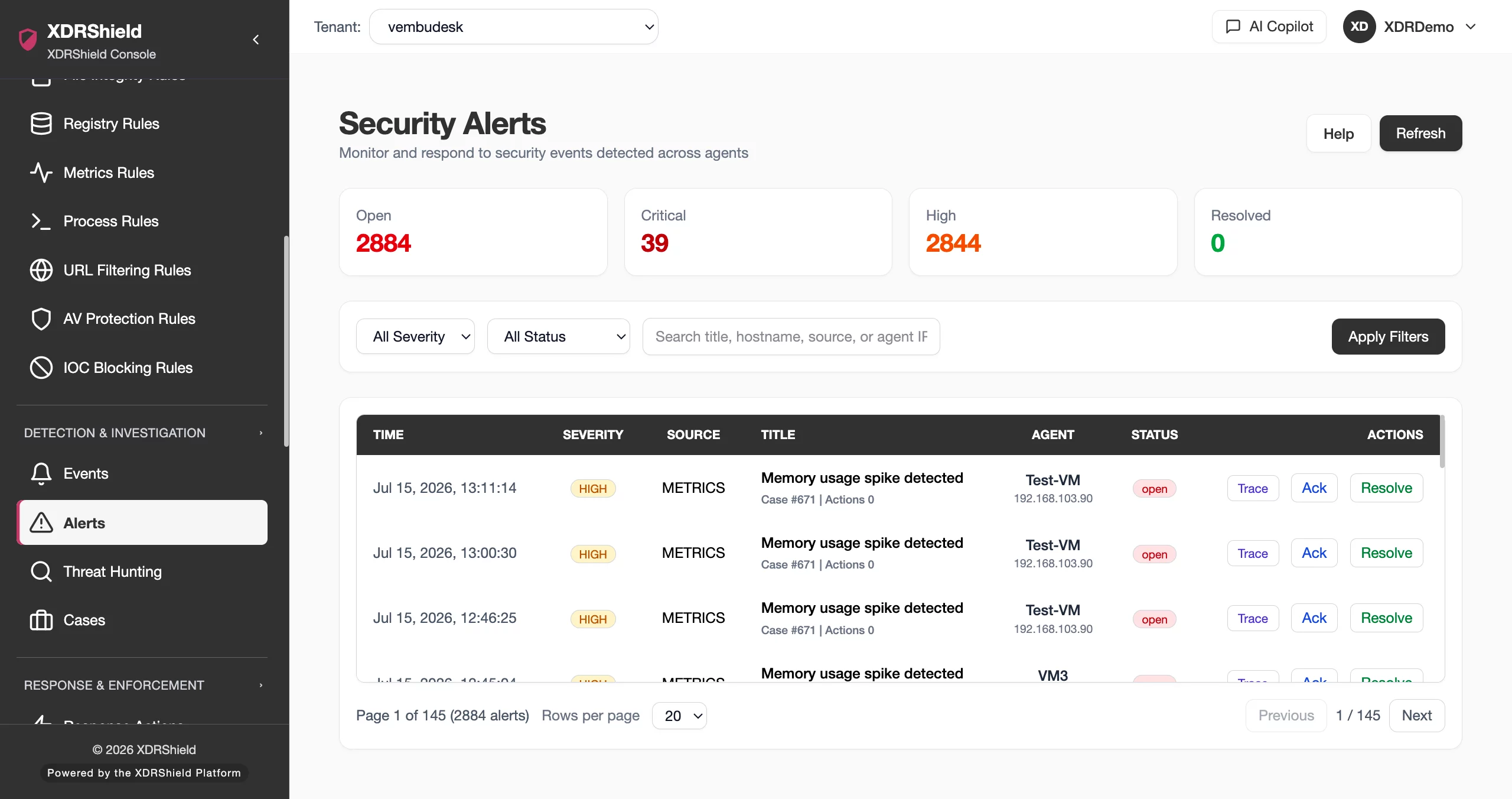
Create alert logic, attach it to policies, and review outcomes in alert triage.
Alert Rules define the conditions that promote endpoint evidence into security alerts. Teams create focused rules, assign severity and scope, attach rules through policies, then review alert outcomes to tune signal quality.
- Create reusable detection rules with clear purpose, severity, and description.
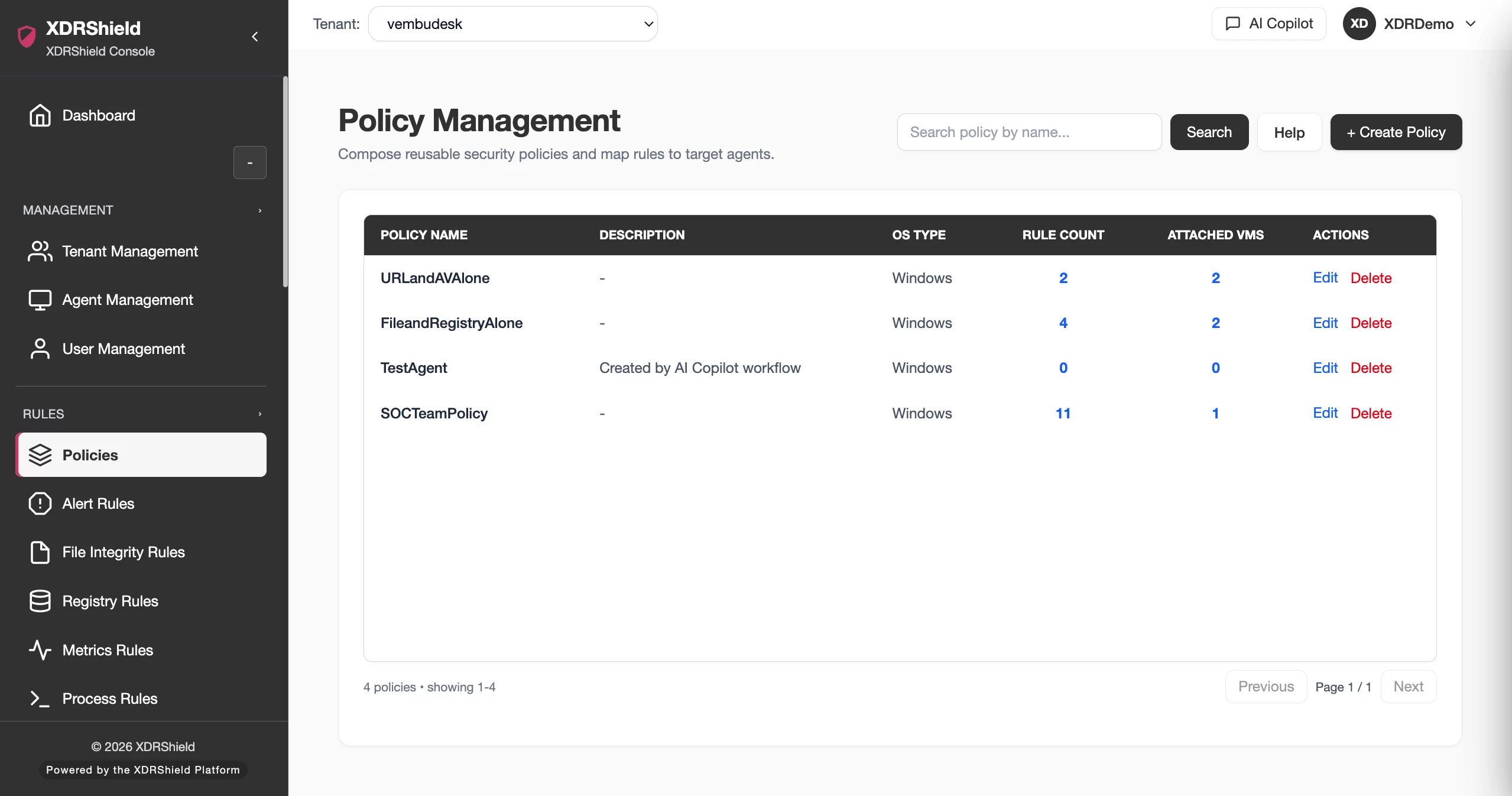
- Attach alert rules to policies for distribution to compatible endpoints.
- Review resulting alerts and security events before expanding noisy rules.
- Use Activity Logs and policy history for accountable rule changes.
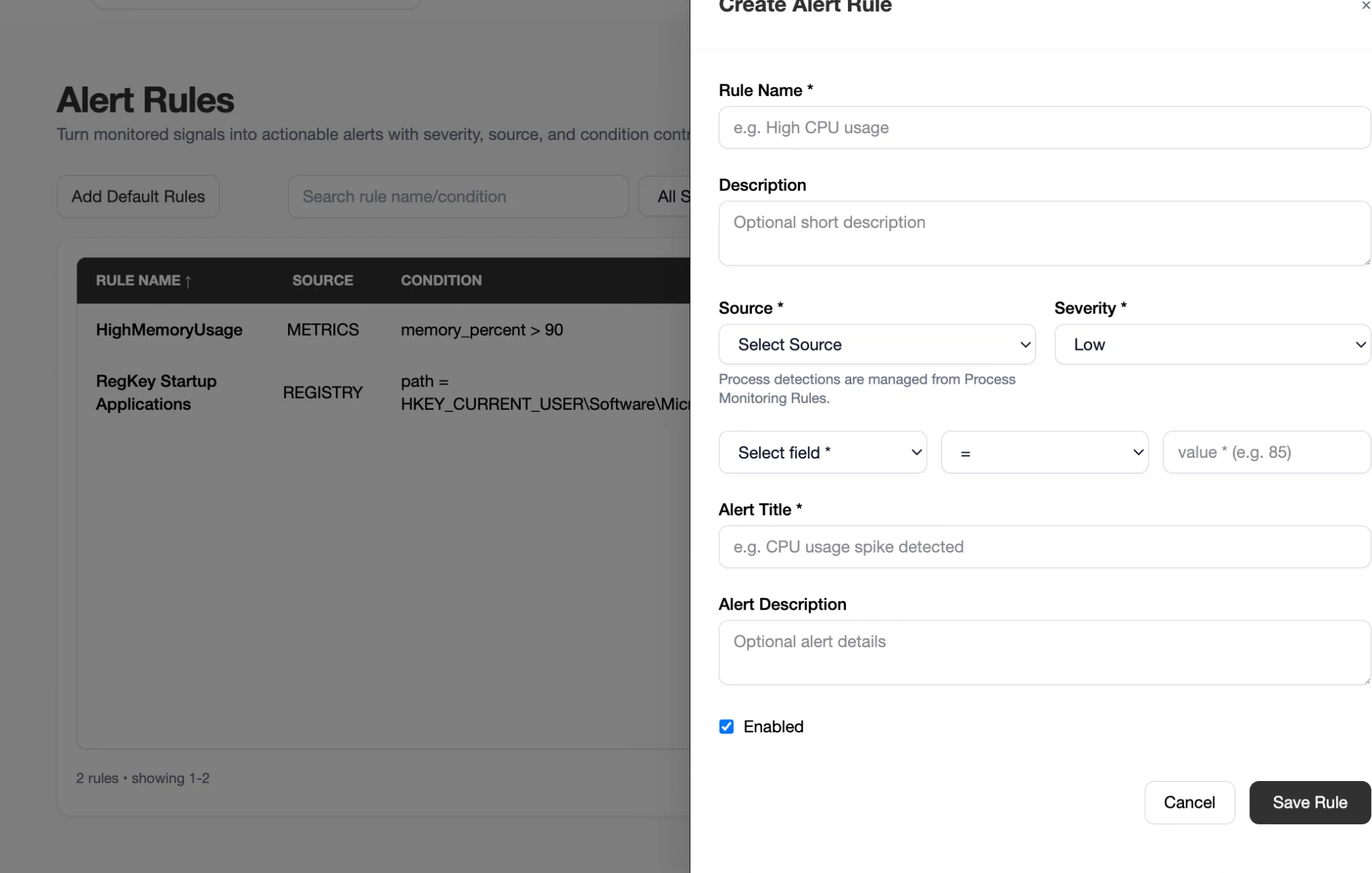
What XDRShield Alert Rules helps teams do.
Each capability supports the operating workflow for alert rules, from configuration and validation to investigation, governance, and follow-up.
Rule condition design
Define the activity, threshold, or evidence pattern that should create an alert.
Severity assignment
Set severity based on expected risk and analyst response urgency.
Policy attachment
Attach alert rules to policies so compatible agents receive the configuration.
Evidence review
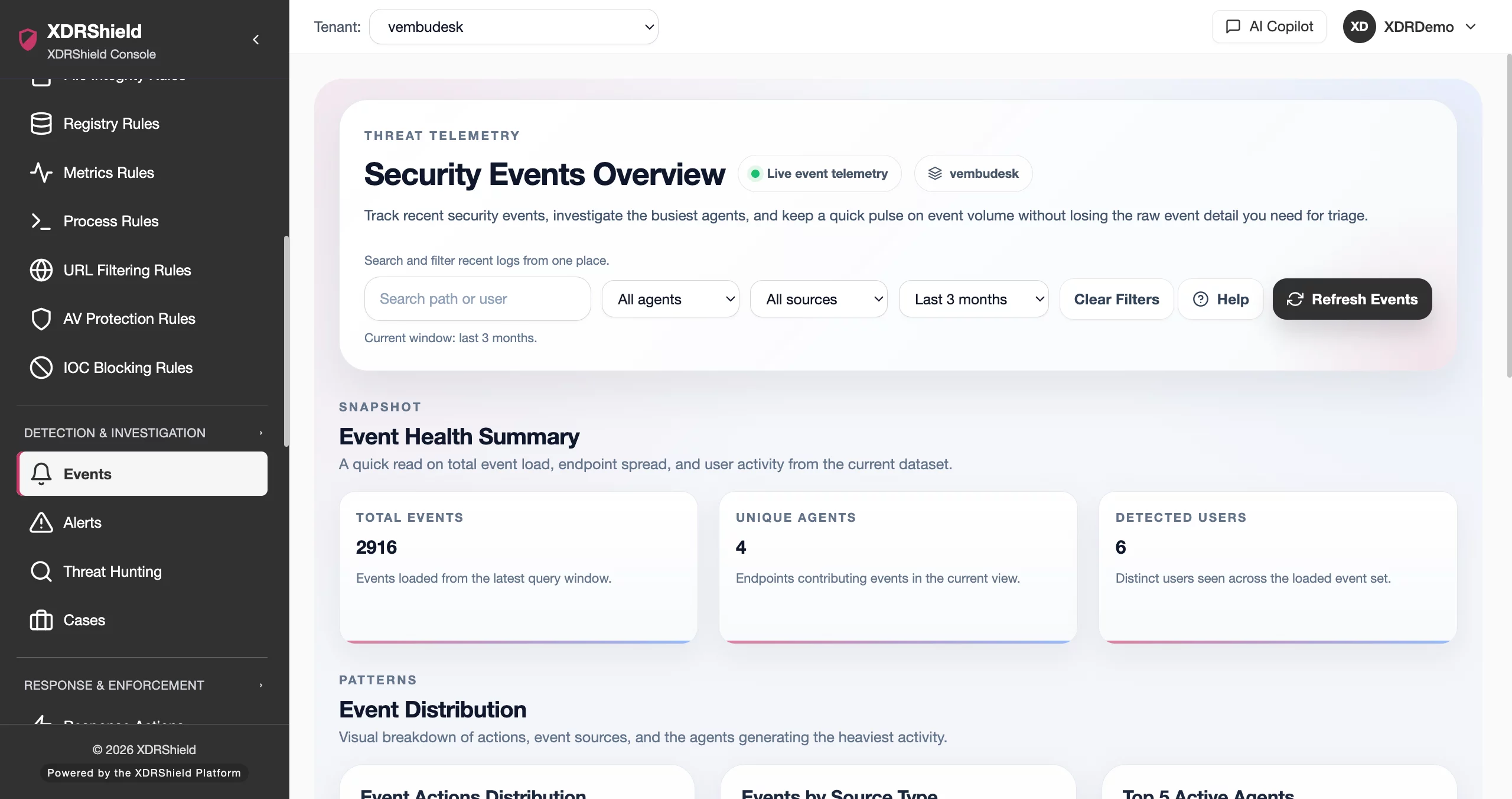
Validate alert output against related events and endpoint context.
Noise tuning
Use search and triage feedback to refine rules that create repeated false positives.
Change timing
Review when rule edits occurred during incident or noise investigations.
Rule documentation
Keep rule purpose, reviewer context, and expected outcome understandable for future operators.
Tenant-scoped detection
Apply customer-specific alert rules without mixing detection scope across tenants.
From detection idea to useful alert.
A repeatable alert rules workflow keeps configuration deliberate, validated, and traceable.
Define objective
Decide what behavior the rule should surface and why it matters.
Set condition and severity
Configure the condition and assign severity based on expected operational impact.
Attach through policy
Add the rule to the correct policy and compatible endpoint scope.
Validate output
Review generated alerts and supporting events after rollout.
Tune noise
Adjust conditions, severity, or scope when alerts do not match intent.
Document change
Use descriptions and activity evidence so future teams understand the rule.
Where Alert Rules helps most.
Use alert rules where endpoint security outcomes depend on consistent configuration and evidence-backed review.
High-value endpoint detection
Surface suspicious endpoint behavior into the alert queue with consistent severity.
Noise reduction
Refine rules that trigger too often or lack investigation value.
Policy-driven rollout
Deploy detection logic to selected agents through governed policy assignment.
Evidence-backed triage
Ensure alerts include enough context to validate in security events and cases.
Rule review
Keep change history and purpose clear for audits and tuning sessions.
Customer-specific detection
Apply different rule strategies by tenant when customer requirements differ.
Design rules for actionability, not volume.
This table separates rule design choices from triage outcomes.
| Area | What it means | How teams use it |
|---|---|---|
| Condition | The evidence pattern or threshold that creates an alert. | Keep focused and measurable. |
| Severity | The risk level analysts see during triage. | Match urgency to expected impact and false-positive risk. |
| Policy scope | Where the rule is distributed. | Validate tenant, platform, and endpoint compatibility. |
| Tuning feedback | Alerts and events created by the rule. | Use to reduce noise or improve coverage. |
Alert Rules for security, IT, and MSP teams.
Alert Rules supports day-to-day operations while keeping tenant scope, evidence, and accountable change control clear.
For security and IT teams
Use this feature to keep endpoint protection, detection evidence, and operational decisions aligned with the current environment.
- Validate configuration before broad rollout.
- Review evidence before changing rules or policies.
- Use related alerts, events, cases, and activity logs for context.
For MSP and service-provider teams
Use tenant-scoped operation so customer environments stay separated while common workflows remain repeatable.
- Confirm customer or tenant scope before bulk changes.
- Standardize configuration patterns across customers.
- Preserve customer-specific audit and review evidence.
Alert Rules FAQs.
What are Alert Rules in XDRShield?
Alert Rules are reusable detection definitions that turn supported endpoint evidence into security alerts with severity and triage context.
How are Alert Rules deployed?
Alert Rules are attached to policies and distributed to compatible endpoint agents based on tenant, platform, and policy assignment.
How should severity be chosen?
Severity should reflect expected risk, urgency, and analyst response priority, while accounting for false-positive likelihood.
How do teams tune noisy rules?
Teams should review related alerts, security events, affected endpoints, and investigation outcomes before narrowing conditions or changing severity.
How do Alert Rules support MSPs?
MSP teams can standardize detection logic across customers while keeping tenant-specific rules and assignments separated.
Create useful alerts, not noise
Define focused detection rules and tune them from evidence.