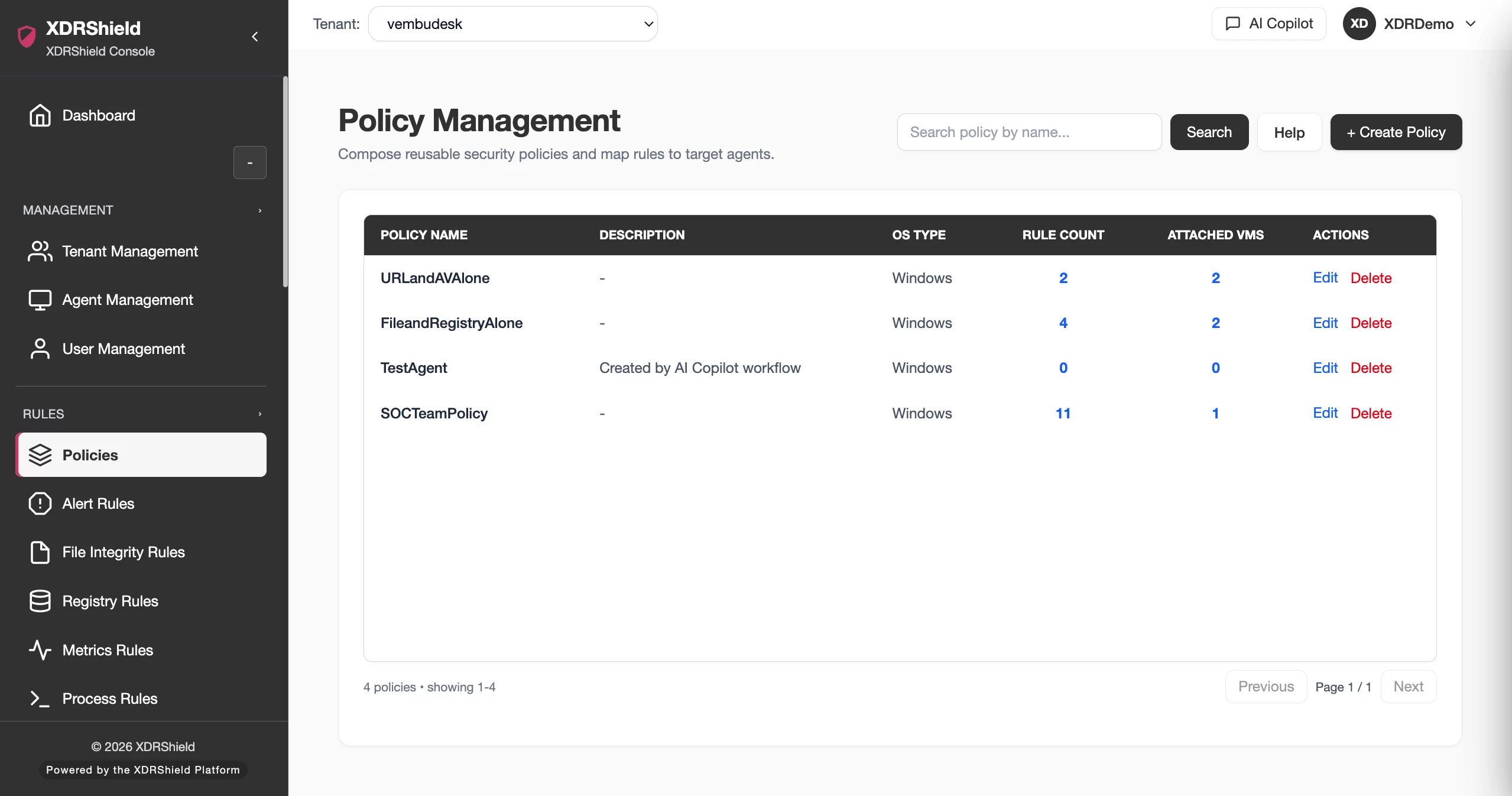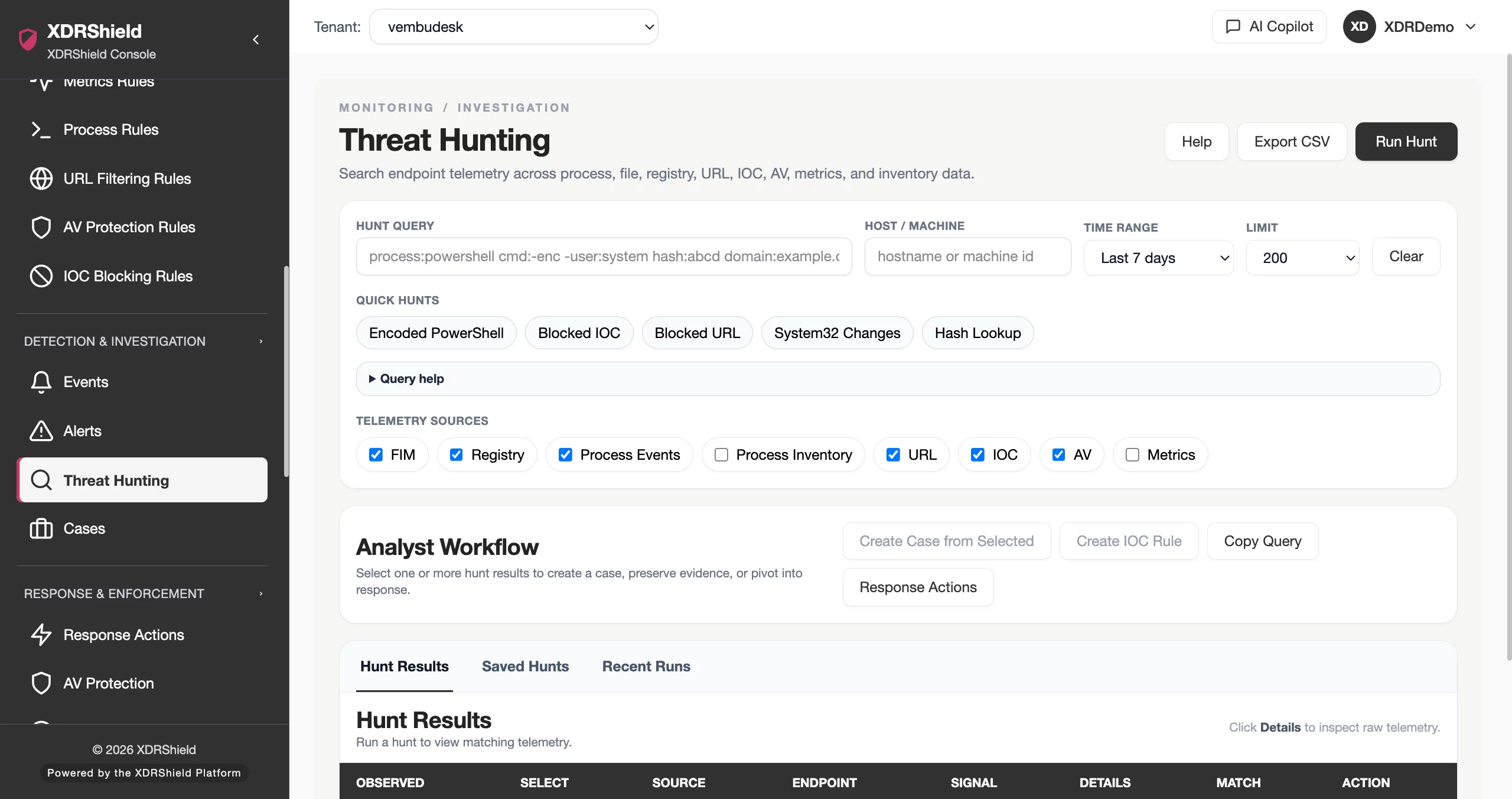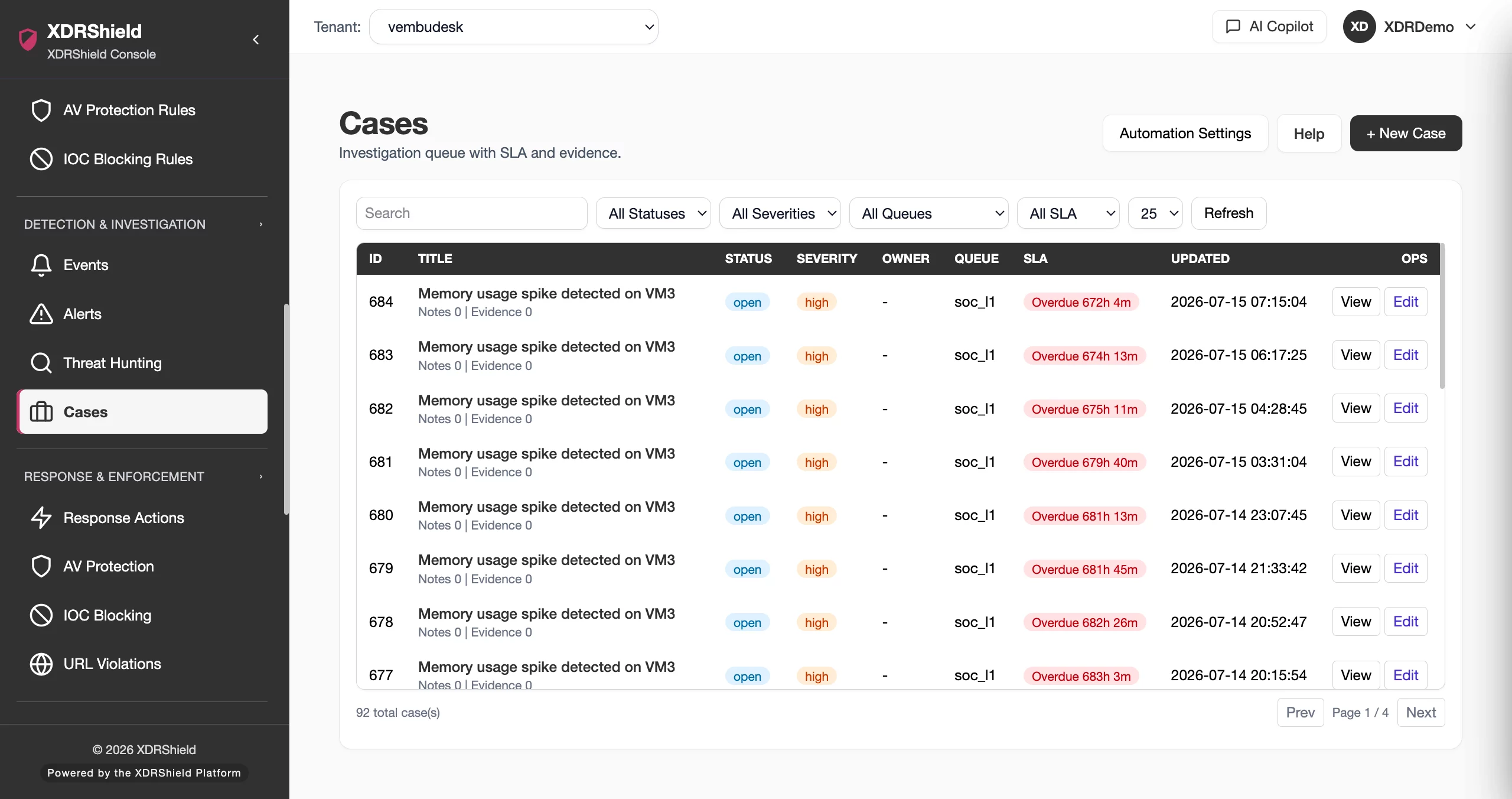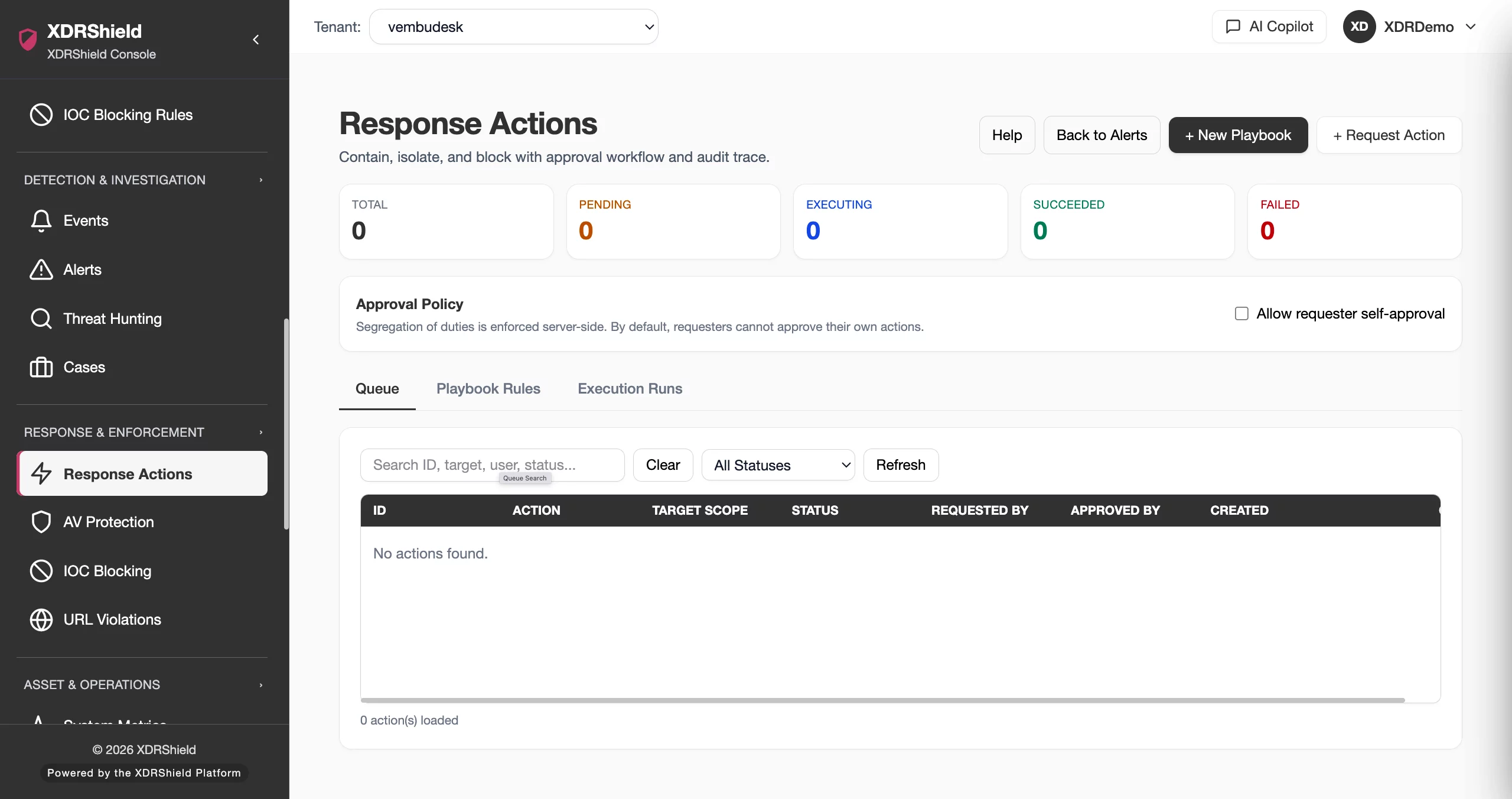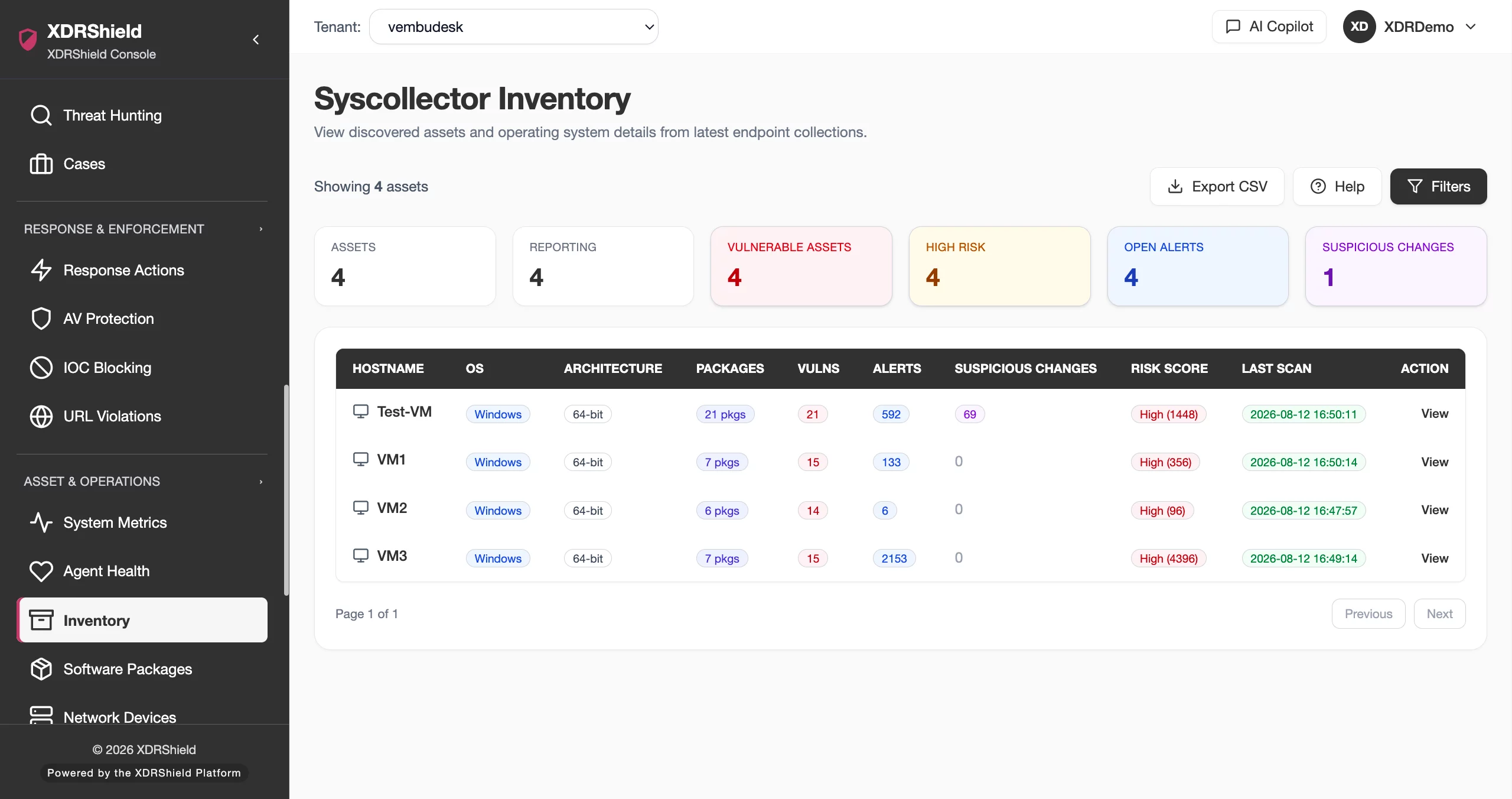
Centralize endpoint policy assignment, compatibility checks, and synchronization control.
XDRShield Policy Management helps administrators group security rules into policies, assign them to compatible agents, track synchronization state, and keep endpoint monitoring and enforcement configuration governed across tenants.
Endpoint security policy needs controlled rollout, not one-off rule changes.
Policies determine which rules reach which endpoints. Centralized management helps teams standardize coverage, validate compatibility, and troubleshoot sync without losing tenant or agent context.
Build policies from reusable rules and assign them to compatible endpoint agents.
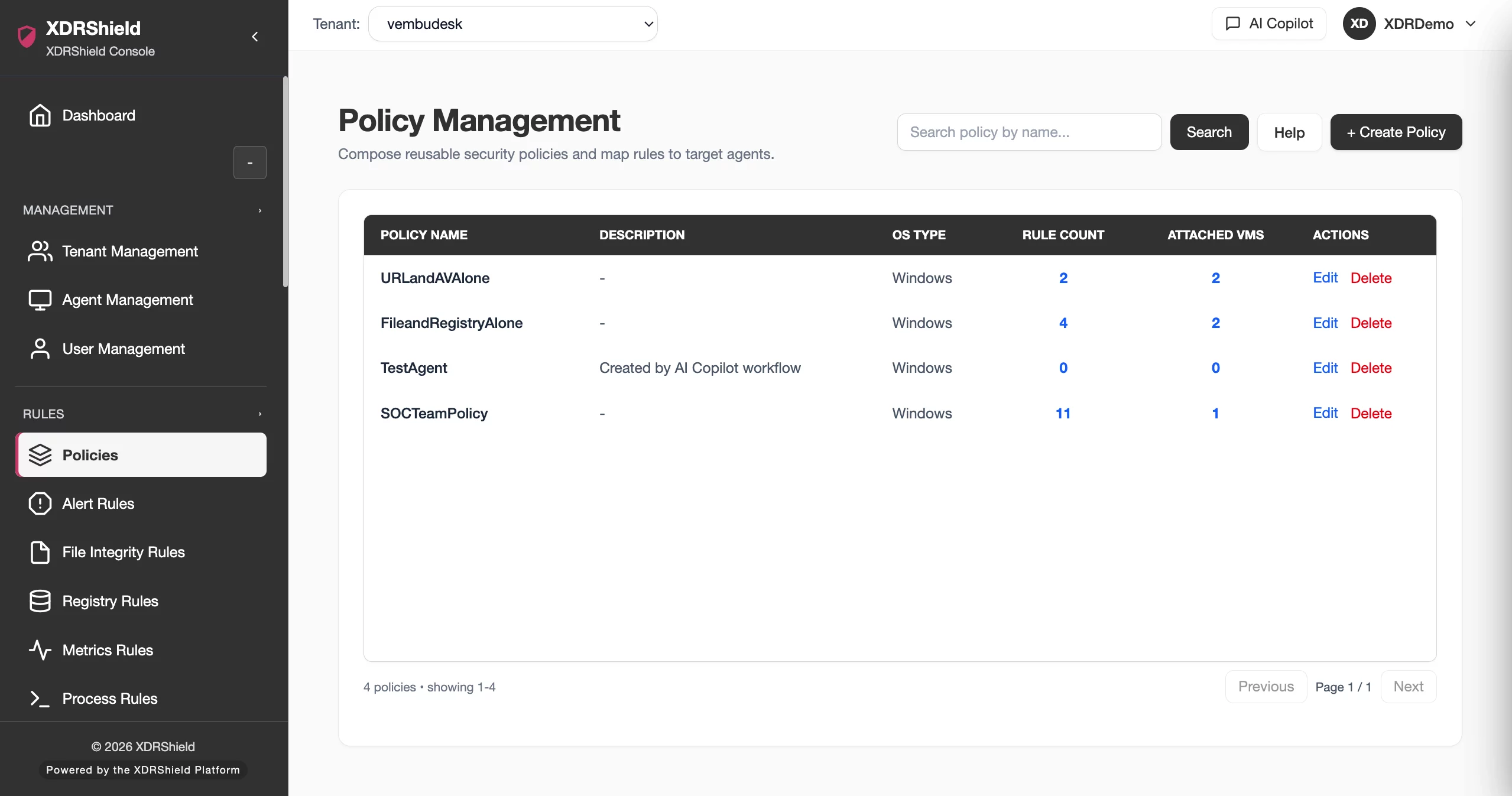
Policy Management connects rules, agents, tenants, compatibility, and sync status. Teams create or update policy bundles, attach supported rule types, assign them to selected agents, and confirm that synchronization completed before treating coverage as active.
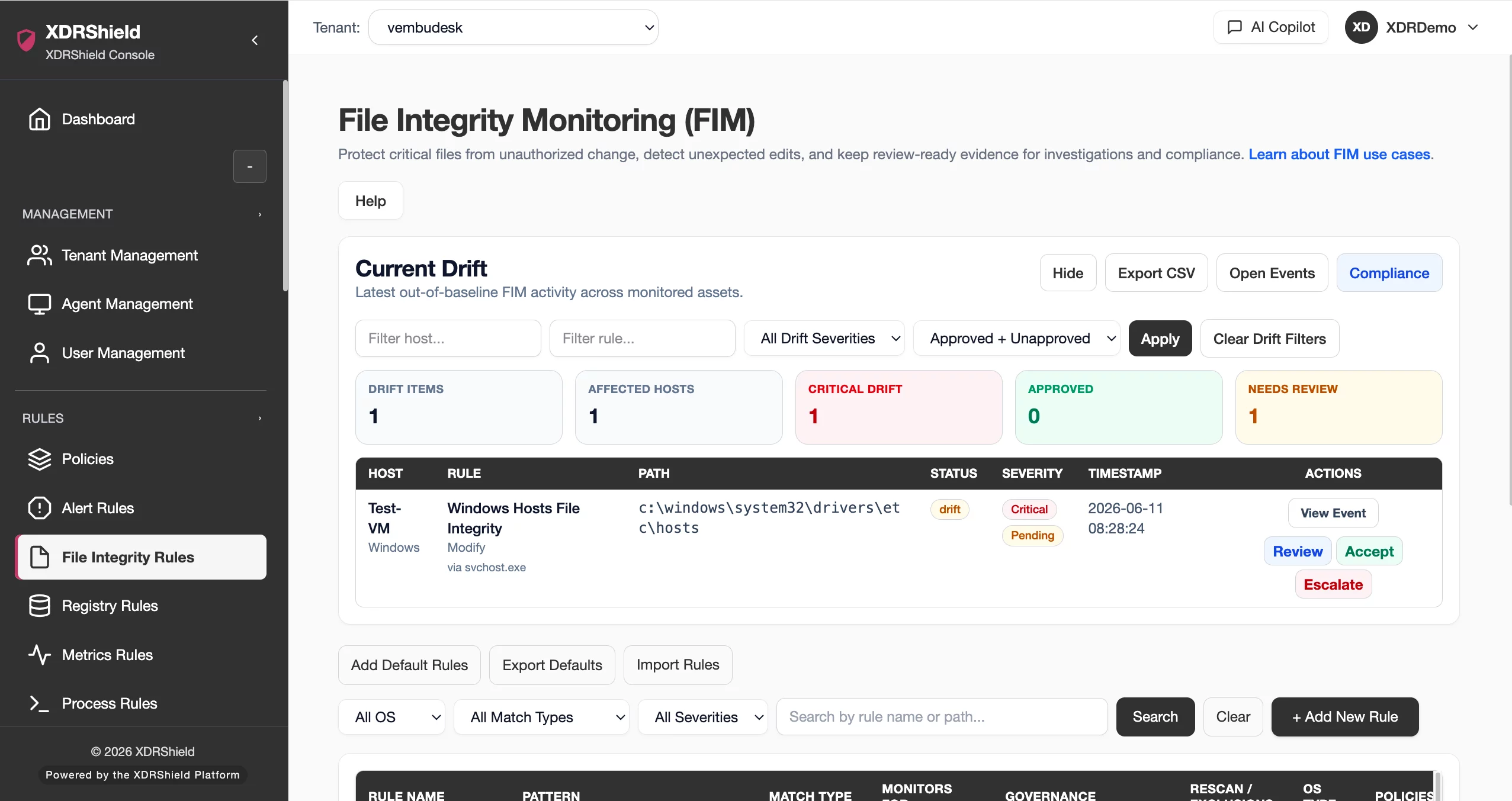
- Group alert, FIM, process, system metrics, AV, IOC, URL, and other supported rules into policies.
- Assign policies to selected compatible agents by tenant, platform, and operational scope.
- Review sync status and last communication before assuming rules are active on endpoints.
- Use activity history for governance around policy creation, edits, and assignment.
What XDRShield Policy Management helps teams do.
Each capability supports the operating workflow for policy management, from configuration and validation to investigation, governance, and follow-up.
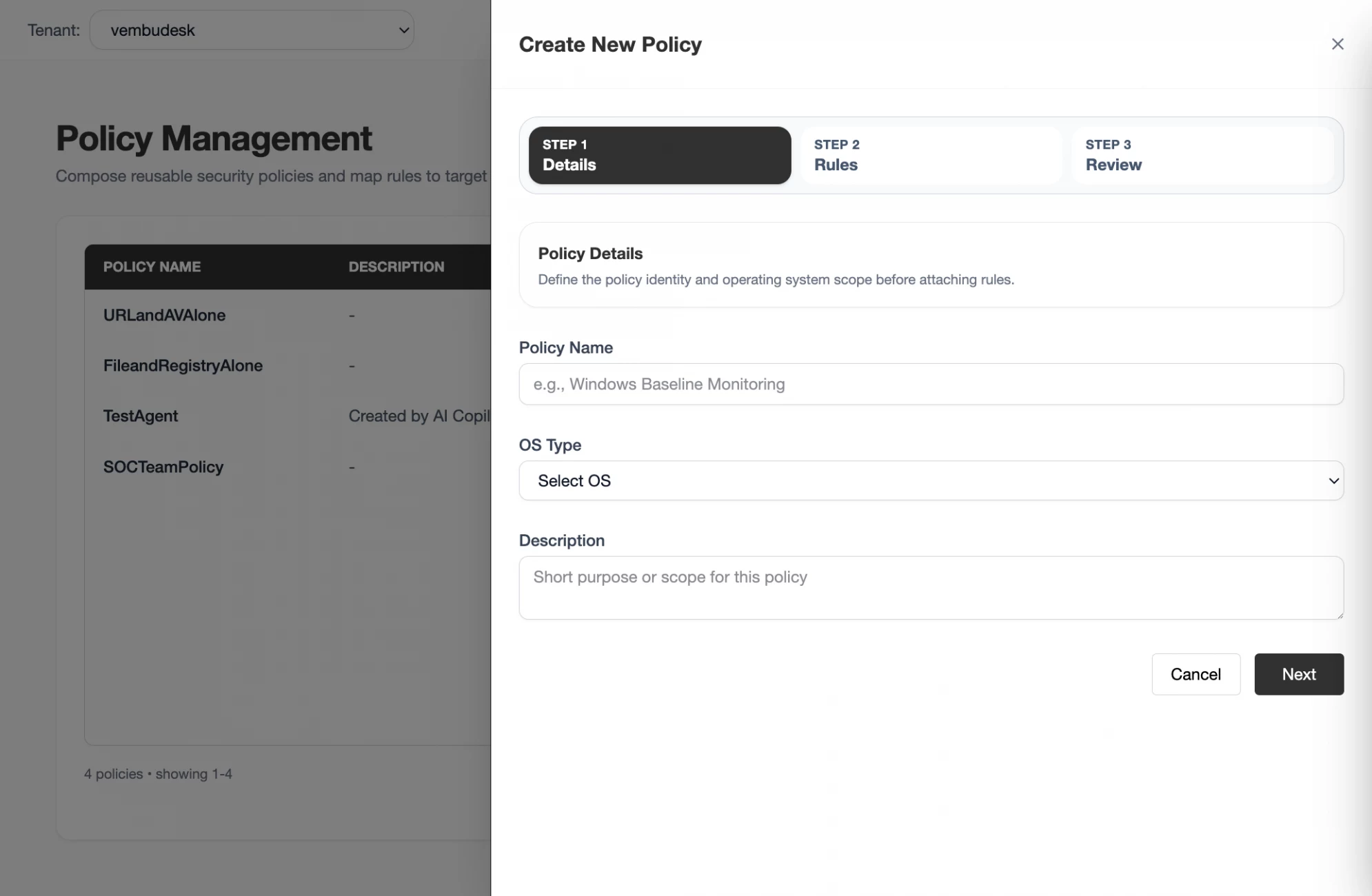
Policy creation and editing
Create reusable policies that group supported detection, monitoring, and control rules.
Rule-to-policy mapping
Attach supported rules to policies so configuration can be distributed consistently.
Agent assignment
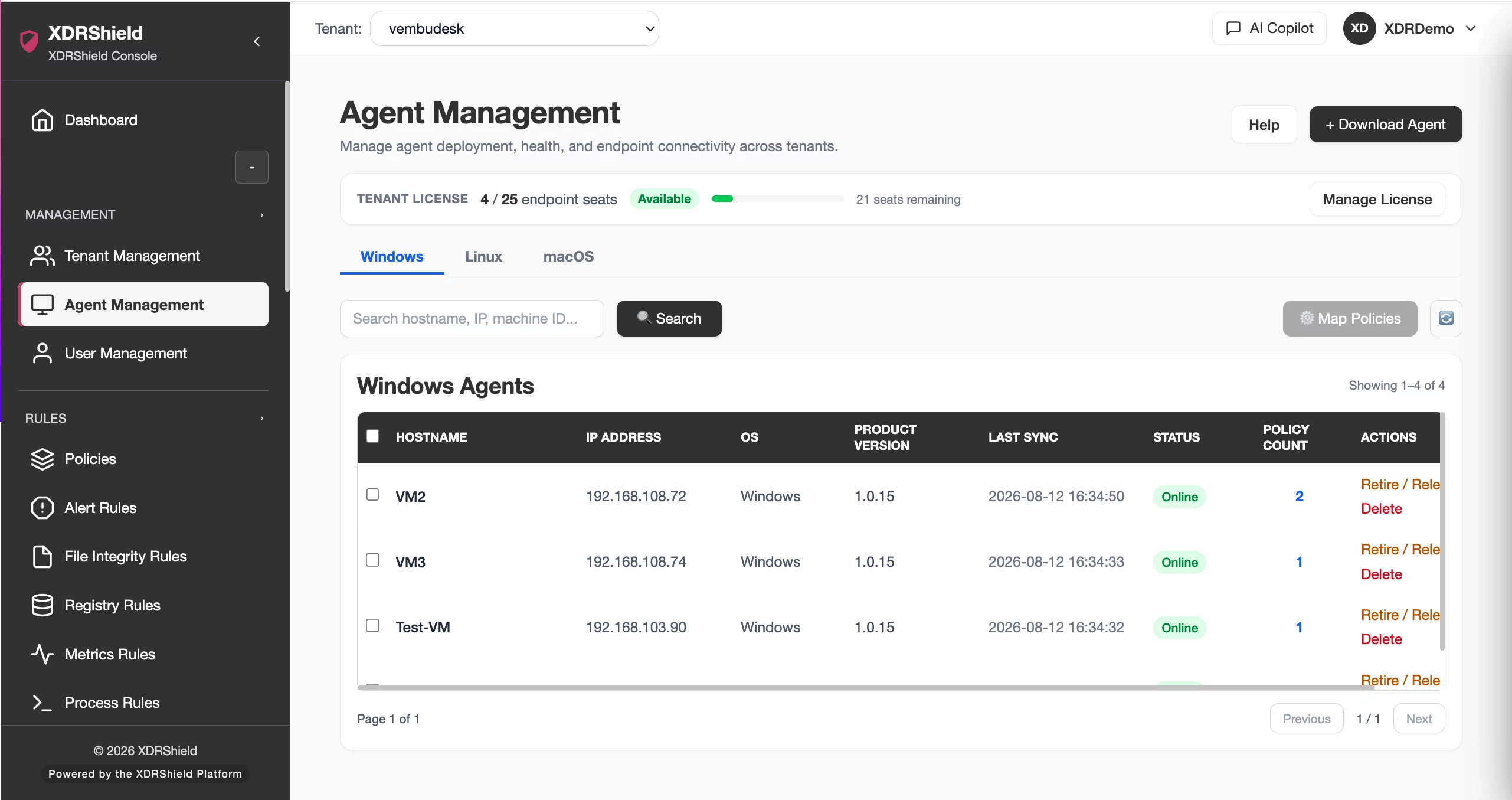
Map policies to selected endpoint agents after validating platform and tenant scope.
Synchronization tracking
Review sync state, last communication, and timing before treating policy coverage as active.
Compatibility validation
Check operating system, agent version, and supported capability before broad rollout.
Policy troubleshooting
Find endpoints with missing, stale, or unexpected policy state and drill into health or sync details.
Change evidence
Use activity logs to review who changed policies, assignments, and configuration scope.
Tenant-scoped policy governance
Apply customer-specific policies without mixing rules or assignments across tenants.
From rule design to synchronized endpoint policy.
A repeatable policy management workflow keeps configuration deliberate, validated, and traceable.
Design reusable rules
Create focused rules for detection, monitoring, or control before attaching them to policies.
Build policy bundle
Group rules that should operate together for a tenant, endpoint set, or use case.
Validate compatibility
Confirm endpoint platform, agent version, tenant, and scope before assignment.
Assign to agents
Map the policy to selected agents or endpoint groups.
Monitor synchronization
Check sync state, health, and last report to confirm delivery.
Review and tune
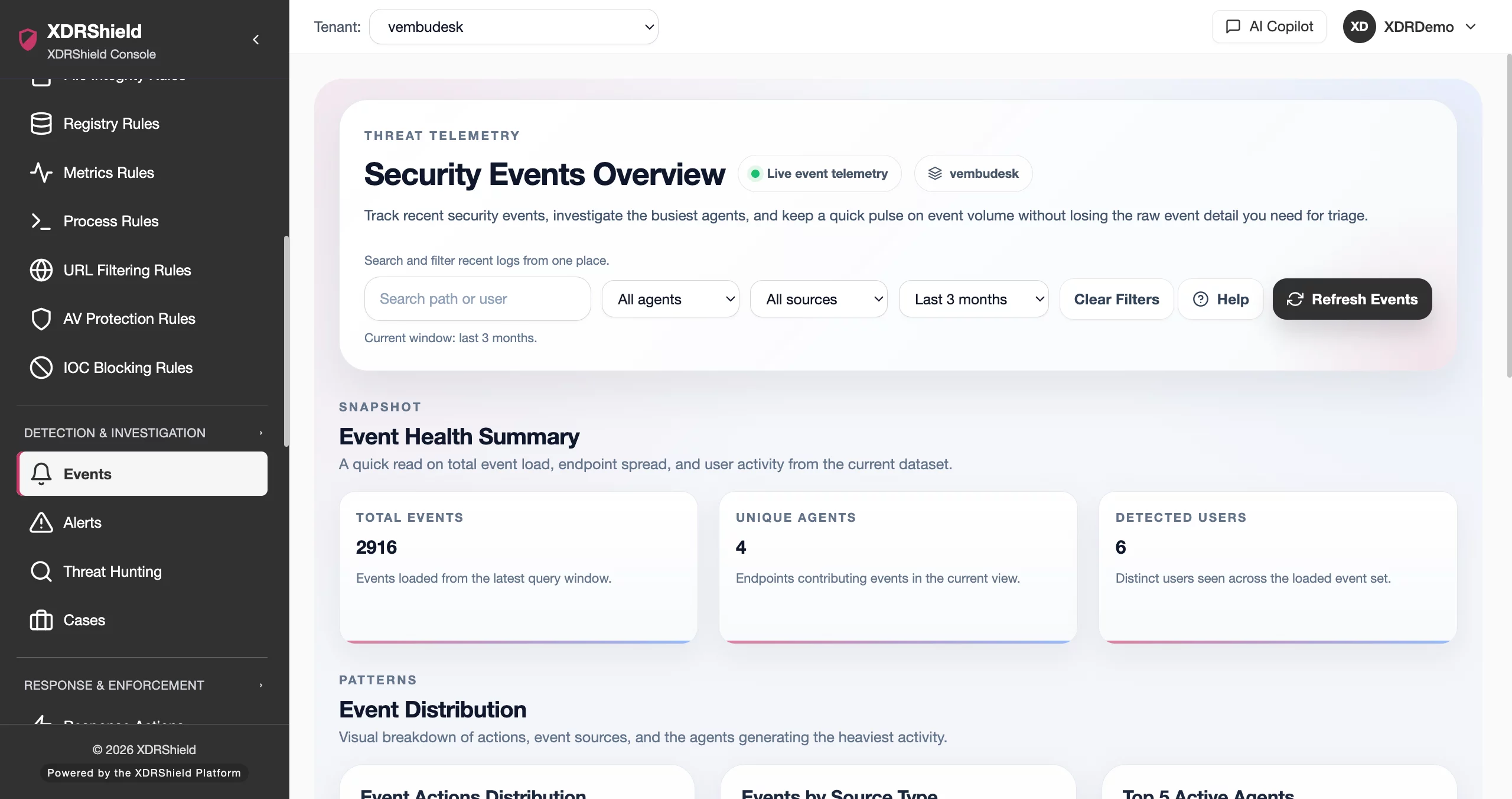
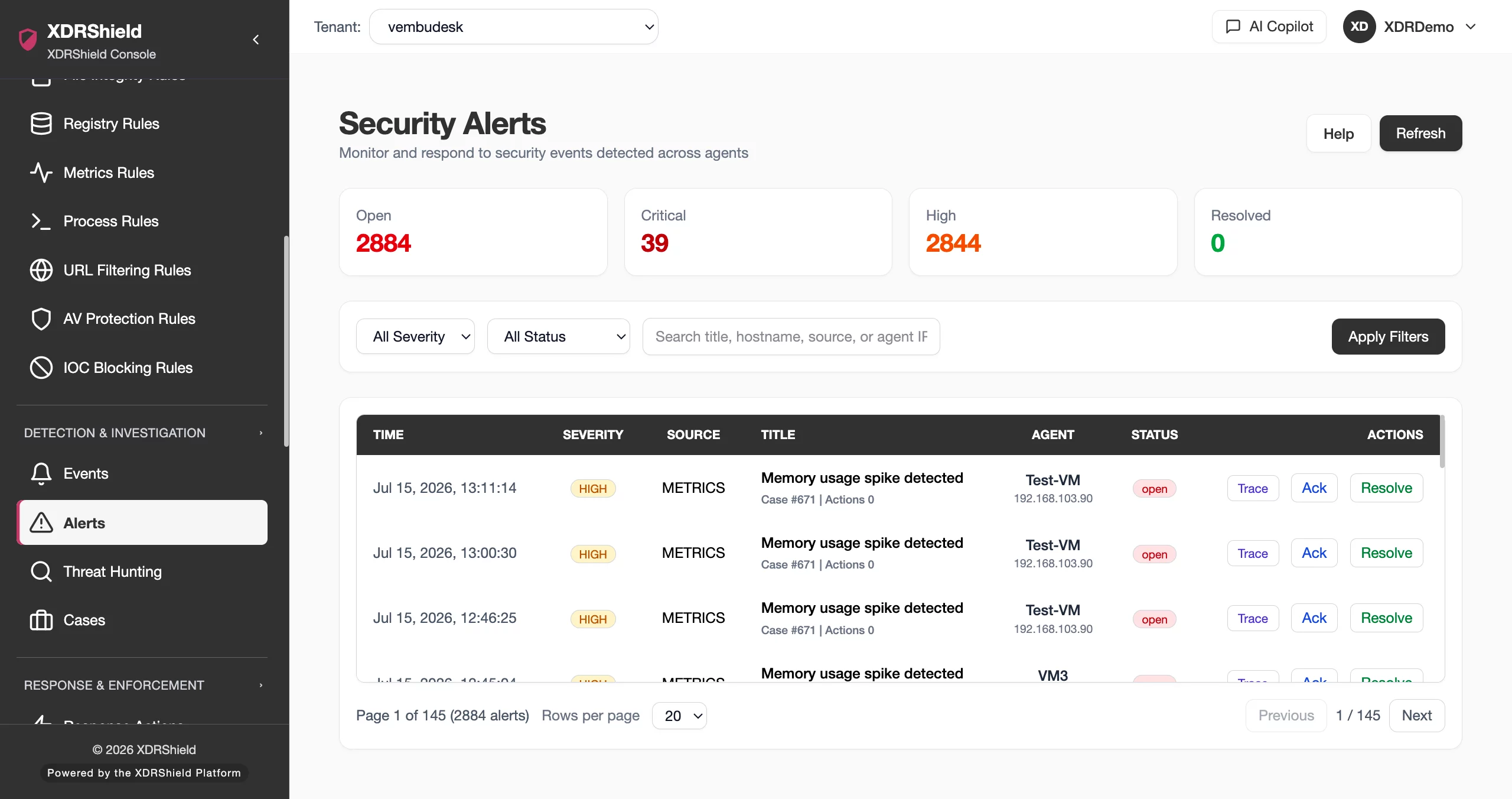
Use events, alerts, and operational health to refine noisy or ineffective policies.
Where Policy Management helps most.
Use policy management where endpoint security outcomes depend on consistent configuration and evidence-backed review.
Coverage standardization
Deploy consistent rule bundles across endpoint groups and customer environments.
Controlled rollout
Assign policies in stages after compatibility and tenant scope are confirmed.
Sync troubleshooting
Investigate stale or missing policy state using agent health and operational health context.
Audit-ready changes
Preserve who changed policy content, assignment, and scope.
MSP policy governance
Reuse policy patterns across customers while keeping customer-specific assignments separate.
Detection tuning
Refine alert and monitoring rules based on recurring alert or event outcomes.
Separate rule design from policy assignment.
This table helps teams choose the correct configuration layer.
| Area | What it means | How teams use it |
|---|---|---|
| Rules | Reusable detection, monitoring, or control definitions. | Create focused logic before assigning it through a policy. |
| Policies | Bundles of rules intended for an endpoint set or tenant scope. | Use for consistent rollout and easier governance. |
| Assignments | The mapping between policy and compatible agents. | Use after validating tenant, platform, and agent state. |
| Synchronization | The endpoint delivery and freshness state of assigned policy configuration. | Use to confirm coverage and troubleshoot stale endpoints. |
Policy Management for security, IT, and MSP teams.
Policy Management supports day-to-day operations while keeping tenant scope, evidence, and accountable change control clear.
For security and IT teams
Use this feature to keep endpoint protection, detection evidence, and operational decisions aligned with the current environment.
- Validate configuration before broad rollout.
- Review evidence before changing rules or policies.
- Use related alerts, events, cases, and activity logs for context.
For MSP and service-provider teams
Use tenant-scoped operation so customer environments stay separated while common workflows remain repeatable.
- Confirm customer or tenant scope before bulk changes.
- Standardize configuration patterns across customers.
- Preserve customer-specific audit and review evidence.
Policy Management FAQs.
What is Policy Management in XDRShield?
Policy Management groups reusable rules into policies, assigns those policies to compatible endpoint agents, and tracks configuration synchronization.
Why should teams use policies instead of one-off rule changes?
Policies make rule rollout repeatable, governable, and easier to validate across endpoint groups, tenants, and customer environments.
What should be checked before assigning a policy?
Teams should confirm tenant scope, endpoint platform, agent version, health, compatibility, and current policy state.
How do policies connect to rules?
Rules define detection or monitoring logic. Policies bundle those rules and distribute them to compatible agents.
How does Policy Management support MSPs?
MSP teams can standardize policy patterns while keeping assignments and evidence separated by customer or tenant.
Manage endpoint policy with confidence
Build rule bundles, assign them safely, and verify sync state.