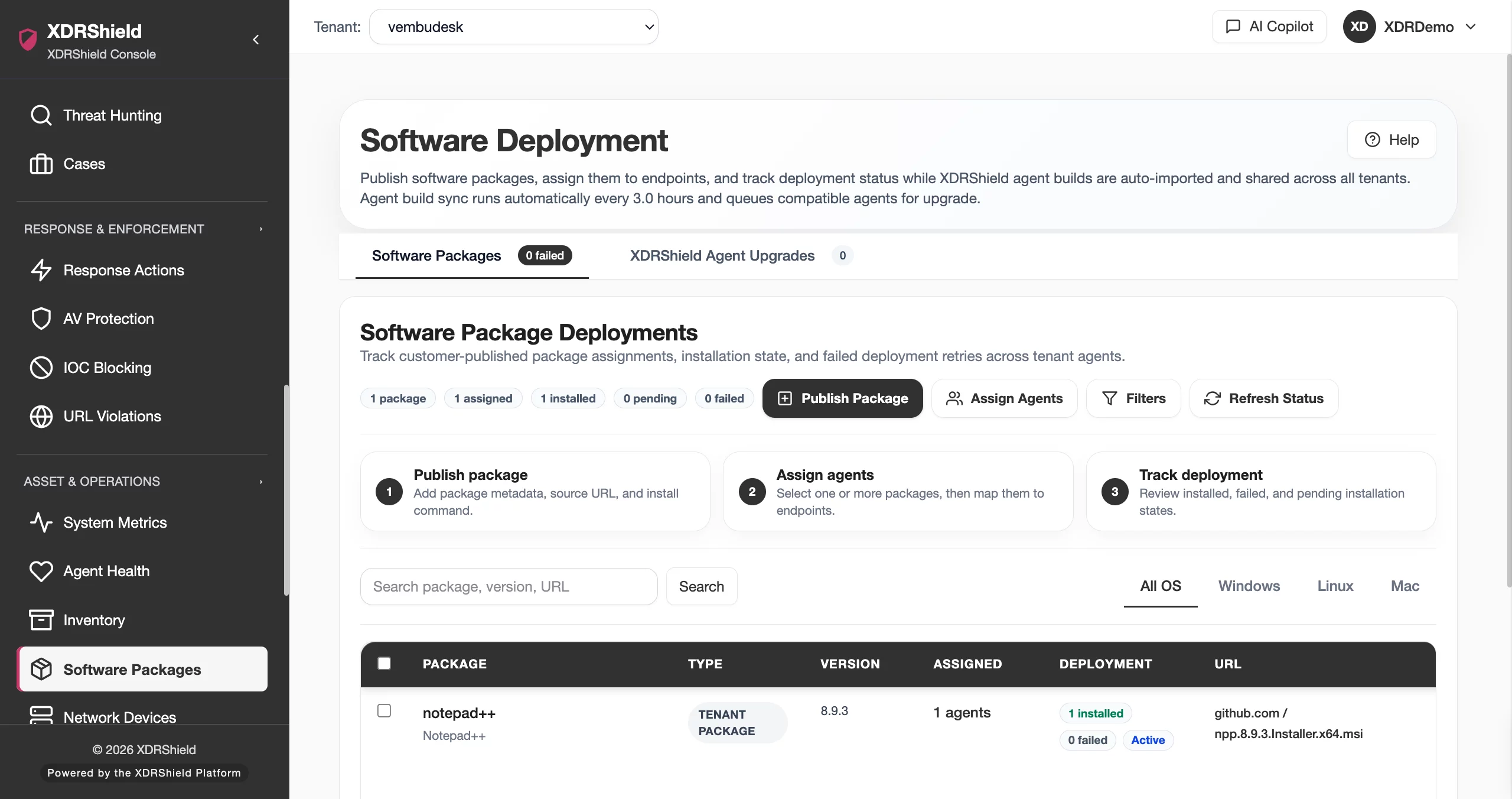
Operate managed security across tenants without mixing customers, access, or evidence.
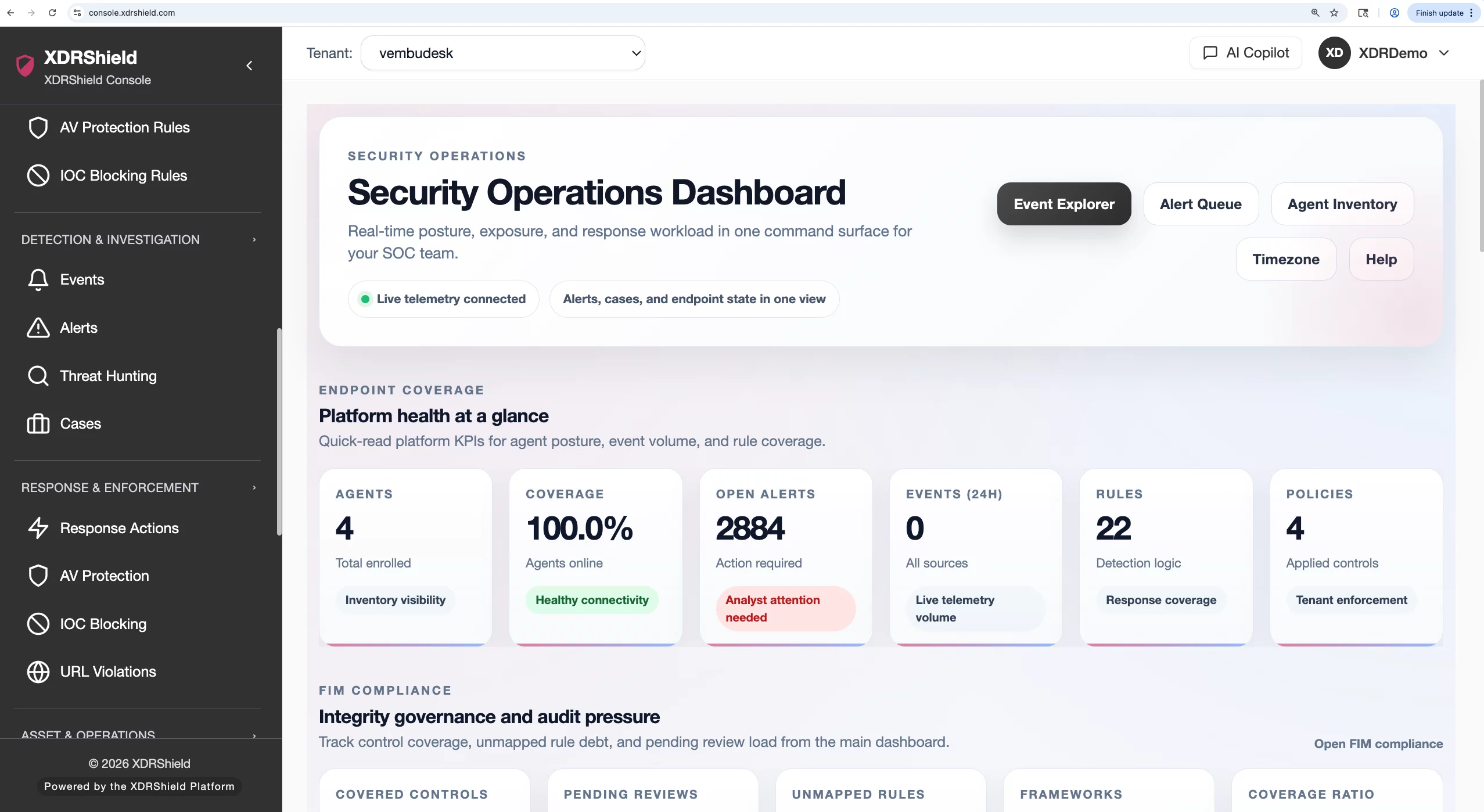
XDRShield helps MSPs and service-provider security teams manage customer-separated workspaces, scoped users, endpoint visibility, alerts, cases, policies, response actions, and operational records from a tenant-aware security operations model.
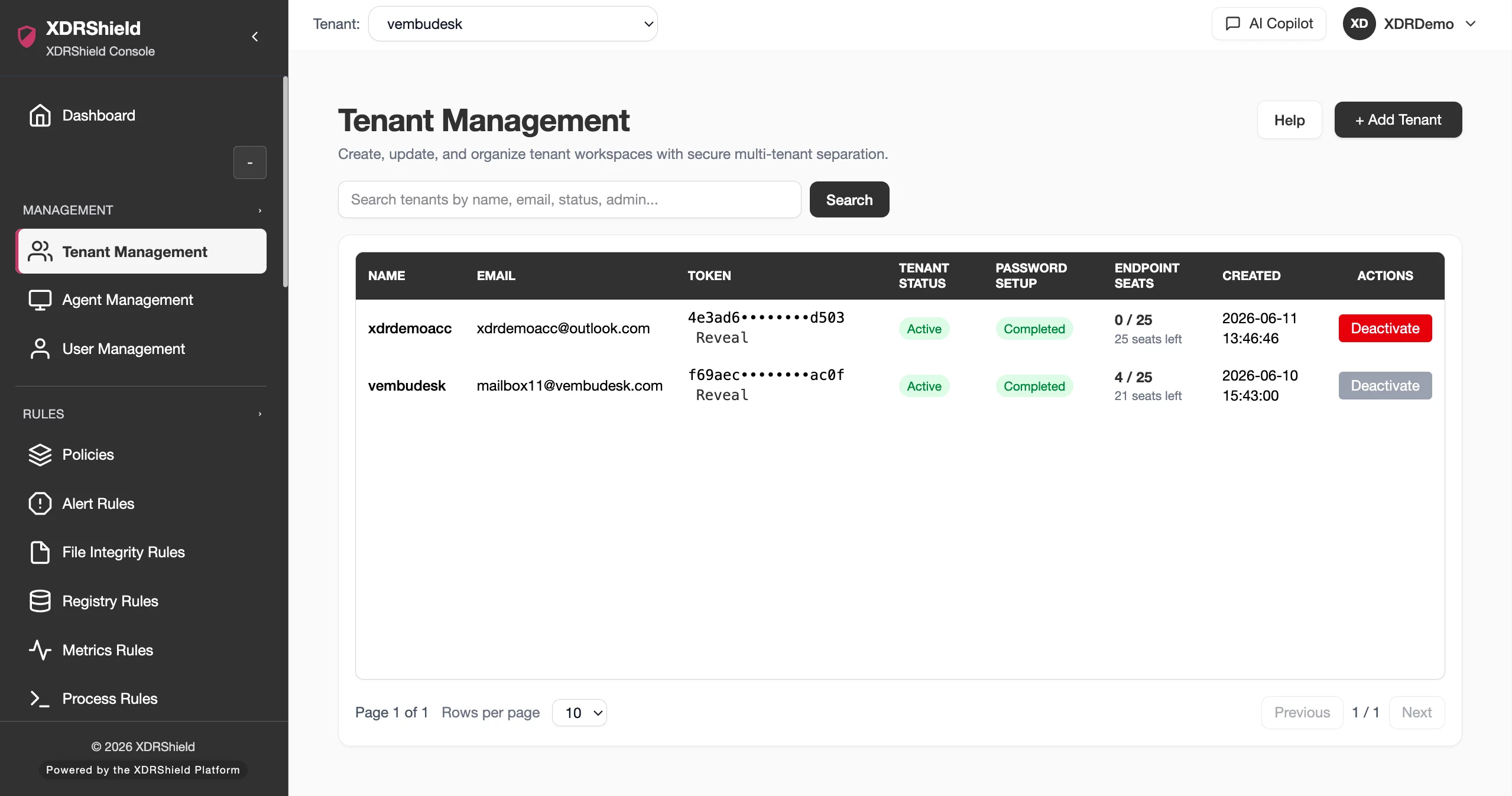
Managed security breaks down when customer boundaries and security work are handled separately.
MSPs need central visibility, but central visibility cannot mean mixed evidence, uncontrolled access, or unclear ownership. XDRShield keeps customers, tenants, users, endpoint scope, policy decisions, investigations, response actions, and activity records connected to the right operating boundary.
Connect customer separation, security operations, and accountable service delivery.
XDRShield is designed for security teams that manage more than one environment. Service providers can work from a shared operating layer while preserving the tenant, workspace, endpoint, role, policy, case, and response context that keeps customer service safe and explainable.
- Maintain customer-aware scope across endpoint evidence, alerts, investigations, policies, and response actions.
- Use role and permission context to separate technician, administrator, service-owner, and approval responsibilities.
- Standardize security workflows while still respecting customer-specific configuration and operating boundaries.
- Retain activity history for customer reporting, service review, escalation, and governance discussions.
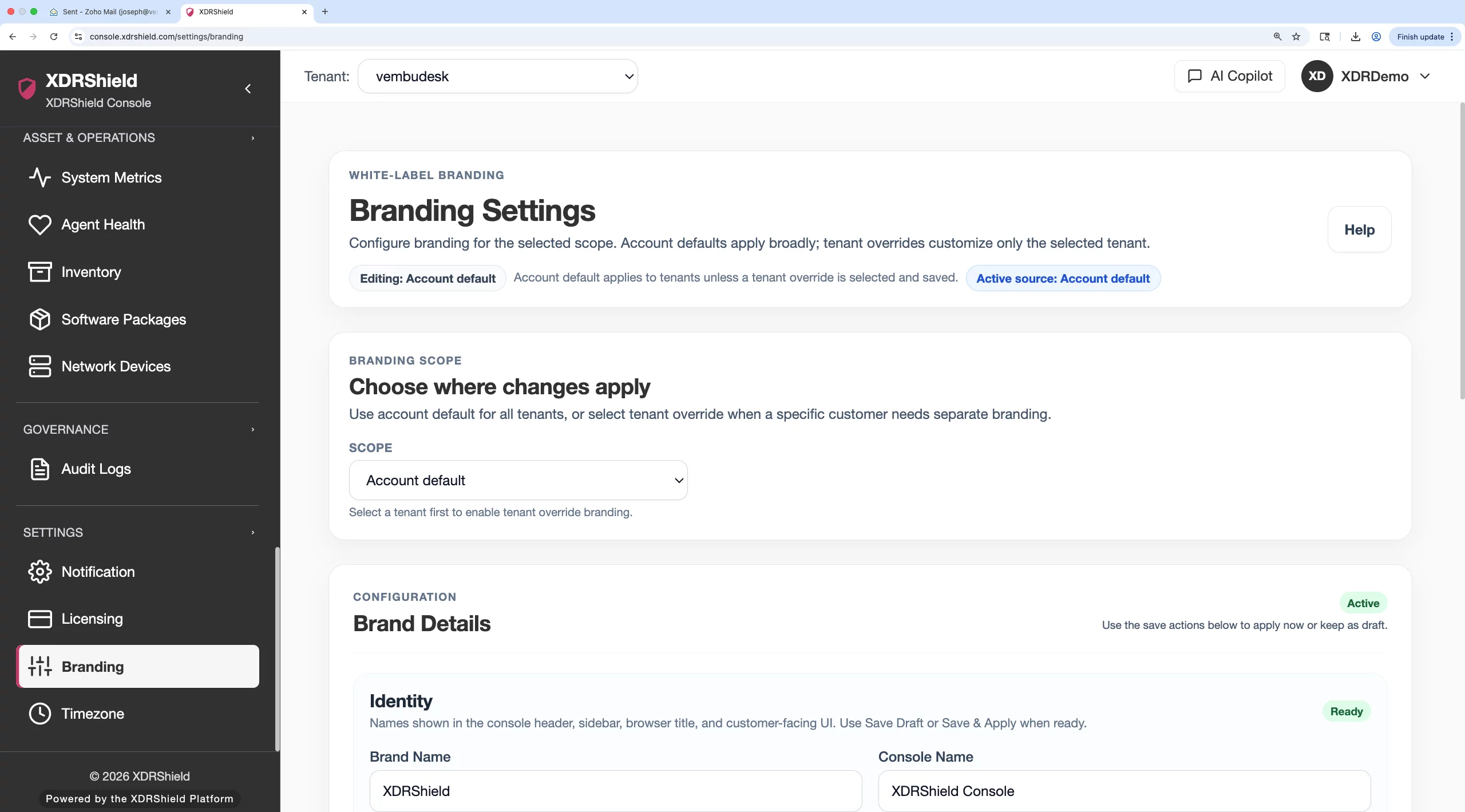
What XDRShield helps service-provider teams manage.
Each capability supports a part of multi-tenant security operations, from onboarding and access control to alert triage, case work, response governance, and customer accountability.
Customer and tenant workspaces
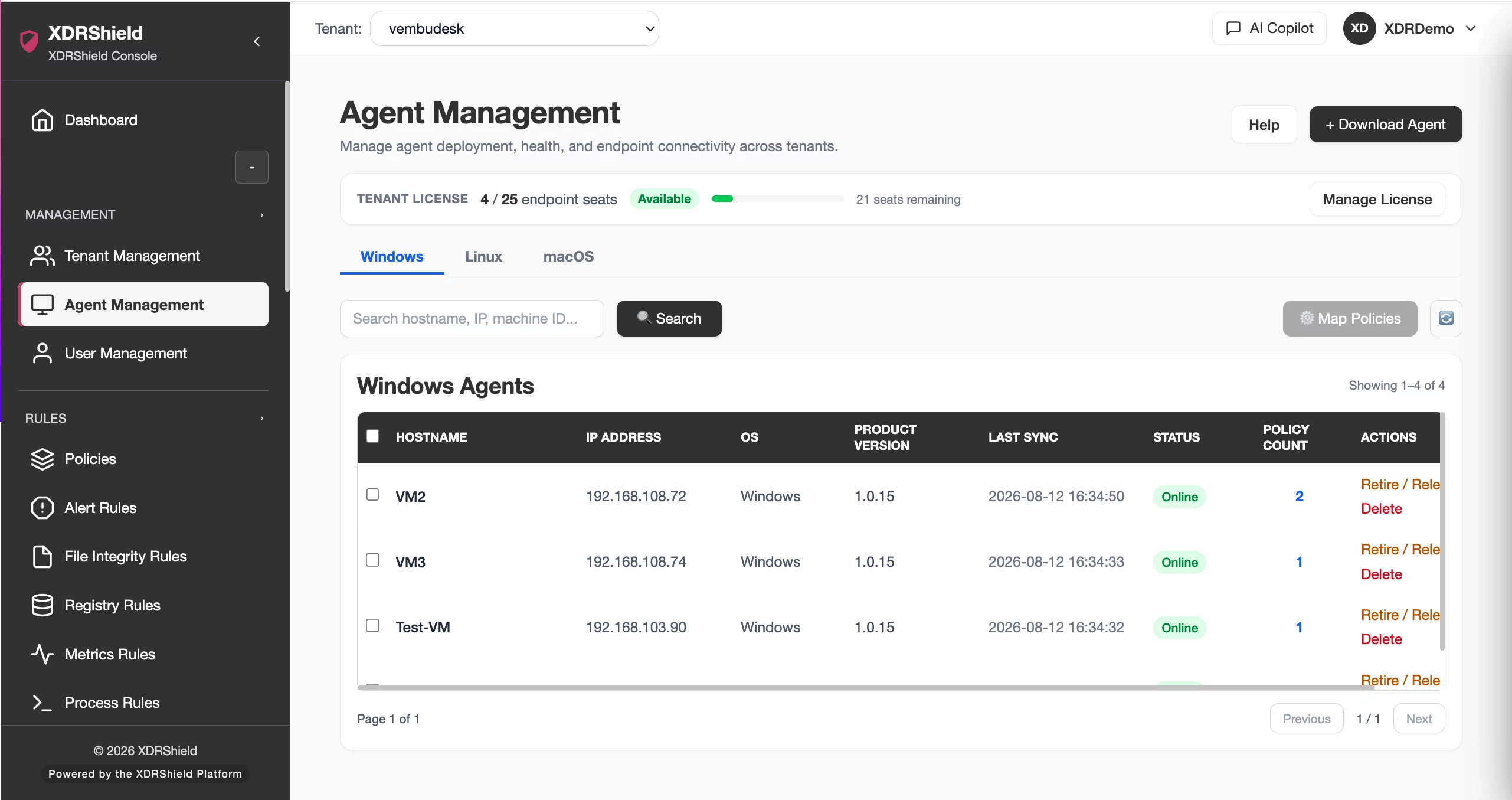
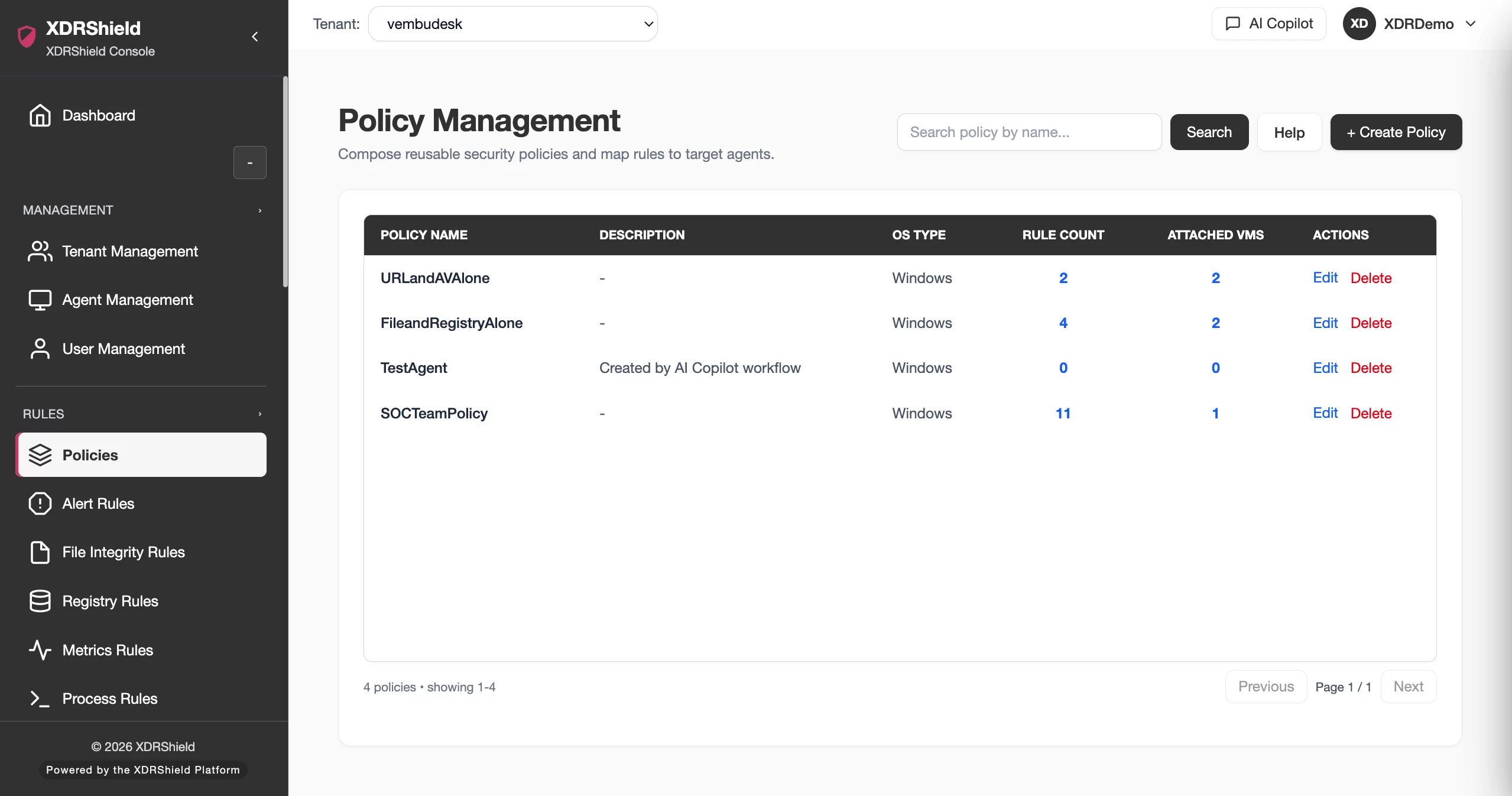
Organize managed environments around customers, tenants, workspaces, endpoints, and operational scope so service teams know exactly where they are working.
Scoped user and role control
Use delegated access and role context to separate technicians, administrators, approvers, and customer-facing responsibilities.
Tenant-aware endpoint visibility
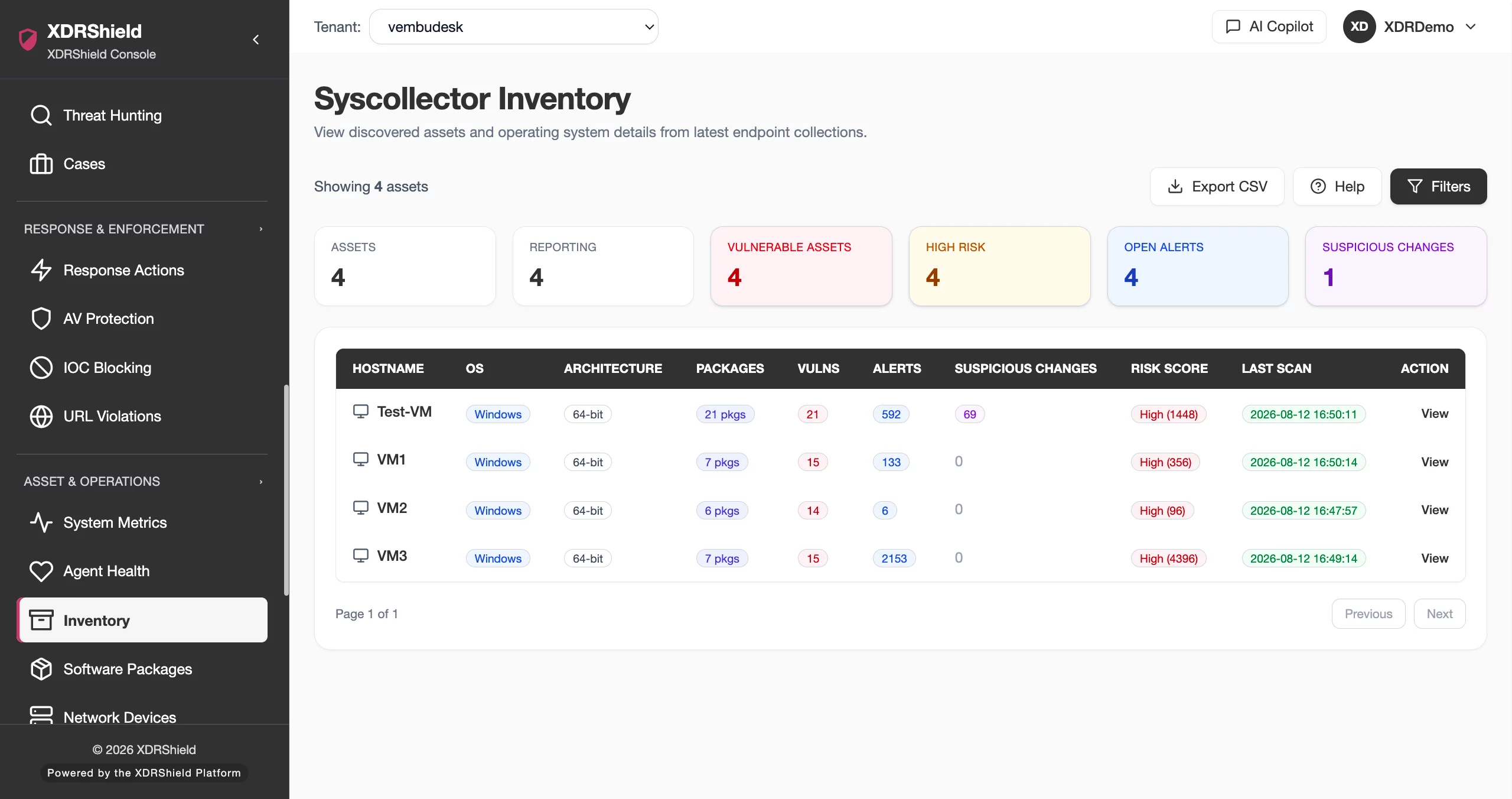
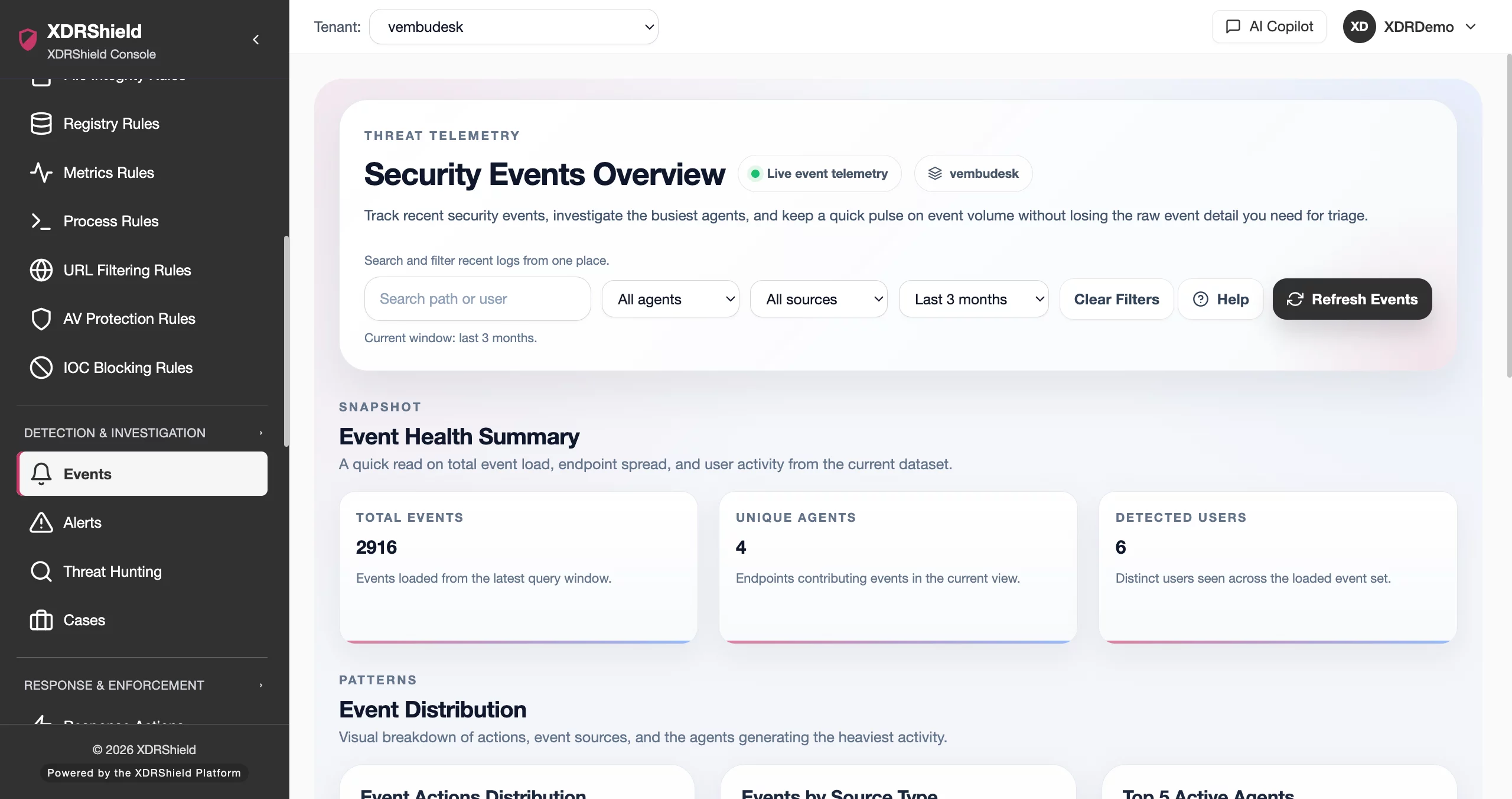
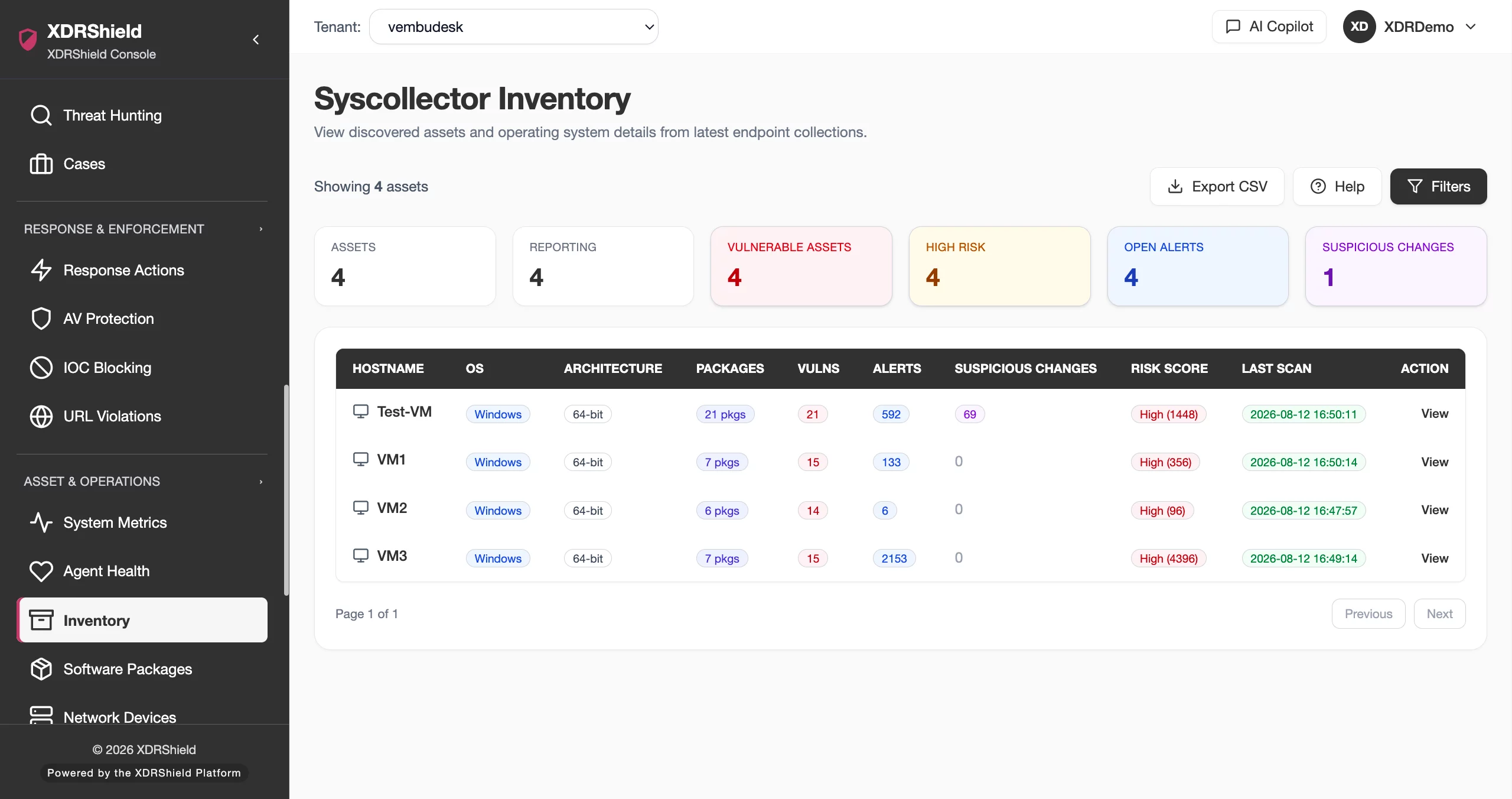
Review endpoint inventory, agent health, vulnerabilities, events, alerts, and operating state without mixing customer evidence.
Customer-specific alert triage
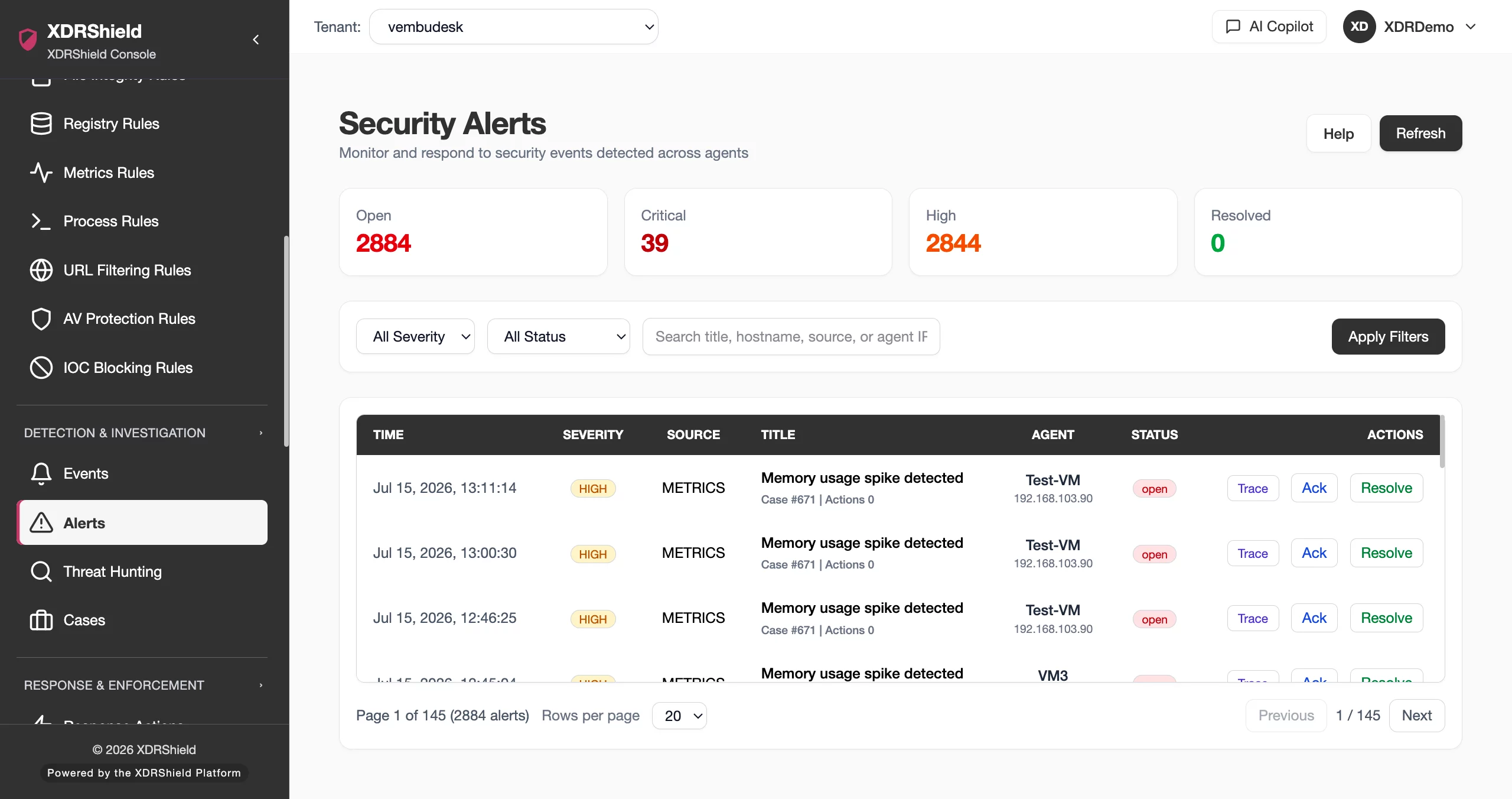
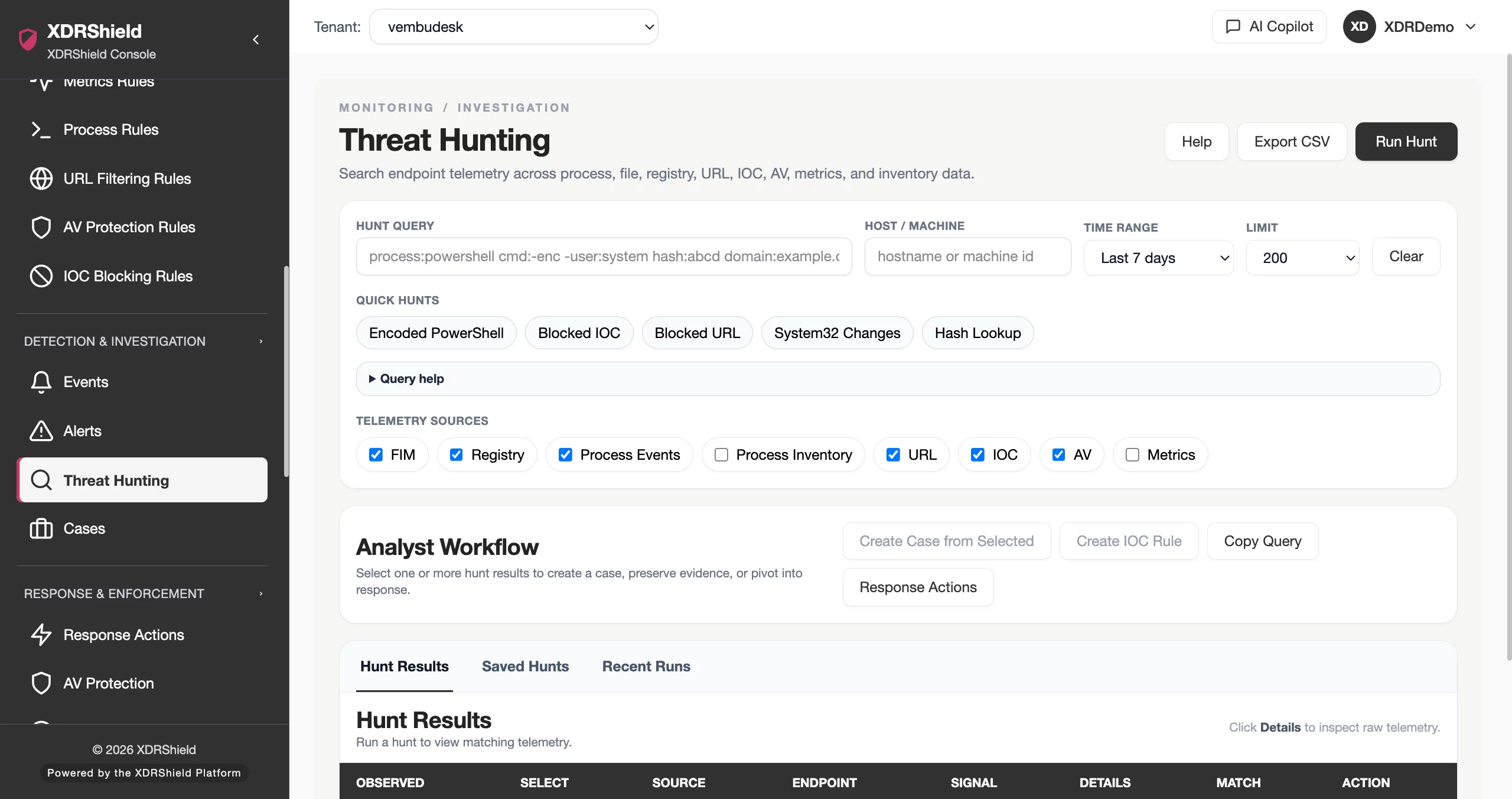
Filter and handle security events by severity, endpoint, status, customer, and workspace so analysts can prioritize the right work.
Case ownership and handoff
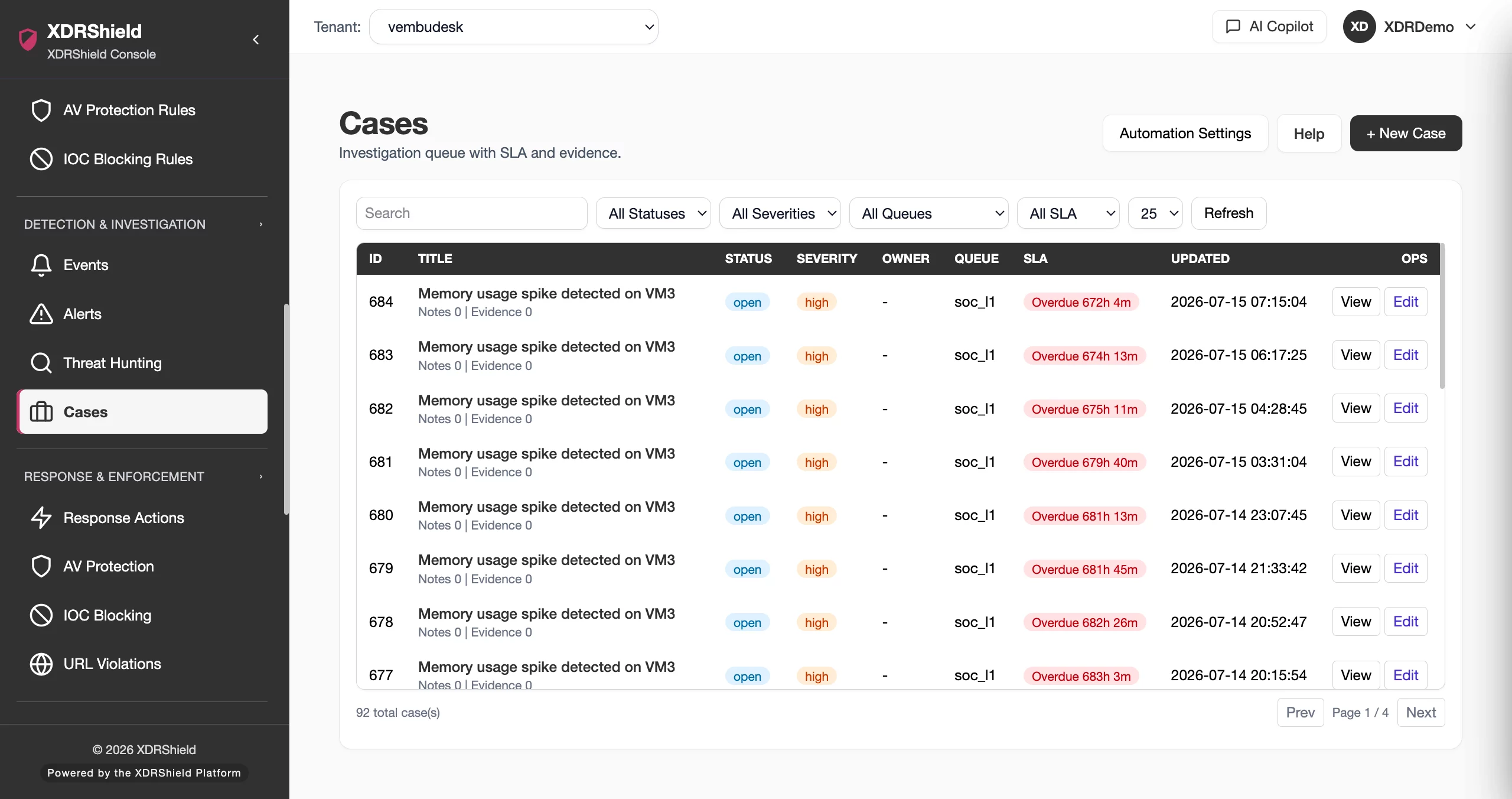
Assign cases, preserve notes, track status, review timelines, and keep SOC, IT, escalation, and service teams aligned.
Policy assignment and tuning
Apply reusable detection and protection policies while tracking synchronization, eligibility, and customer-specific operating needs.
Governed response control
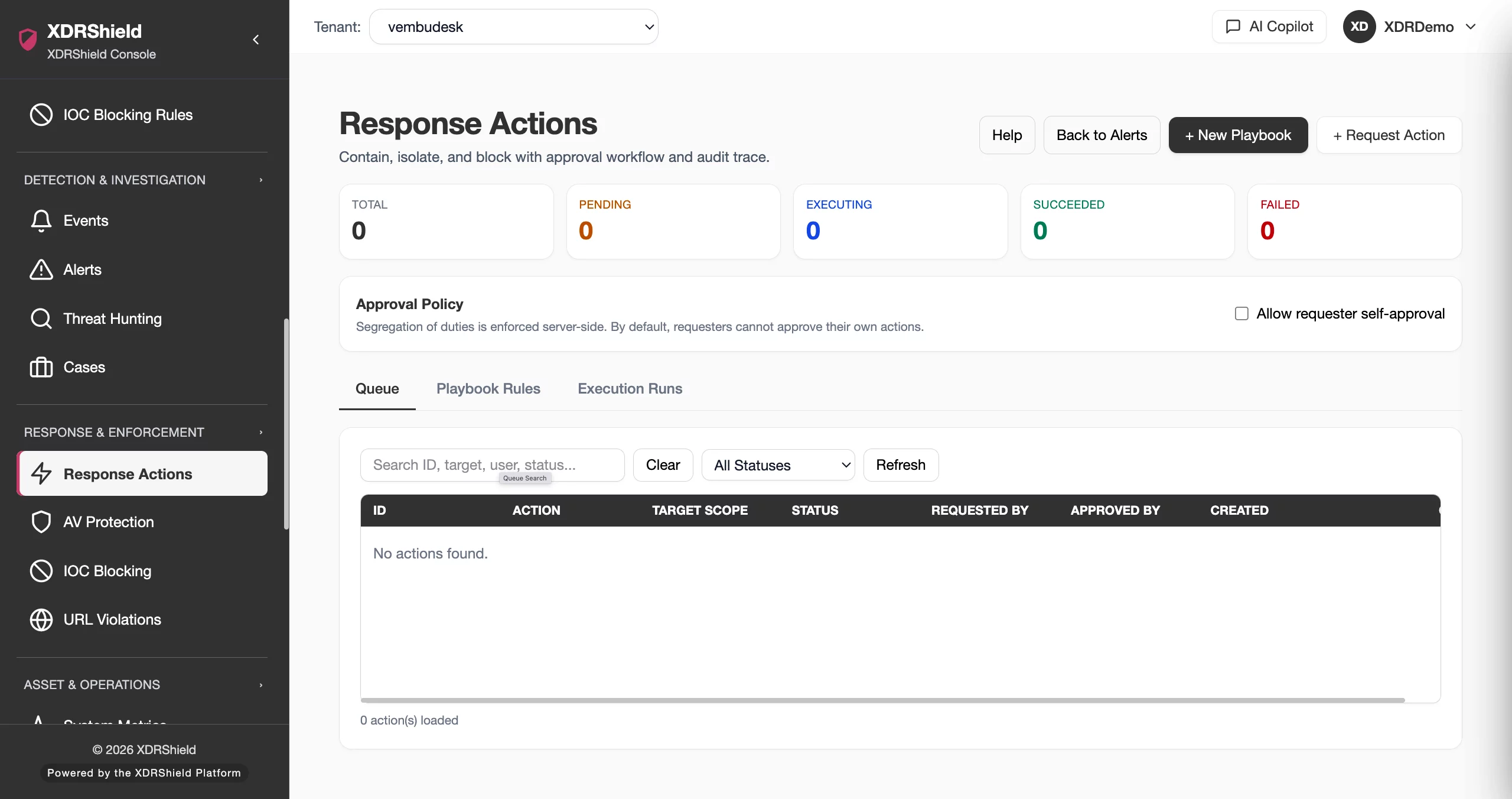
Connect confirmed customer risk with supported response actions, approval paths, execution results, and action history.
Activity and service records
Review operational activity, policy updates, case changes, response records, and service evidence for accountability.
From customer onboarding to accountable managed response.
A strong multi-tenant security workflow keeps service scale and customer separation together. XDRShield supports the operational path from onboarding through daily detection, investigation, policy management, response, and review.
Define customer scope
Create or review the customer, tenant, workspace, endpoint group, and operating boundary before work begins.
Assign access
Map technicians, administrators, approvers, and service owners to the right role and permission context.
Apply coverage
Connect endpoints, policies, rules, notifications, and monitoring expectations to the managed environment.
Triage by tenant
Review alerts, events, endpoint evidence, and exposure context without leaving the customer boundary.
Investigate and respond
Open cases, assign ownership, preserve timelines, and use governed response only when evidence supports action.
Review service record
Use activity history, case status, policy state, and response results for reporting, escalation, and continuous improvement.
Centralized operations should not blur customer responsibility.
MSP teams need speed and scale, but customer trust depends on scoped access, clean evidence boundaries, repeatable process, and explainable decisions. XDRShield keeps the service-provider operating record structured.
For MSP security teams
Work across customers from a centralized security operations model while keeping tenant scope, endpoint evidence, alert triage, investigation ownership, policy state, and response decisions aligned to each managed environment.
- Separate customer evidence and operational records.
- Use consistent workflows for triage, case work, policy updates, and response.
- Support service review with activity and timeline context.
For service owners and governance teams
Review what happened for each customer, who handled the work, what policy or response decision was made, and whether follow-up is needed without relying on disconnected notes or broad shared admin access.
- Preserve delegated-role, approval, and customer context.
- Use activity history for review and customer communication.
- Keep response decisions tied to evidence and tenant scope.
Where service-provider-native multi-tenancy helps most.
Use this capability when the security team must manage several customers, environments, technicians, policies, alerts, cases, and response paths without sacrificing customer separation.
MSP security operations
Centralize day-to-day monitoring and investigation while keeping customer, tenant, and workspace boundaries intact.
Delegated technician access
Give service teams role-aware access instead of relying on broad accounts that make accountability difficult.
Cross-customer alert triage
Prioritize alerts across managed environments while preserving severity, source, endpoint, and tenant context.
Case-driven service delivery
Track ownership, notes, timelines, status, and closure decisions across SOC, IT, escalation, and customer-facing workflows.
Governed response at scale
Use approval-aware response workflows when customer risk requires supported containment or enforcement action.
Audit-ready review
Preserve activity records that support post-incident review, service reporting, and operational governance.
MSP multi-tenant feature directory.
Service-provider-native operations depend on customer separation, scoped access, endpoint visibility, alert triage, case ownership, policy governance, response control, lifecycle visibility, and reviewable activity history. Use the directory to explore how the parts connect.
Customer, Tenant, and Workspace Separation
Keep every managed environment anchored to the correct customer, tenant, workspace, endpoint group, and operating boundary so evidence and actions do not cross accounts.
- Separate customer and workspace context across dashboards, alerts, cases, policies, and endpoint views.
- Give technicians a clear operating scope before investigation or response work begins.
- Reduce service risk by keeping customer-specific evidence and decisions attached to the right account.
Delegated Roles and Access Boundaries
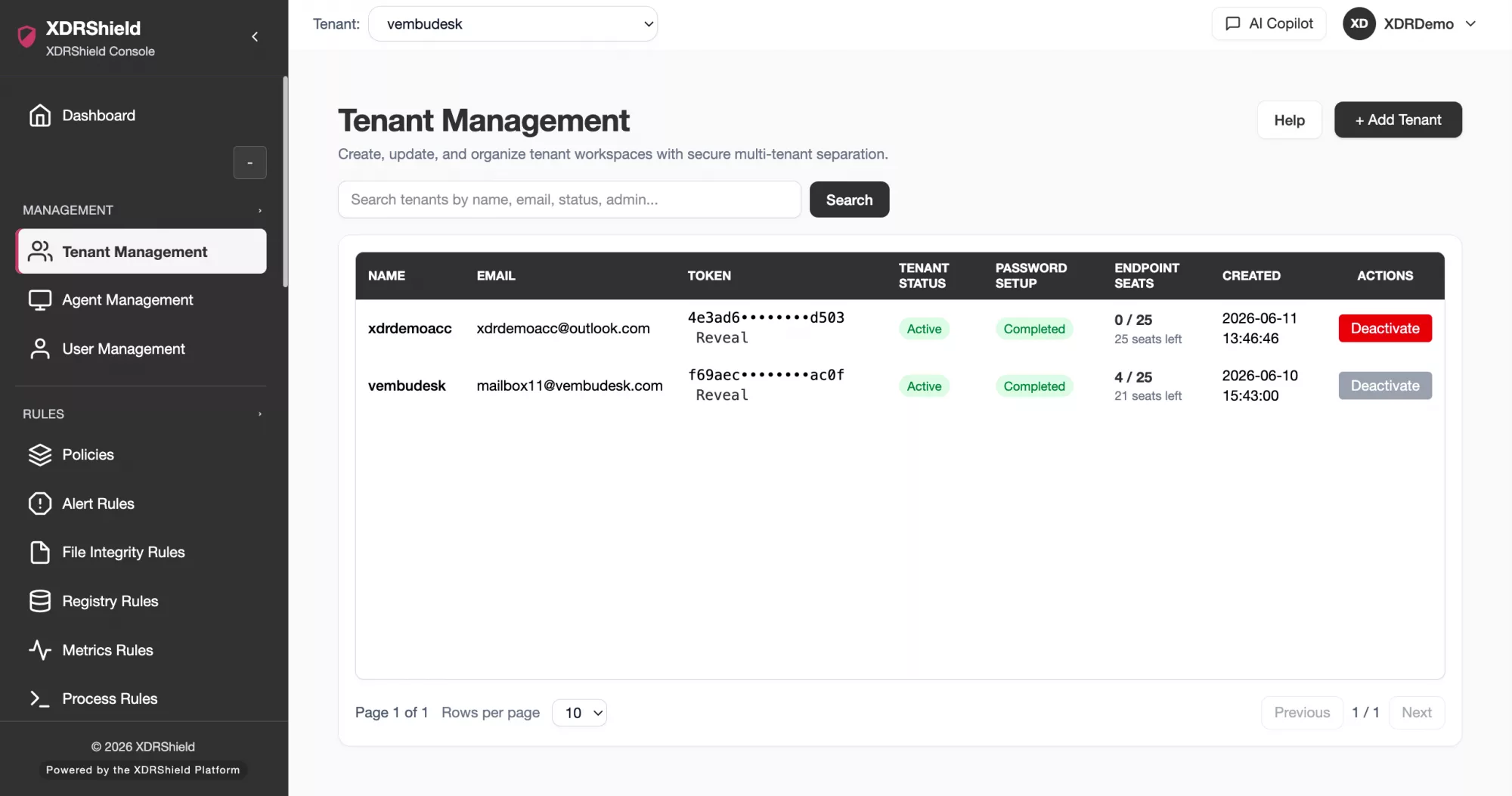
Use role and permission context to control which technicians, administrators, and service teams can view evidence, change policy, handle cases, or request response actions.
- Support scoped access for technicians, service owners, and administrators.
- Limit high-impact actions to the users and approval paths that should control them.
- Keep role context visible when reviewing operational activity and response history.
Tenant-scoped Endpoint Visibility
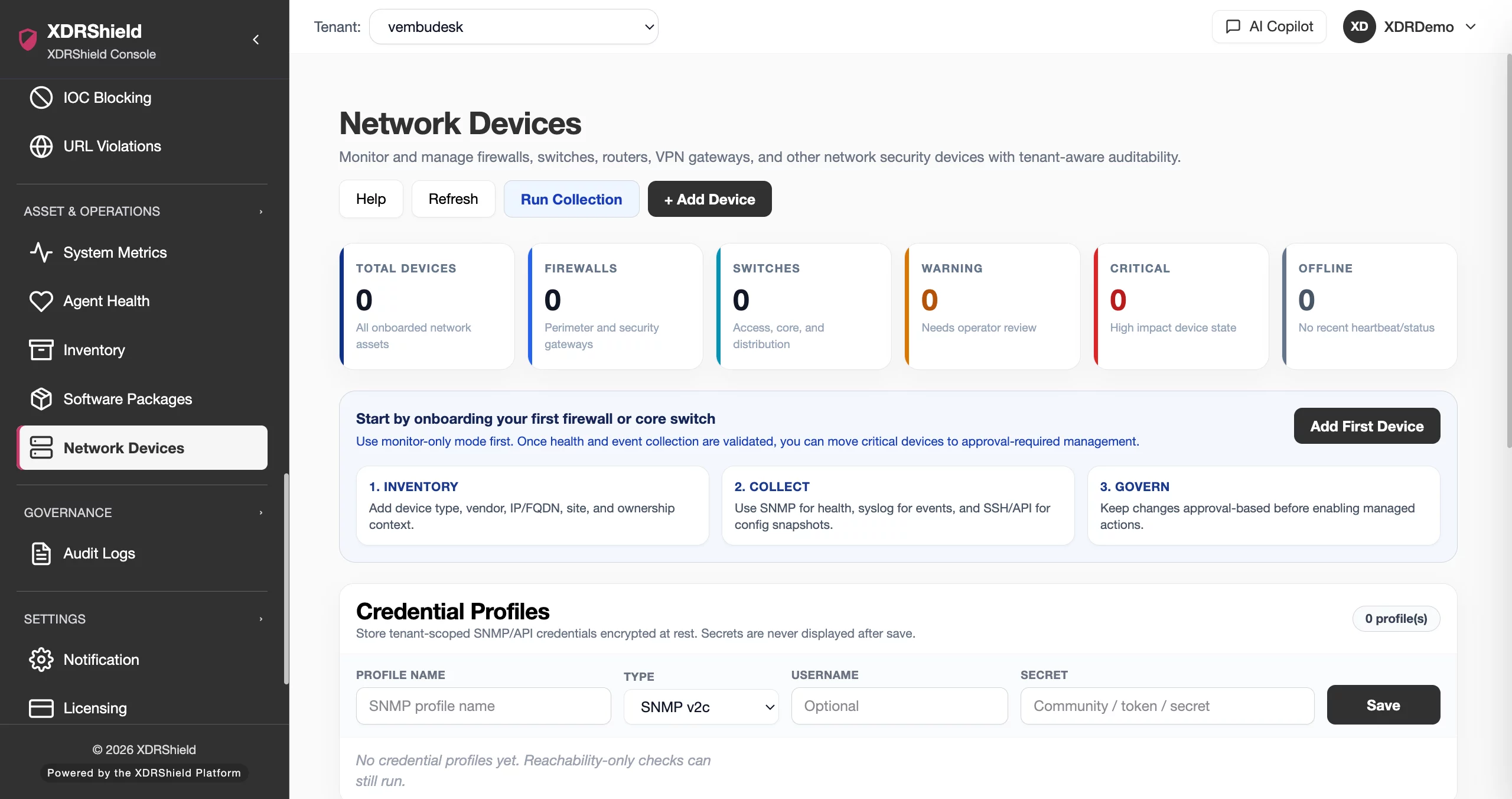
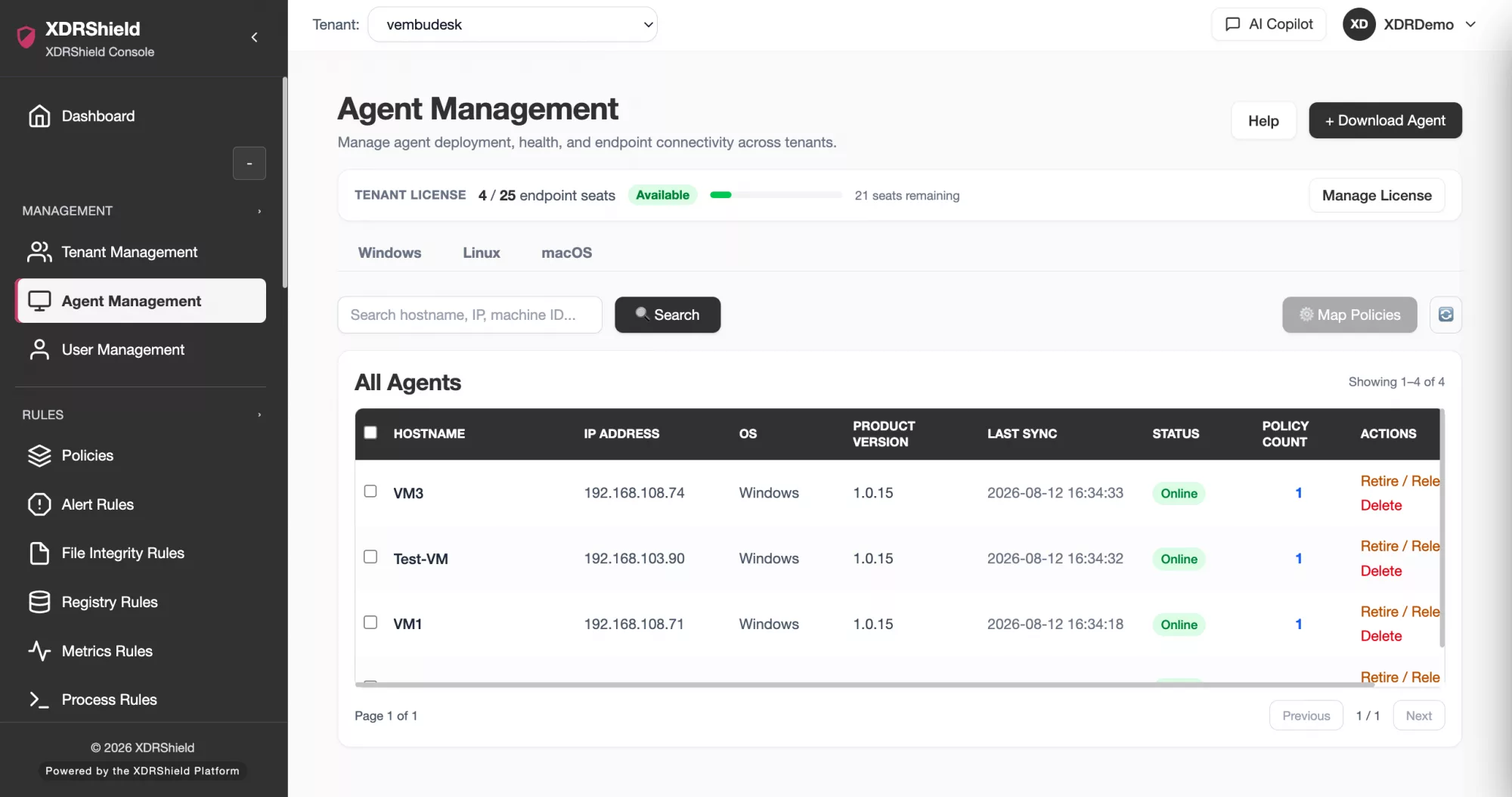
Endpoint visibility becomes more useful for MSPs when asset, agent, health, vulnerability, process, IOC, URL, AV, and event context remains scoped to the correct customer.
- Review endpoint state without mixing customer environments.
- Connect endpoint health, inventory, events, alerts, and exposure context to the right tenant.
- Give service teams practical visibility before escalation, remediation, or response.
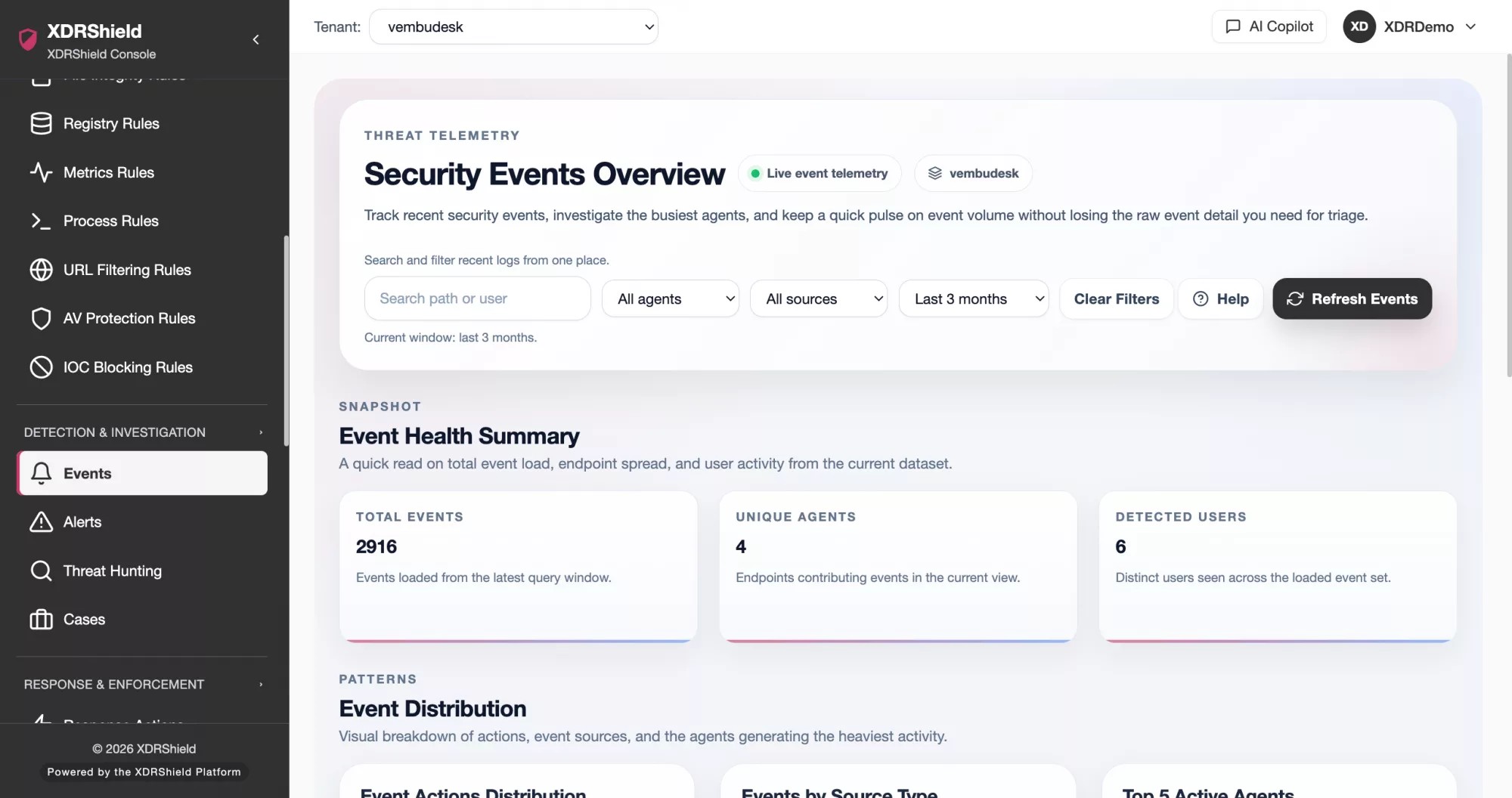
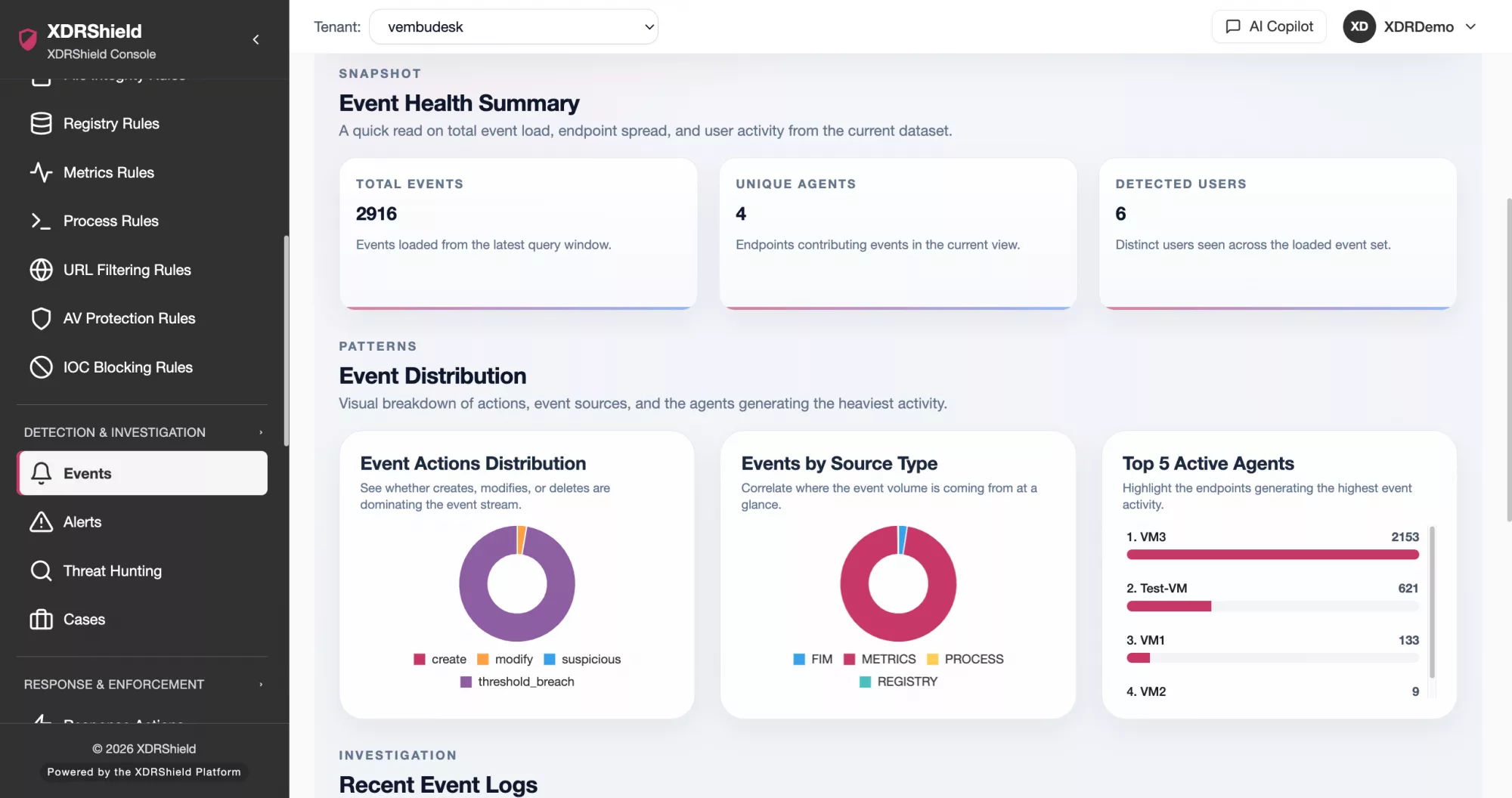
Security Events and Alert Routing
Centralized event and alert views help MSP teams triage across customers while preserving severity, source, endpoint, timestamp, tenant, and status context.
- Filter and review alerts by customer, severity, source, endpoint, or status.
- Keep events searchable for escalation, investigation, and customer review.
- Route work into cases or response paths without losing tenant scope.
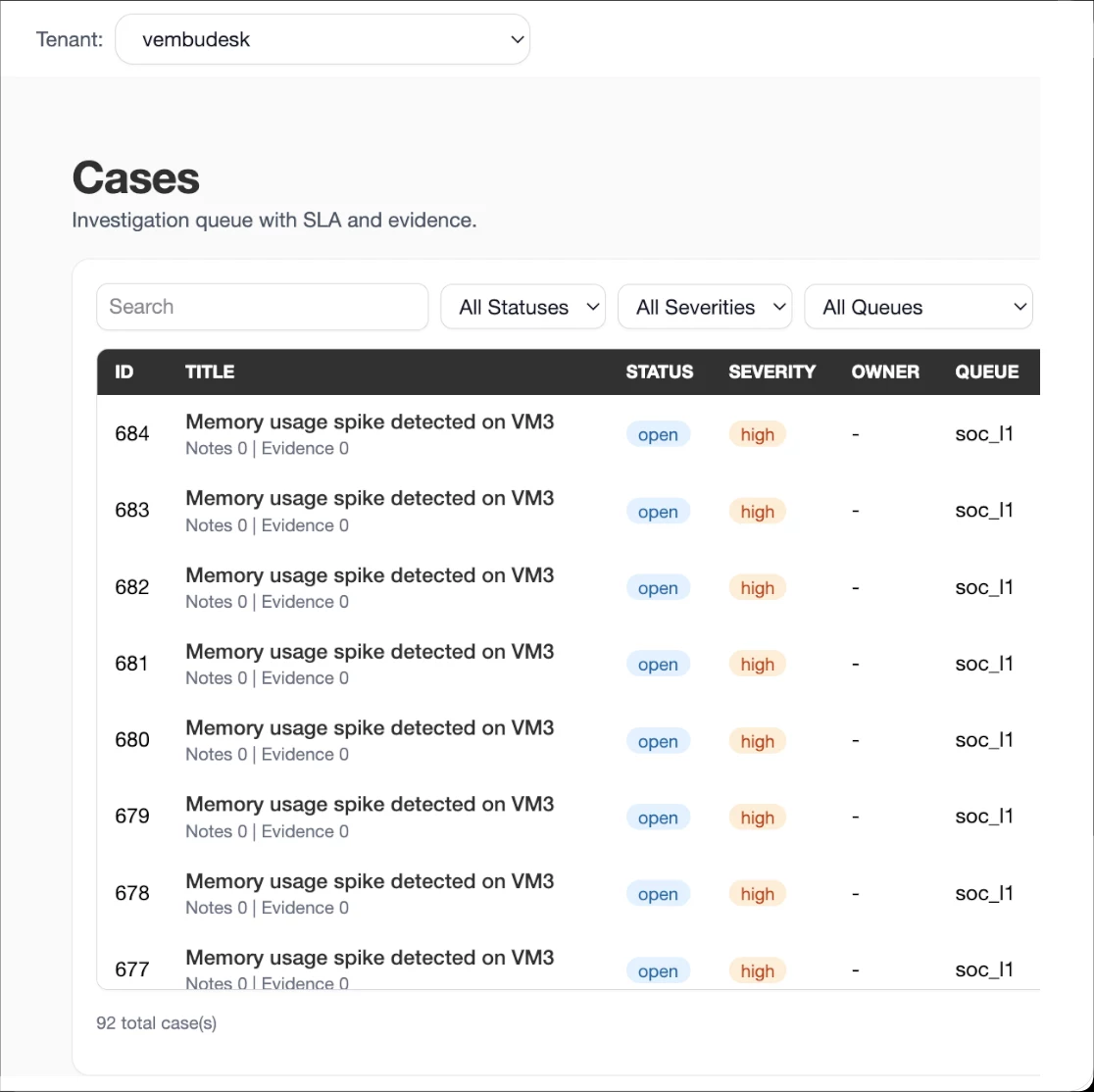
Cases and Investigation Ownership for MSPs
Turn multi-customer triage into owned work by keeping case status, priority, owner, evidence, notes, SLA pressure, and resolution context organized per tenant.
- Assign investigation ownership while keeping evidence attached to the correct customer.
- Track status, priority, notes, decisions, and timeline activity across service workflows.
- Support handoffs between SOC, IT, escalation, and customer-facing teams.
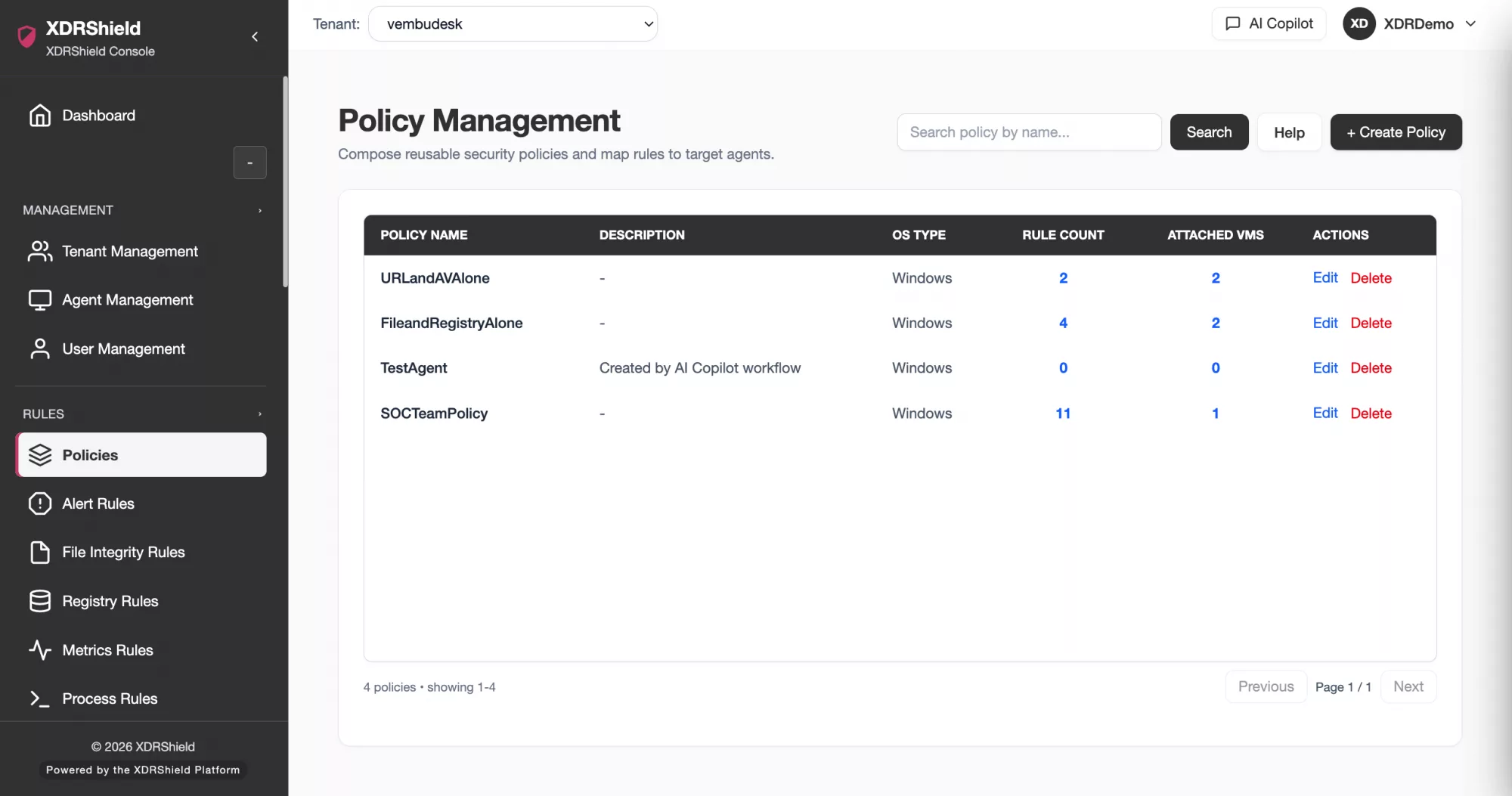
Policy Assignment and Synchronization
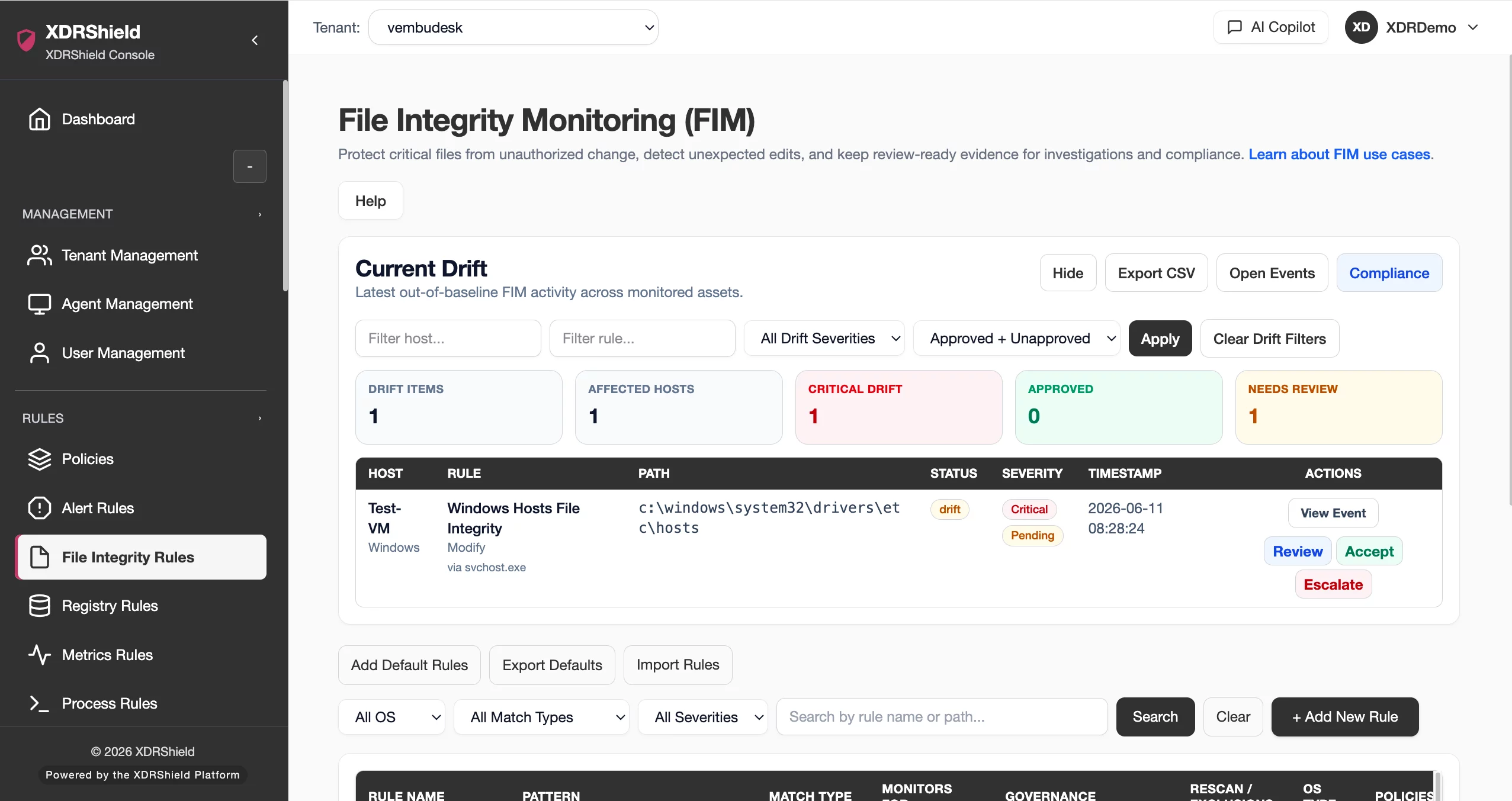
Reusable rules and policies help MSPs standardize detection and protection coverage while still respecting customer-specific needs and endpoint eligibility.
- Apply policy and rule logic consistently across compatible tenants and endpoints.
- Review synchronization and policy state before relying on expected coverage.
- Use investigation findings to tune rules, assignments, and notifications.
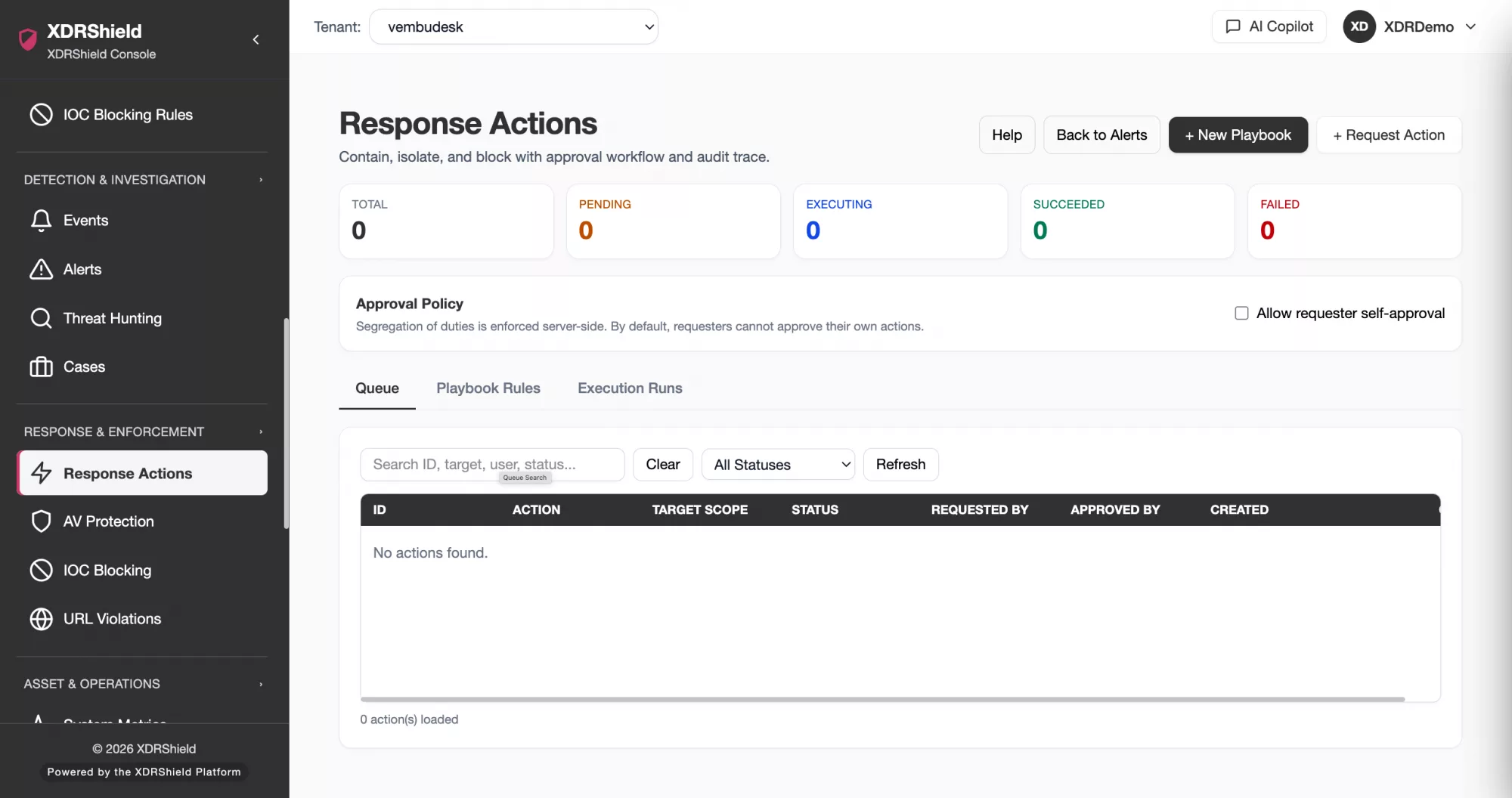
Governed Response Across Customers
High-impact actions need customer-aware control. XDRShield keeps request, approval, target, reason, execution state, result, and history context aligned with tenant boundaries.
- Confirm tenant, endpoint, role, and evidence context before action.
- Use approval-aware workflows for supported containment and enforcement actions.
- Preserve action history for service review and customer reporting.
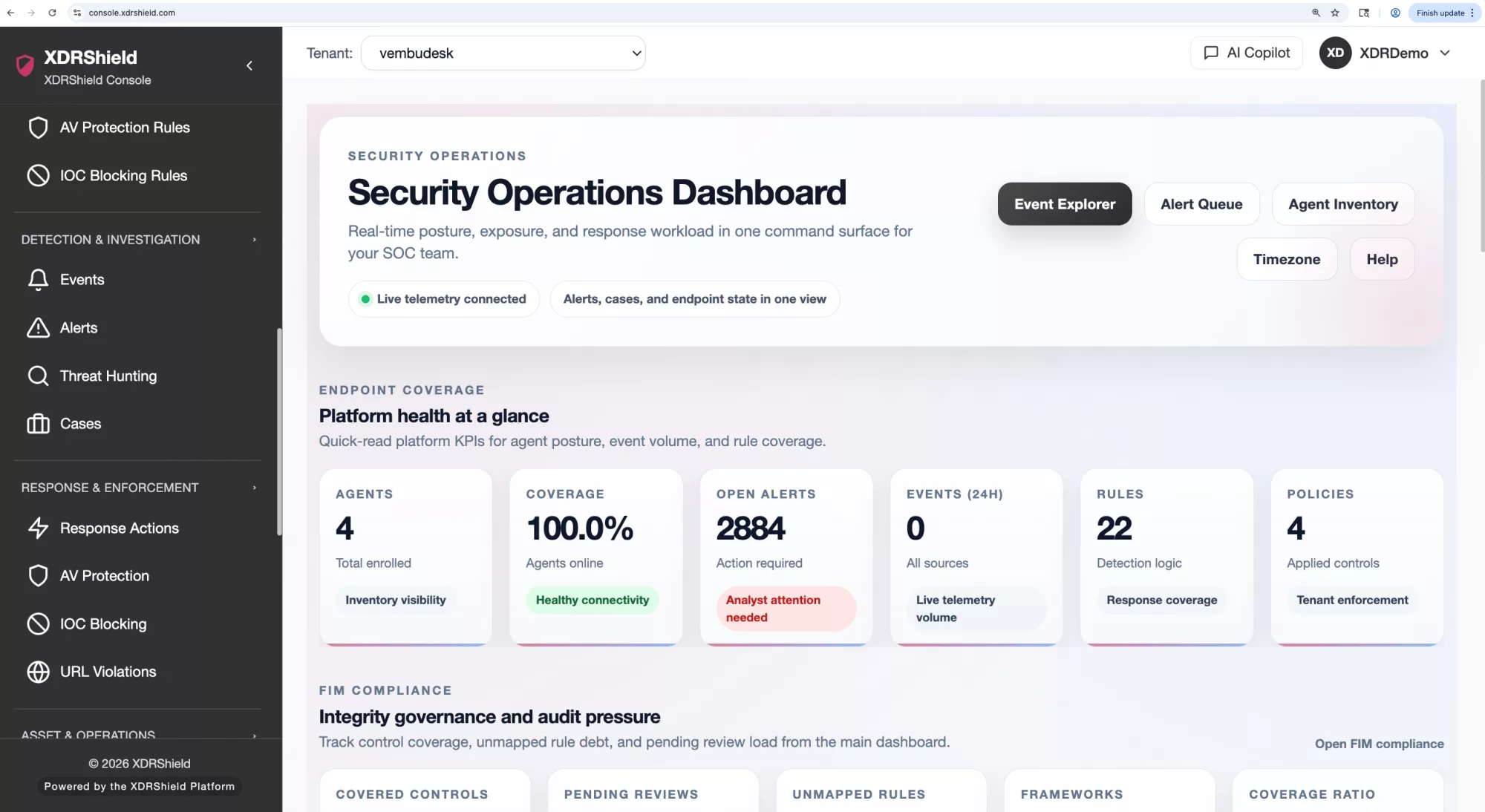
Licensing, Lifecycle, and Operational Health
Managed services depend on knowing which customers, endpoints, agents, and workspaces are active, healthy, eligible, licensed, or in need of follow-up.
- Track customer and endpoint operating state across the managed estate.
- Identify stale, unsupported, unhealthy, or unassigned assets before they become service gaps.
- Support repeatable onboarding, lifecycle review, and operational hygiene.
Notifications, Reporting, and Branding Context
Customer service workflows need clear escalation, notification, and reporting context so security activity can be communicated without exposing unrelated tenants.
- Keep customer-facing updates tied to the correct account and operating record.
- Support notification and escalation workflows that match service responsibility.
- Maintain service-provider context for reporting, review, and customer communication.
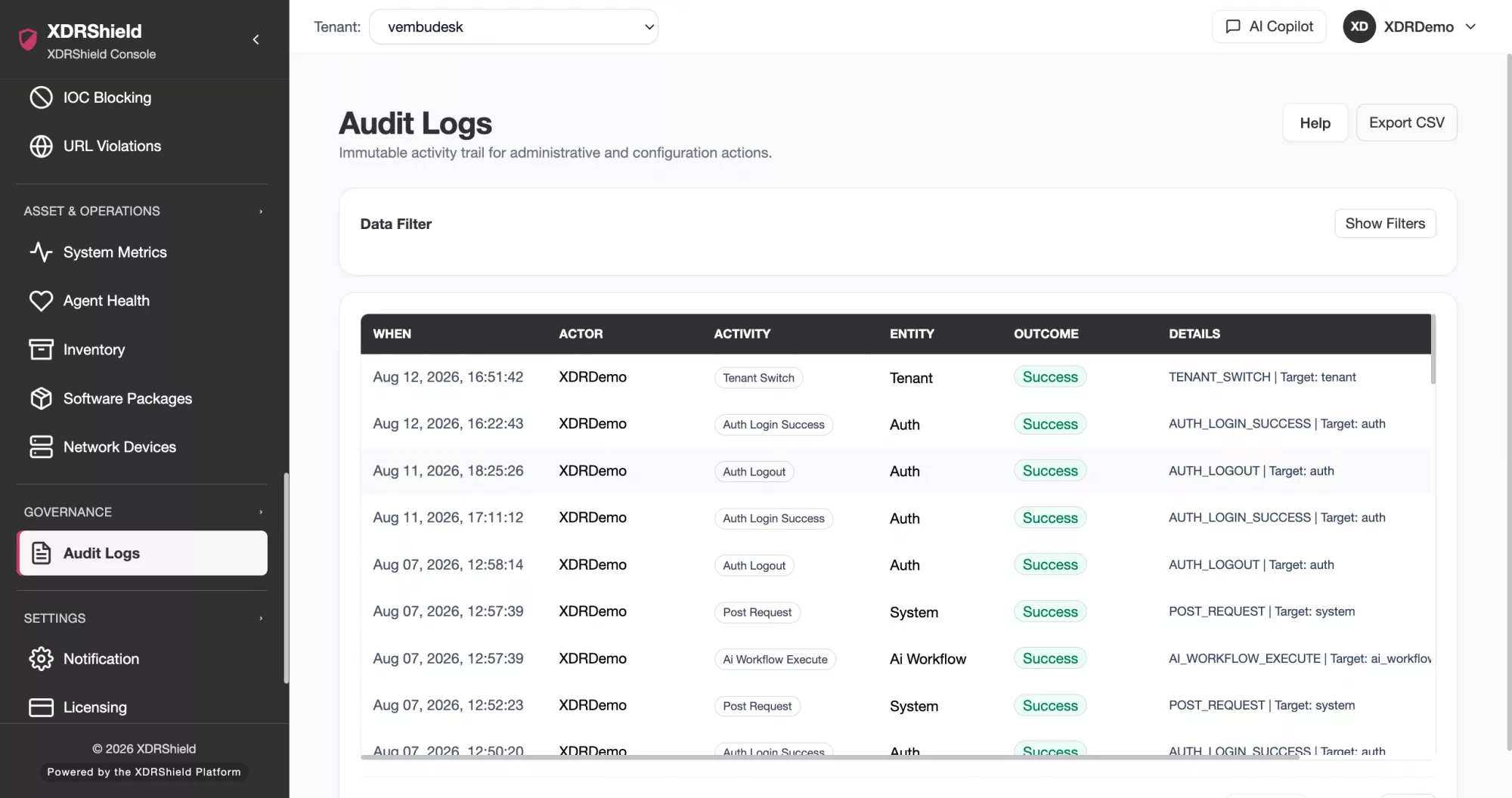
Audit History and Service Accountability
Activity records help MSP teams reconstruct who reviewed evidence, changed status, updated policy, requested action, approved work, or closed a case.
- Preserve operational activity for post-incident and customer-service review.
- Review status changes, policy updates, response decisions, and investigation history.
- Support accountable managed security without relying on informal notes or disconnected tools.
Service-provider-native multi-tenancy FAQs.
What does service-provider-native multi-tenancy mean in XDRShield?
It means XDRShield is structured for teams that manage multiple customer environments. Customer, tenant, workspace, user, endpoint, policy, alert, case, response, and activity context stay aligned so MSPs can operate centrally without mixing customer work.
How does XDRShield help prevent customer evidence from being mixed?
The operating model keeps alerts, endpoint evidence, cases, policies, actions, and activity records tied to the relevant customer and workspace context. Teams should still configure roles, access, and workflow boundaries carefully for their service model.
Can technicians work across multiple customers?
Yes, MSP teams can operate across managed environments, but work should remain scoped by role, tenant, permission, and customer responsibility so access and accountability stay clear.
How does multi-tenancy connect to investigation and response?
Alerts and endpoint evidence can become tenant-scoped cases with ownership, timeline, notes, and status. When response is required, supported actions should use governed workflows that preserve request, approval, target, result, and action-history context.
Does this replace customer-specific policies?
No. Multi-tenancy helps organize and operate across customers. Policy assignment, detection tuning, notifications, and response procedures still need to reflect each customer’s environment, risk, and service agreement.
Scale security operations without losing tenant control.
Use XDRShield to keep customer-separated endpoint visibility, alert triage, case ownership, policy governance, response actions, and activity records connected for accountable MSP security operations.